Info Page
HSH Success Stories: Housing
Stable housing changes everything. These stories show how housing programs help people move from crisis to community through long-term support and deeply affordable homes—and what happens when people finally have a place to call their own.
New Beginnings
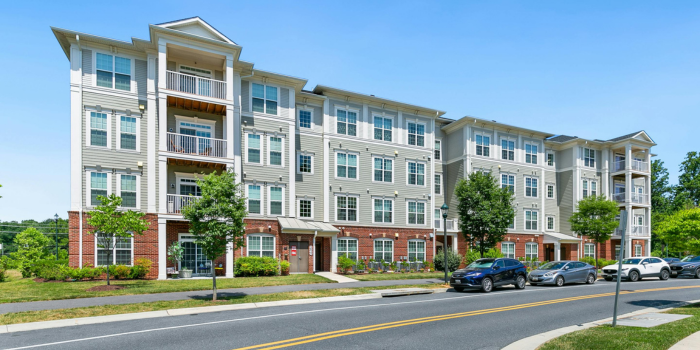
The program at 42 Otis has only recently opened and the Five Keys team is already welcoming residents and getting them settled in. In a short time, the program has been able to fully lease its 24 units dedicated to Transitional Age Youth moving from shelter to Permanent Supportive Housing. We're highlighting a resident who’s worked hard to find stable housing.
When Sharon, 24, entered the Lower Polk TAY Navigation Center, she was facing significant challenges related to mental health – including anger management. Sharon had experienced homelessness her entire life and had never had a stable place to live, making her feel like the goal of a home was impossible. Once she entered the Navigation Center, though, that all changed.
As soon as Sharon entered the program she connected with therapy and worked to overcome her mental health obstacles. This sparked a change in Sharon, that allowed her to realize the goal of a stable home wasn’t out of reach.
Once Sharon reached a stable point in her therapy journey, she began engaging in workforce development programs and community events. Through these activities she was able to build confidence and strengthen her life skills. The TAY Navigation Center staff from 3rd Street Youth Center and Clinic noticed significant growth from Sharon and noticed she was consistently applying what she was learning both in therapy and in the community.
Recently, Sharon achieved a major milestone – securing a permanent home at 42 Otis. Sharon is thriving in her new home and settling into the Hub neighborhood. Now that she’s stably housed, she can look toward the future and her education and employment goals.
*Sharon, name changed to protect client’s privacy.
A Home for Two Generations of Veterans
After years of living apart, 86-year-old Navy veteran Grant and his daughter Regina, 65, a veteran of the Air Force Reserve, are finally under the same roof again—this time, not out of necessity, but in a place they proudly call home. They now live together in the Maceo May Apartments, permanent supportive housing for veterans developed by Swords to Plowshares on Treasure Island.
Grant, who once built a successful career in the computer software industry, began experiencing serious health and memory issues later in life. The challenges mounted until he found himself without stable housing. Regina, too, faced her share of obstacles. After serving in the military in the 1970s, she returned to San Francisco as a single mother. Despite working hard as a nursing aide, she struggled to find affordable housing and eventually relied on hotel stays just to keep a roof over her head.
In 2016, Regina was referred to the Swords to Plowshares Service Center at 1060 Howard Street. During a support group session, she shared her experience, and for the first time, someone recognized her as a veteran. That moment changed everything. Swords to Plowshares connected her to the resources and support she needed, and she soon became a part of their housing pipeline.
When the pandemic hit, Regina moved into her father’s small one-bedroom unit for a time, but space was limited and unsustainable. So when staff at Swords to Plowshares recommended they apply for one of the new family-friendly units at the just-completed Maceo May Apartments, they jumped at the chance. The development, which offers over 100 units of supportive housing for veterans and their families, opened in 2023—and the timing couldn’t have been better. Regina and Grant moved in just weeks later.
Now, they each have their own bedroom, a shared kitchen, and a bathroom that meets their accessibility needs. Regina calls their new home “a lottery win,” and for good reason.
“Programs to end veteran homelessness must make space for families,” says Colleen Murakami, Chief Development Officer at Swords to Plowshares. “It’s an honor to provide a dignified home for people like Grant and Regina who have served their country and deserve stability.”
Today, Grant and Regina enjoy a slower pace of life—folding laundry side-by-side, relaxing on the observation deck, and sharing laughs with fellow veteran neighbors. “My favorite word is fun,” says Grant, smiling. “And it is fun living here.”
Brenda’s First Home: A New Year, A New Beginning
For most of her life, Brenda*, now in her early 60s, had never known the comfort of a home of her own. Living on the streets of San Francisco for decades, she carried the weight of chronic homelessness, compounded by age and mobility challenges. As someone who uses a walker, Brenda often found it difficult to hold on to basic essentials—her phone, her bags, even her dignity.
But everything changed the winter she moved from a Shelter-in-Place (SIP) hotel into permanent supportive housing. After years of instability, Brenda signed her lease on December 30, closing one chapter of hardship and opening another filled with comfort, safety, and community. She rang in the new year not on the streets, but at home.
One of the first things she did was something simple—but deeply meaningful: cook. With kitchenware provided by the nonprofit Brilliant Corners, Brenda prepared her favorite dish—collard greens—and reveled in the joy of being able to make meals again. For someone who spent so long without a kitchen, the ability to cook wasn't just about food. It was about care, independence, and pride. Brenda now regularly cooks and shares meals with friends, turning her new space into a warm, welcoming hub of connection.
Today, Brenda lives with greater peace of mind. She no longer has to worry about where to sleep or how to protect herself and her belongings. She has privacy, safety, and stability—things she went without for far too long. Most of all, she has something she never thought she'd experience: the feeling of truly being at home.
A Fresh Start for Caressa: Stability After the Storm
For years, Caressa*—an Asian Filipino transgender woman in her early 40s—navigated the harsh realities of homelessness in San Francisco. She carried not only the weight of housing insecurity, but also the compounded challenges that come with being a trans woman of color. Then came COVID-19. After contracting the virus, Caressa spent much of January isolated in the hospital, fighting to recover with little more than her own resilience.
Once she was discharged, she was placed temporarily in a Shelter-in-Place (SIP) hotel, part of the City’s pandemic response to keep vulnerable residents safe. While she was grateful for the roof and the care she received, the temporary nature of the hotel left her with an aching desire for permanence—somewhere she could truly settle, heal, and live with dignity.
That opportunity arrived one spring, just before Easter. Caressa was approved for a permanent supportive housing unit at the Granada Hotel, a building transformed through California’s Project Homekey initiative. It wasn’t just a room—it was a home with support built in.
Thanks to Homebridge, Caressa now receives caregiving services twice a week. These visits help her maintain a clean, welcoming space and manage daily tasks with dignity. She also receives freshly prepared meals delivered each afternoon—tuna casserole, lasagna, fish sticks—along with fruit and vegetables that keep her nourished and grounded. After so many years of uncertainty, the simple routines of home life have become deeply meaningful.
“It’s a relief to have food and a stable place to live,” Caressa says. “Thank God I have a roof over my head and don’t have to be out in the cold.”
Today, Caressa is no longer focused on day-to-day survival. With stability and support, she has the foundation to dream, connect, and reclaim her life.
From Hardship to Healing: Dante’s Journey Home
Dante* grew up surrounded by family in San Francisco, especially close to his grandmother who helped raise him. His early years were filled with community and connection, but adulthood brought instability. A string of low-level offenses landed him in the Community Justice Court (CJC), a restorative justice program designed to give people a second chance.
Through the support of CJC staff and a dedicated judge, Dante began to turn his life around. But while he worked to stabilize emotionally and legally, his housing situation remained uncertain. He moved between shelters and slept outdoors, vulnerable to both the elements and the wear of street life.
The turning point came when, after graduating from the CJC program, Dante was connected to San Francisco’s Emergency Housing Voucher (EHV) program. The EHV program helps people experiencing homelessness or housing instability secure a long-term home, with the goal of placement within 90 days. For Dante, receiving the voucher felt like “one of the greatest moments of [his] life.”
It marked the beginning of a new chapter after three long years of what he calls “very dark times”—a period that included severe health challenges, including an infection that nearly led to the amputation of his leg. With perseverance and support, Dante found what he describes as his dream apartment in the Nob Hill neighborhood.
For the first time in years, he has his own kitchen, his own bathroom, and a space to truly call his own. “The best part of having a home,” Dante says, “is that I can focus on my health and take better care of myself.”
Today, he’s not just surviving—he’s planning for the future. He’s working on improving his health and hopes to return to the workforce. Long term, he wants to go back to school and become a counselor. Inspired by the support he received, Dante dreams of helping others who are facing challenges like the ones he overcame.
“I want to give back to the San Francisco community that believed in me when I needed it most,” he says.
Coming Home: David’s Path to Stability and Recovery
Born and raised in San Francisco’s Visitacion Valley, David T*. spent his youth playing baseball in the neighborhood park, dreaming of a future in professional sports. But as he got older, the pressures of his environment took hold. Despite his parents’ warnings, David became involved with drugs—first using, then selling. His life unraveled further after a devastating fire destroyed his family’s home, leaving him with nothing and no place to turn. David soon found himself experiencing homelessness.
For several years, David participated in a work program, but as his addiction worsened, he was eventually let go. His health began to decline. It was during this difficult time that outreach workers connected with David and invited him into a Shelter-in-Place (SIP) hotel. These temporary hotel-based shelters were established during the COVID-19 pandemic to protect vulnerable people experiencing homelessness.
“If it wasn’t for the SIP program,” David reflects, “I don’t know where I’d be.”
As the SIP program wound down, David was offered a permanent supportive housing unit at 835 Turk Street—a turning point in his life. “When I walk through these front doors, I’m home,” he says with deep gratitude.
Now, David takes what he calls his “safe walk” each day—up the street to St. Mary’s Cathedral, where he finds peace in spiritual reflection, and to the nearby park where he once played baseball as a teen. With a secure place to call home, David is finally able to focus on healing. He’s working on a detox plan and preparing to enter a 90-day treatment program.
“Without stable housing, I couldn’t get healthy,” says David. “Now that I’m home, I’m really feeling better.”
A New Beginning for Rosa: From RV to Safe, Stable Housing
For over two decades, Rosa C. built a life with her husband in San Francisco’s Noe Valley neighborhood, raising five children in their Church Street apartment. Originally from Ecuador, Rosa loved the sense of community and the stability they had created. But after her husband passed away, her world began to shift. The sudden death of her landlord triggered an eviction that Rosa fought in court—but ultimately lost.
With limited options and rent rising rapidly, Rosa turned to the only solution she could afford: she used her savings to purchase a used RV. She parked it in the Bayview, just a block from her former apartment, and lived there with her adult son, who helped cover the vehicle payments. While she continued working full time, living in an RV presented daily challenges—no reliable access to water, safety concerns, and isolation.
That changed when the San Francisco Homeless Outreach Team (SFHOT) helped Rosa connect with the Bayview Vehicle Triage Center (VTC), a safe parking site with access to meals and services. The Urban Alchemy staff at the VTC helped Rosa feel welcome and cared for, offering the first sense of security she’d had in years.
On Rosa’s birthday, opportunity came knocking—literally. Staff from Catholic Charities appeared at her RV door with news that felt like a miracle. She had been selected for the Emergency Housing Voucher program, which would allow her to move into a permanent apartment. Though hesitant to leave the VTC—the closest thing to stability she’d known in years—Rosa saw the offer as “God’s blessing.”
She soon found her new home in San Francisco’s Excelsior neighborhood. With the support of the Bayview Hunters Point Foundation, who furnished the apartment with essentials and made sure it felt like home, Rosa made a fresh start. Today, she is no longer cold, uncertain, or alone. She’s part of a vibrant community and is thankful for the people and programs that helped her get here.
“That’s how I live,” Rosa says now. “Happy and grateful to God for the good people he put in front of me and for the city that helped me.”
*all names changed to protect client privacy