Info Page
Urban flooding
Urban flooding happens when storms produce so much water that our drainage systems are overwhelmed.
Floods create multiple hazards, both while waters are high and after they have receded. Here’s how to stay safe during and after flooding.
Before an urban flooding
- Make an emergency plan and gather supplies.
- In flood-prone areas, keep materials on hand like sandbags, plywood, plastic sheeting, plastic garbage bags, lumber, shovels, work boots and gloves.
- Get up to 10 free sandbags during the rainy season Monday-Saturday, 8 a.m. to 2 p.m. at the Public Works’ operations yard, Marin Street/Kansas Street gate. Visit SFpublicworks.org/sandbags for more information.
- You can also buy sandbags and other flood control supplies at local hardware stores.
- Be aware of streams, drainage channels and areas known to flood to avoid becoming trapped. Check out flood risk maps from SFPUC to learn more about areas in the city most likely to flood in a major storm.
- Safely handle food after power outages
- Discard any perishable food that has been above 40°F for more than 4 hours.
- If your freezer remained full and unopened, food may last 48 to 72 hours—when in doubt, throw it out.
- Visit OEWD's Food Safety for Businesses page for more tips on preparing your business for a power outage.
- Move electronics and hazardous chemicals like paint, cleaning products, or pesticides off the floor or to higher levels to avoid potential damage and contamination .
- If you're in a flood-prone area, apply for a Flood Grant from the San Francisco Public Utilities Commission (SFPUC) to install flood-prevention infrastructure. Email: FloodwaterGrants@sfwater.org
During an urban flooding
- Turn around, don’t drown! Avoid walking, swimming or driving through floodwaters. Just six inches of moving water can knock you down, and one foot of moving water can sweep your vehicle away. Move to higher ground whenever safely possible.
- Avoid water that is in contact with downed power lines.
- Report non-life-threatening storm-related issues such as clogged catch basins, residential or street flooding, sewer backups, or wastewater odors to 311 online at sf311.org, on the 311 mobile app for Android and iPhone, or by calling 3-1-1.
- Call 9-1-1 for life-threatening emergencies.
Storm and Flood Hazards Map
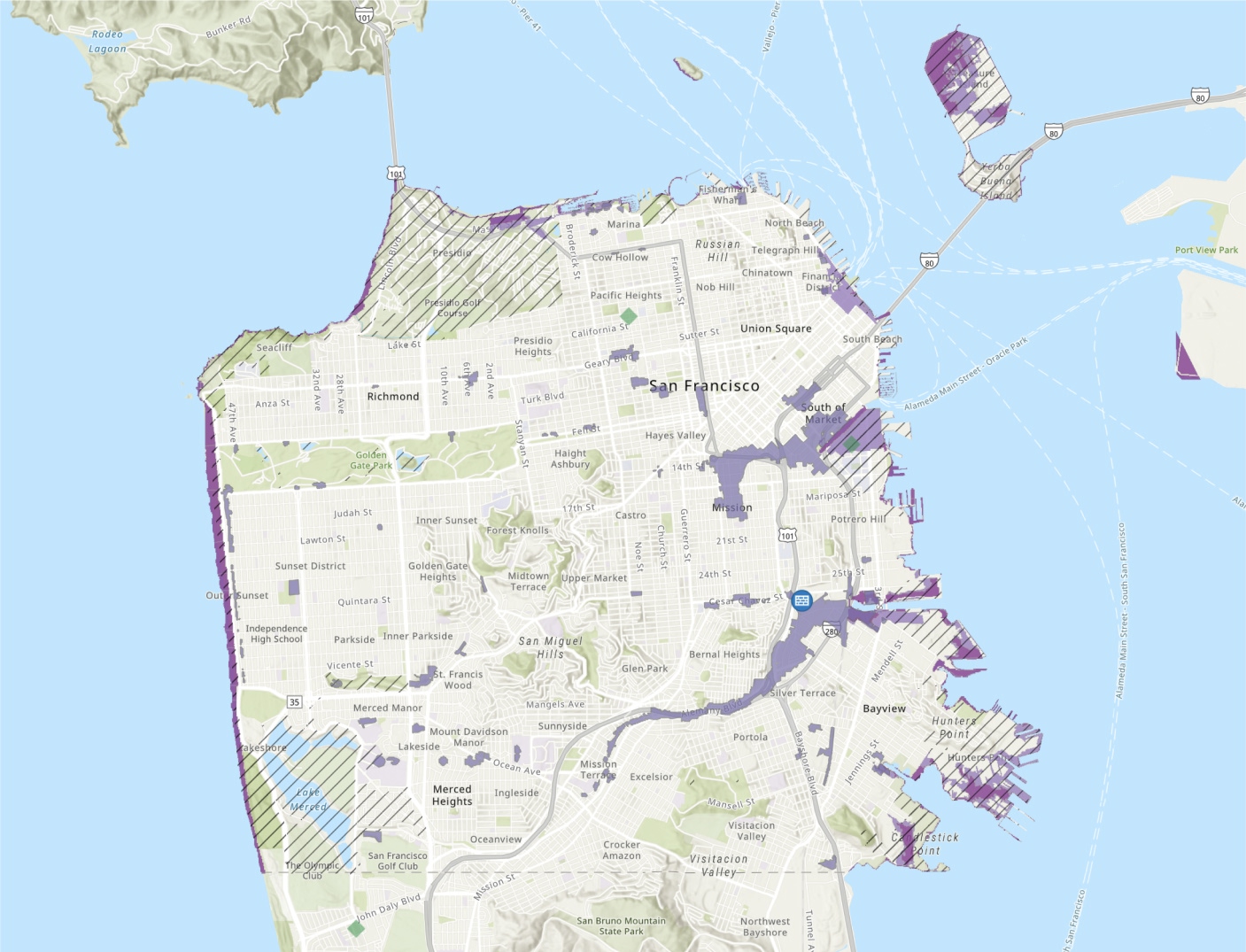
During severe storms, stay up to date on local hazards with our Storm and Flood Hazard Map.
This interactive map shows local flood risk zones identified by FEMA and the City, PG&E outage areas, sandbag pickup locations, and National Weather Service hazard products.
To explore additional resources, click the drop-down menu in the top-right corner of the map and select “layers” (the icon that looks like a stack of papers).
After an urban flooding
- Call, text or visit neighbors. Older adults, especially those who live alone, and those with disabilities or medical conditions are most at risk during emergencies and disasters.
- Wear protective clothing, including rubber boots, gloves, and a hat for all cleanup. Floodwater is dirty and may contain hazardous chemicals.
- If you do come in contact with floodwater, clean up safely
- Bathe or shower thoroughly with soap and water.
- Wash all contaminated clothing in hot water and detergent.
- Make sure tetanus immunizations are up to date.
- Disinfect hard surfaces that have come into contact with floodwater with a diluted bleach solution (1 cup of bleach per 1 gallon of water) after washing with water and soap. Do not mix cleaning solutions together, as they can produce irritating or toxic gases.
- Prevent mold growth
- Dry out building interiors with fans and dehumidifiers
- Remove wet items immediately. Wet carpet, furniture, bedding, and any other permeable items may develop mold within 24-48 hours.
- Be aware of chemical hazards from moved or spilled household toxic items like cleaning supplies, paint, pesticides, antifreeze, poisons, or oil. Visit sfenvironment.org for information on how to dispose of household chemicals.
For more information about what to do if backup or flooding occurs in your building, visit the San Francisco Public Utilities Commission.
Sign up for AlertSF to receive important updates before, during and after emergencies.
Text your ZIP Code to 888-777 or sign up at AlertSF.org.
Learn more
- Find out about how disasters and emergencies can affect San Francisco.
- Review the steps to get prepared for any emergency.
About

Brought to you by the San Francisco Department of Emergency Management (DEM). DEM manages San Francisco's everyday and not-so-everyday emergencies.
For more information and updates, follow the San Francisco Department of Emergency Management on Instagram, X, Nextdoor, Facebook and BlueSky
Request a short presentation on disaster preparedness from the Department of Emergency Management.