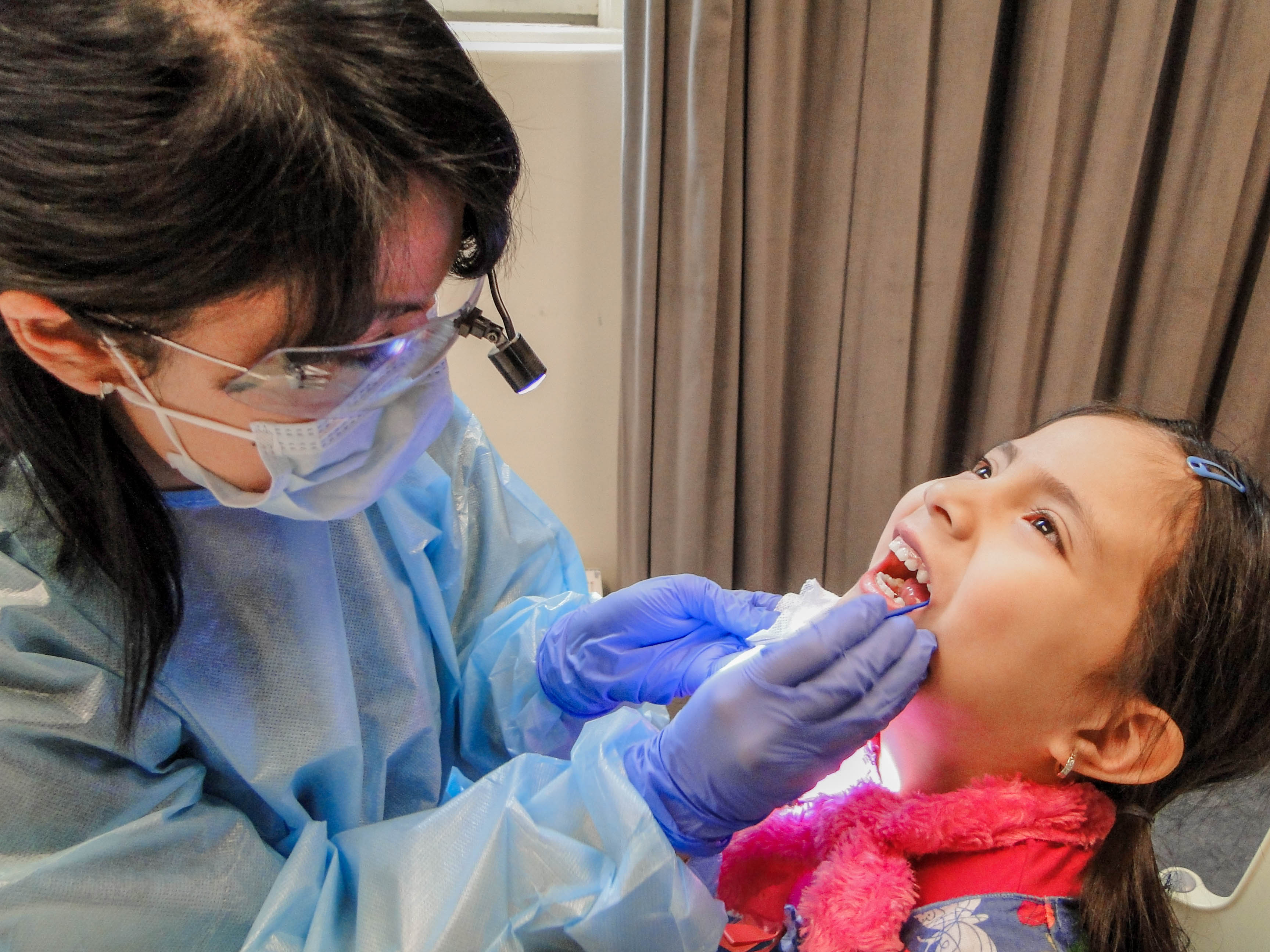
Developing the 2026-2030 Strategic Plan
These strategies were developed by a committee of diverse CavityFree SF stakeholders between April and October 2025. The committee used local data, and findings from community interviews and focus groups. The strategic priorities align with the California Department of Public Health’s Office of Oral Health Local Oral Health Program grant requirements.Strategic Priority #1:
Support and strengthen dental care access
1.1 Strengthen relationships and partnerships with individual providers and organizations, such as federally qualified health centers (FQHCs) and the San Francisco Community Clinic Consortium.
What this might look like: Assess and study the feasibility of developing school-based dental clinics
1.2 Continue to gather information to better understand the landscape of dental care access in San Francisco, including structural barriers that disproportionately impact low-income communities and communities of color.
1.3 Identify targeted approaches for vulnerable populations, such as children and youth with special health care needs, to improve their access to dental care.
1.4 Promote collaborative care coordination efforts that counter shrinking access to culturally responsive and affordable dental care.
Strategic Priority #2:
Develop innovative pathways to access prevention and care
2.1 Expand the use of fluoride varnish in medical settings.
2.2 Explore innovative and technologically advanced approaches to improve access.
2.3 Increase capacity to provide onsite dental services at programs that serve children, including preschools, elementary schools, daycares, and other spaces that families of young children frequent.
2.4 Cultivate partnerships across SFDPH programs and other health-focused community organizations that can contribute to improving oral health in alignment with their core mission.
What this might look like: Collaborating with health educators who can promote nutrition and prevention messaging, like the importance of drinking water
Strategic Priority #3:
Advance education and advocacy on children's oral health
3.1 Strengthen relationships with leadership across the San Francisco Department of Public Health to communicate about CavityFree SF’s mission and impact.
3.2 Disseminate accessible and evidence-based best practices, guidance, and training materials related to oral health for cross-sector stakeholders (e.g., community members, caregivers, community service providers, school district, elected officials).
3.3 Expand CavityFree SF’s use of diverse communication and promotion channels, such as social media, op-eds, journal articles, newsletters, and listservs.
What this might look like: Garnering media attention by developing relationships with journalists or promoting our impact with data visualization on social media.
3.4 Leverage partnerships with education-based health initiatives to integrate key oral health messages (e.g., the importance of nutrition and community water fluoridation on children’s oral health).
3.5 Establish CavityFree SF representation in aligned work groups (e.g., Sugary Drink Distributor Tax Advisory Committee, California Department of Public Health oral health work group, California Dental Association).
Strategic Priority #4:
Foster a data-driven, community-oriented evaluation approach
4.1 Use local, state, and peer-reviewed data to guide programming, resource allocation, and task prioritization.
4.2 Automate robust data collection, analysis, and public dashboard maintenance.
4.3 Increase the data and evaluation capacity of CavityFree SF members and partners.
What this might look like: Training members in data collection, analysis, quality improvement, and formal evaluation frameworks.
4.4 Ensure that CavityFree SF is regularly disseminating evaluation findings to broader San Francisco audiences.
4.5 Support research to expand the evidence base and inform policy on children's oral health.
Strategic Priority #5:
Boost relationships and engagement within CavityFree SF
5.1 Expand CavityFree SF’s membership, and keep new partners engaged, taking care to ensure that CavityFree SF is reflective of the San Francisco communities most impacted by children’s oral health disparities.
5.2 Build capacity of CavityFree SF members related to topics such as media, communications, data visualization, and advocacy.
5.3 Explore partnerships and foster collaborations with non-dental professional schools to help support increased oral health awareness and strengthen the workforce addressing oral health.
What this might look like: Collaborating with students from social work and nursing schools to promote oral health and lend their expertise to oral health programming.
5.4 Streamline and strengthen communication mechanisms across CavityFree SF work teams to sustain and optimize CavityFree SF’s impact.