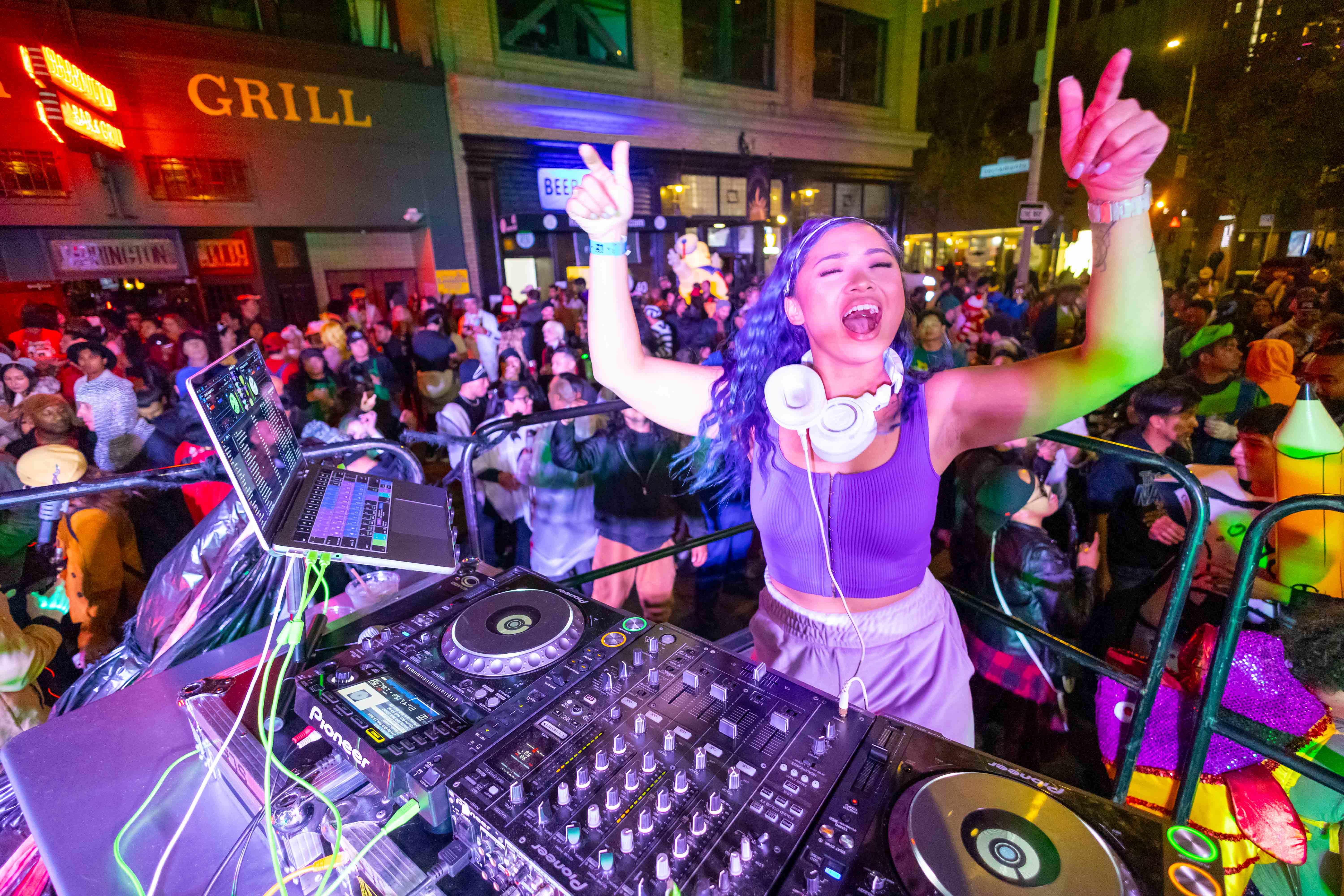
Plan your event
Planning an outdoor special event that closes streets? We review special event permit applications and materials to make sure your event will be safe, secure, and accessible for everyone. This page is an overview, to understand the requirements and process.Primary considerations
Activities
Whether you have food or alcohol, stages, equipment, or other elements will impact the the permit approval process and cost.
Location
If your event impacts public transit routes, we'll need to plan for changes. If your event isn't in a street, but a park or other jurisdiction, start here.
Size
For large events, we'll require emergency medical, public safety, waste management, and other plans.
Get one-on-one help
Reach out early in your planning. We can provide guidance and instructions based on your unique event. Email SpecialEvents@sfmta.com.
General guidance
Location
Permit processes vary by location. This page only covers rules for events on City streets.
Different rules apply for events in parks, at the Presidio, along the waterfront, on Treasure Island, etc. Find links to each of these locations' instructions.
Email SpecialEvents@sfmta.com to ask if the location you’re planning is in one of these special jurisdictions.
Outreach
You must conduct outreach before your event.
Notify nearby residents and businesses about your event plans and give them a chance to share their concerns.
Be clear and honest about potential impacts like noise, traffic, and access changes like street closures. Be prepared to adjust your plans based on feedback. Strong outreach helps build community support and helps ensure a successful event.
Learn how to create an outreach plan.
Hosting a neighborhood block party?
Small, one-block events on residential streets are simpler to organize and permit. Follow the steps to host this type of event.
Activities
You will need more permits depending on your planned activities. Detail all activities in your application and on your site plan.
Site plan
A site plan is a drawing showing the event’s layout. It is submitted as part of your special event permit application to close a street(s).
Learn how to prepare a site plan.
Food
All food vendors must have the necessary permits, licenses, and safety equipment.
You’ll need permit(s) from the Department of Public Health if you plan to sell or give food to the public - even if food is free or offered as samples. There are limited exceptions to the permit requirement.
You may also need a Fire Department temporary special event permit if your vendors are:
- Cooking with open flames
- Using generators
- Operating cooking equipment
See the full guide for food permits at special events.
Alcohol
The California Department of Alcoholic Beverage Control (ABC) issues permits for alcohol service. The SF Police Department must sign your ABC permit application.
Learn more about service and selling alcohol at outdoor events.
Cannabis
You can only sell cannabis at certain events.
Check if you can sell cannabis at your event.
Amplified sound or entertainment
The Entertainment Commission issues permits for events with outdoor amplified sound or entertainment.
- One Time Outdoor Event Permit: required for an event that provides outdoor amplified sound or entertainment. Examples include a band, DJ, dance act, pre-recorded streaming music, amplified speeches.
- Sound Truck Permit: required for the outdoor use of amplified sound equipment attached to, or being carried on, a motor vehicle or other means of conveyance. Examples include parades, floats, marches that use amplified sound equipment.
Tents, food booths, stages, and other structures
Many events have temporary structures ranging from tents to stages and or carnival rides.
Learn more about the safety requirements and Fire permit process.
They will also need to be included in your site plan (see above).
No structure can be fixed or bolted into the roadways or sidewalk.
Night construction
If your setup exceeds 5 dBA and will be performed between 8pm-7am, you need a Night Noise permit from Public Works.
Safety
Ensuring access
Keep sidewalks open even when a street is closed to vehicles.
Sidewalks must always remain accessible for pedestrians.
Emergency lane
Maintain a minimum 14-foot wide emergency access lane running the full length of the event.
- Recommended Placement: Center of the road, not on the side. People can be in the emergency lane during the event, just not objects like tents, or tables/chairs.
- All intersections must remain clear of any objects to allow for emergency vehicle movement.
Placement restrictions
Maintain clear zones of at least 5 feet of any fire hydrant, fire alarm box, or police call box. Don’t put anything within 10 feet of any fire escape and stand pipe inlet, measuring horizontally.
Don’t have anything in any intersection or pedestrian crosswalk, including any vehicles. Curb ramps must remain clear and accessible.
Barricades
You will need to arrange for barricades.
Rent barricades from a private vendor or SF Public Works. Email dpweventrequest@sfdpw.org to rent from SF Public Works.
Refer to your approved site plan when you set them up.
You are responsible for setting up, monitoring, and removing the barricades.
Learn more about how to set up barricades at your event.
Fire safety
The Fire Department will need to permit parts of your event for safety. They have the authority to shut down your event if public safety is compromised.
After your overall street closure permit is approved, you will need to get permits for some common event features, including:
- Tents, canopies, or similar
- Food and beverage booths
- Cooking appliances that use liquid petroleum (LP) gas, butane, propane, natural gas, mesquite wood, or charcoal briquettes
- Assembly spaces to prevent over-crowding
- Temporary built structures such as stages, scaffolding and large tents
- Generators
- Pyrotechnics, fireworks, or flame effect performance
- Liquid Nitrogen
* List is not complete. Other restrictions may apply.
Learn about the process for Fire Department permits for your event.
When special events are large or have fire-based activities, we may require Fire Department staff, called "fire watch" at your event.
See event activities needing Fire Department staff
Security plan
You must submit a security plan if you expect more than 500 attendees.
Smaller and simpler events generally will not require security plans.
Events with alcohol service are more likely to require one.
A security plan is a detailed description of your plans to ensure the safety and security of the people. It also includes keeping the physical area in and around the event safe and secure.
The Police Department and the Department of Emergency Management review your plan and coordinate emergency personnel as needed.
Learn more about event security.
Emergency medical plan
If your special event has more than 1000 attendees, more than 100 swimmers, or is required by a permitting agency, you have to submit an event medical plan and arrange for the right level of emergency medical services and resources. This includes having ambulances. Start at least 90 days in advance of your event.
Learn how to create and submit an emergency medical plan.
Transit & parking
Encourage attendees to take public transit. Include transit directions in promotional materials.
Transportation plan
SFMTA requires some larger events to provide traffic management plans for detours, signage, and other elements. These plans need to be professionally prepared. This is uncommon.
Encourage attendees to ride bikes or take public transit. Include transit directions in promotional materials. You may want to add an area for monitored bicycle parking to your plans.
Accessible parking (Blue Zones)
If your event displaces any accessible parking spaces (Blue Zones), you must provide temporary replacement spaces.
Replacement typically is whichever is greater:
- 1:1 replacement (one temporary Blue Zone for each displaced space), OR
- One temporary Blue Zone per block closed
Include directions to temporary Blue Zones in your promotional materials.
We will tell you where to have temporary Blue Zone locations during the permit review process. They will be included in the request for “no parking” spaces for your event.
Temporary No Parking/Tow away signs
If your event will take place in an area where vehicles park, you will likely need to have “no parking” signs posted by SFMTA.
You may need signs beyond the street closure itself, too. This would be for taxi zones, temporary delivery and/or Blue Zones (see above). There’s an additional fee for this City service.
Learn about SFMTA Temporary Signage.
Towing vehicles
To minimize towing, distribute fliers on the blocks. This gives people advance notice of the closure and the “no parking” restrictions.
To have parked vehicles removed, contact SFMTA to arrange towing. Only authorized SFPD or SFMTA personnel can legally remove vehicles from City streets or authorize towing in the public right-of-way.
Some events may need to arrange for a dedicated “tow detail” from SFMTA. SFMTA will tell you if this is something you’ll need.
Other requirements
Accessibility
Ensure that people with disabilities can access and enjoy your event. Review this checklist for hosting an accessible event.
Restrooms
If your event is not a simple residential block party, you may need to provide portable toilets.
If you will have food or drink, you should plan on having at least 2 or 3 toilets, with one being ADA accessible.
If you can guarantee free and open access to toilets in adjacent facilities and buildings, you may not need portable toilets.
We will let you know whether you need toilets and how many after our initial review of your application.
Insurance
You may be required to carry liability insurance to cover costs for damage or injuries that may occur during the event.
Read about insurance requirements for special events.
Waste management
Zero waste plan
Every event held in San Francisco is required to offer recycling and composting at the event.
If you’re hosting an event with more than 1,000 attendees you must also have a zero waste plan. You will submit this plan to SF Environment at least 30 days before the event.
Learn how to hold a zero waste event and prepare a zero waste plan.
Order Recology event services
Recology provides special event recycling, compost, and landfill collection services. Order at least 30 days in advance.
Clean up the area
You can hire a private vendor or pay a fee for SF Public Works to clean up the street after your event. Here is a list of private vendors that provide clean-up and sorting services.
If the area isn’t left clean, you may be billed by SF Public Works.
Permit process
Submit an intake form
Start by submitting an intake form online. The form captures key event details, like location, date(s), and activities.
Staff will review your form within 2 business days. You’ll get a personalized checklist of the permits you’ll need, and the order in which to apply for them.
Submit form
Apply to SFMTA for a street closure permit
Based on your intake form details, you may need multiple permits. Typically the first one you should submit is for the street closure from SFMTA.
Learn how to submit a street closure permit application to SFMTA.
About
This page is an overview of the permitting process to host an outdoor event on a San Francisco Street. Because each event is unique, we recommend you reach out to us early, several months or more, depending on the size of your event.
Email SpecialEvents@sfmta.com to get started.
After that, submit an intake form.
Partner agencies
Contact information
Address
49 South Van Ness Ave, 2nd Floor
San Francisco, CA 94103
We are closed on public holidays. Plan Review and Print Center queues will close at 4:30pm, but payments will be accepted until 5pm.