Report
Rent Arbitration Board: Security Camera Surveillance Impact Report
Council on Information Technology (COIT)PUBLIC MEETING REVIEW DATES
COIT Meeting Date(s): March 18, 2021
BOS Approval Date: August 4, 2021
As required by San Francisco Administrative Code, Section 19B, departments must submit a Surveillance Impact Report for each surveillance technology to the Committee on Information Technology ("COIT") and the Board of Supervisors.
The Surveillance Impact Report details the benefits, costs, and potential impacts associated with the Department's use of surveillance cameras.
DESCRIPTION OF THE TECHNOLOGY
The Residential Rent Stabilization and Arbitration Board’s (RNT) mission is to protect tenants from excessive rent increases and unjust evictions, while assuring landlords fair and adequate rents; to provide fair and even-handed treatment for both tenants and landlords through efficient and consistent administration of the rent law; to promote the preservation of sound, affordable housing; and to maintain the ethnic and cultural diversity that is unique to San Francisco
In line with its mission, the Department shall use security cameras only for the following authorized purposes:
Authorized Use(s):
- Live monitoring.
- Recording of video and images.
- Reviewing camera footage in the event of an incident.
- Providing video footage/ images to law enforcement or other authorized persons following an incident or upon request.
Prohibited use cases include any uses not stated in the Authorized Use Case section.
Further, processing of personal data revealing racial or ethnic origin, political opinions, religious or philosophical beliefs, trade union membership, gender, gender identity, disability status, or an individual person’s sex life or sexual orientation, and the processing of genetic data and/or biometric data for the purpose of uniquely identifying an individual person shall be prohibited.
Department technology may be deployed in the following locations, based on use case:
- The Lobby Cameras are used to protect against harassment, theft, safety or vandalism of the Rent Board’s lobby area, which includes publicly accessible computers and other City owned assets.
Technology Details
The following is a product description:
Q-See QT454 - This DVR uses high-performance video processing chips and an embedded Linux operating system for quality image recording and ease of use. It utilizes numerous advanced technologies including the industry-standard H.264 codec to deliver high-quality, smooth videos and dual stream capability for remote viewing. A SATA hard-drive interface offers upgradability and VGA output allows users to connect to any standard TV or monitor for viewing.
A. How It Works
To function, Lobby Cameras record video of the Rent Board’s lobby and entrance. The video is stored for 7 days prior to deletion. In the event of an incident of harassment, staff safety, theft or vandalism, RNT staff will review the recorded video to determine if it has captured the incident.
Data collected or processed by security cameras will not be handled or stored by an outside provider or third-party vendor on an ongoing basis. The Department will remain the sole Custodian of Record.
IMPACT ASSESSMENT
The impact assessment addresses the conditions for surveillance technology approval, as outlined by the Standards of Approval in San Francisco Administrative Code, Section 19B:
- The benefits of the surveillance technology outweigh the costs.
- The Department's Policy safeguards civil liberties and civil rights.
- The uses and deployments of the surveillance technology are not based upon discriminatory or viewpoint-based factors and do not have a disparate impact on any community or Protected Class.
The Department's use of the surveillance technology is intended to support and benefit the residents of San Francisco while minimizing and mitigating all costs and potential civil rights and liberties impacts of residents.
A. Benefits
The Department’s use of surveillance cameras has the following benefits for the residents of the City and County of San Francisco:
| Yes or No | Benefit | Description |
|---|---|---|
N | Education | N/A |
N | Community Development | N/A |
Y | Health | Protect safety of staff, patrons, and facilities while promoting an open and welcoming environment. |
N | Environment | N/A |
Y | Criminal Justice | Review video footage after a security incident; provide video evidence to law enforcement or the public upon request by formal process, order, or subpoena. |
N | Jobs | N/A |
N | Housing | N/A |
N | Other | N/A |
B. Civil Rights Impacts and Safeguards
The Department has considered the potential impacts and has identified the technical, administrative, and physical protections as mitigating measures:
Administrative Safeguards: The data can only be accessed by 0961 Department Head and a vendor in case of assistance in fixing/troubleshooting or to retrieve at the direction of the Department Head.
Technical Safeguards: The Lobby Camera data is on a closed system not connected to other City data networks.
Physical Safeguards: Data can only be accessed at the Rent Board’s Office at 25 Van Ness Ave., Ste. 320, SF, CA
The Rent Arbitration Board strives to mitigate all potential civil rights impacts through responsible technology and associated data use policies and procedures, and intends to use Lobby Cameras and their associated data exclusively for aforementioned authorized uses cases. All other uses, including surveillance of San Francisco residents or groups, are expressly prohibited. The Lobby Cameras are used at the department’s offices to monitor entrance and exit points and the lobby in case of a break in, for staff safety, and to monitor in case there is an allegation of any other illegal activity. They capture footage of the interior of the site, and do regularly capture members of the public who come into the department’s offices. The use of Lobby Cameras may result in dignity loss, discrimination or loss of liberty. The quality of the video captured through the CICs may vary in quality due to lighting, motion or other factors. Poor quality video may lead to misidentification. Conversely, the video may not correctly convey intent and viewers may interpret actions captured as threatening or menacing which may have a more benign interpretation. For example, the Lobby Cameras may capture a person approaching a facility with a brick and assume they intend to cause physical damage to the property when there may be an alternative explanation. That person may be correctly identified as an employee or member of the public, but subsequently subjected to investigation and possibly arrest. To protect camera data from potential breach, misuse or abuse that may result in civil rights impacts, data is maintained on secure, department-owned DVR. Only persons authorized to utilize the raw data may access the information and are required to maintain records of access by completing the community security cameras data access log described in section 3. Data stored on the DVR is deleted every seven days, and sharing with building management or law enforcement pursuant to policy. Vendor has limited access to data only to install and maintain the cameras.
C. Fiscal Analysis of Costs and Benefits
The Department’s use of surveillance cameras yields the following business and operations benefits:
| Yes or No | Benefit | Description |
|---|---|---|
Y | Financial Savings | Department Security Camera Systems will save on building or patrol officers. |
Y | Time Savings | Department Security Camera Systems will run 24/7, thus eliminating building or patrol officer supervision. |
Y | Staff Safety | Security cameras help identify violations of Department Patron Code of Conduct and provide assurance that staff safety is emphasized and will be protected at their place of employment. |
Y | Data Quality | Security cameras run 24/7/365 so full-time staffing is not required to subsequently review footage of security incidents. Data resolution can be set by level and is currently set to high resolution. |
The fiscal cost, such as initial purchase, personnel and other ongoing costs, include:
| Expense Category | Annual Cost | One-Time Cost |
Total Salary & Fringe | N/A | N/A |
Software | N/A | N/A |
Hardware/Equipment | N/A | $700 |
Professional Services | N/A | N/A |
Training | N/A | N/A |
Other | N/A | N/A |
Total Cost | N/A | $700 |
The Department funds its use and maintenance of the surveillance technology through:
- The Board is an enterprise department funded by the Rent Board fee, and receives no general fund support. The DVR system costs a minimal amount.
COMPARISON TO OTHER JURISDICTIONS
Security Cameras are currently utilized by other governmental entities for similar purposes.
Appendix A: Crime Statistics
Department: Rent Board
Section 19B requires each department in their Surveillance Impact Report to respond to the following question if applicable, “the general location(s) [of the surveillance technology] may be deployed and crime statistics for any location(s).”
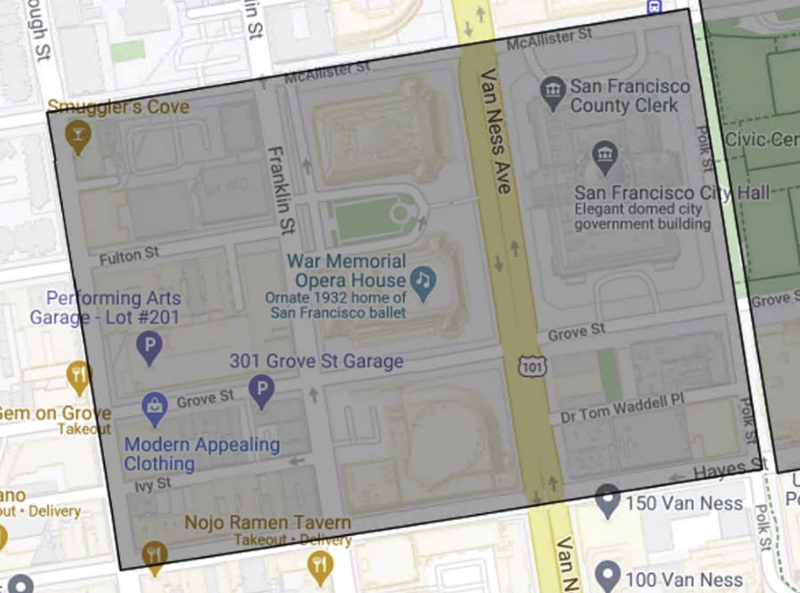
The Rent Board operates a total of 3 Security Cameras at the following locations:
- 25 Van Ness Avenue, Suite 320, San Francisco, CA
| Incident Category | Number of SFPD Incidents | Percent |
Arson | 1 | 0.006098 |
Assault | 7 | 0.042683 |
Burglary | 10 | 0.060976 |
Disorderly Conduct | 1 | 0.006098 |
Drug Offense | 1 | 0.006098 |
Embezzlement | 1 | 0.006098 |
Fraud | 7 | 0.042683 |
Larceny Theft | 91 | 0.554878 |
Lost Property | 1 | 0.006098 |
Malicious Mischief | 12 | 0.073171 |
Missing Person | 2 | 0.012195 |
Motor Vehicle Theft | 5 | 0.030488 |
Non-Criminal | 4 | 0.02439 |
Offenses Against the Family and Children | 4 | 0.02439 |
Other Miscellaneous | 6 | 0.036585 |
Recovered Vehicle | 2 | 0.012195 |
Robbery | 2 | 0.012195 |
Suspicious Occ | 3 | 0.018293 |
Traffic Violation Arrest | 2 | 0.012195 |
Warrant | 2 | 0.012195 |
Information on crime statistics in 2020 in this area is provided by the San Francisco Police Department. Statistics are taken from a 1-block radius around the location of cameras. All information is obtained through the San Francisco Open Data Portal: https://datasf.org/opendata/
In addition, the department maintains an internal incident log which is available on request.