news
Artist Alicia Escott Explores the Impacts of Concrete for the Culmination of Their Research at San Francisco Environment Department
Arts CommissionSan Francisco-based artist and environmentalist Alicia Escott invites community to engage with concrete, a material we interact with every day, and how it impacts our environment
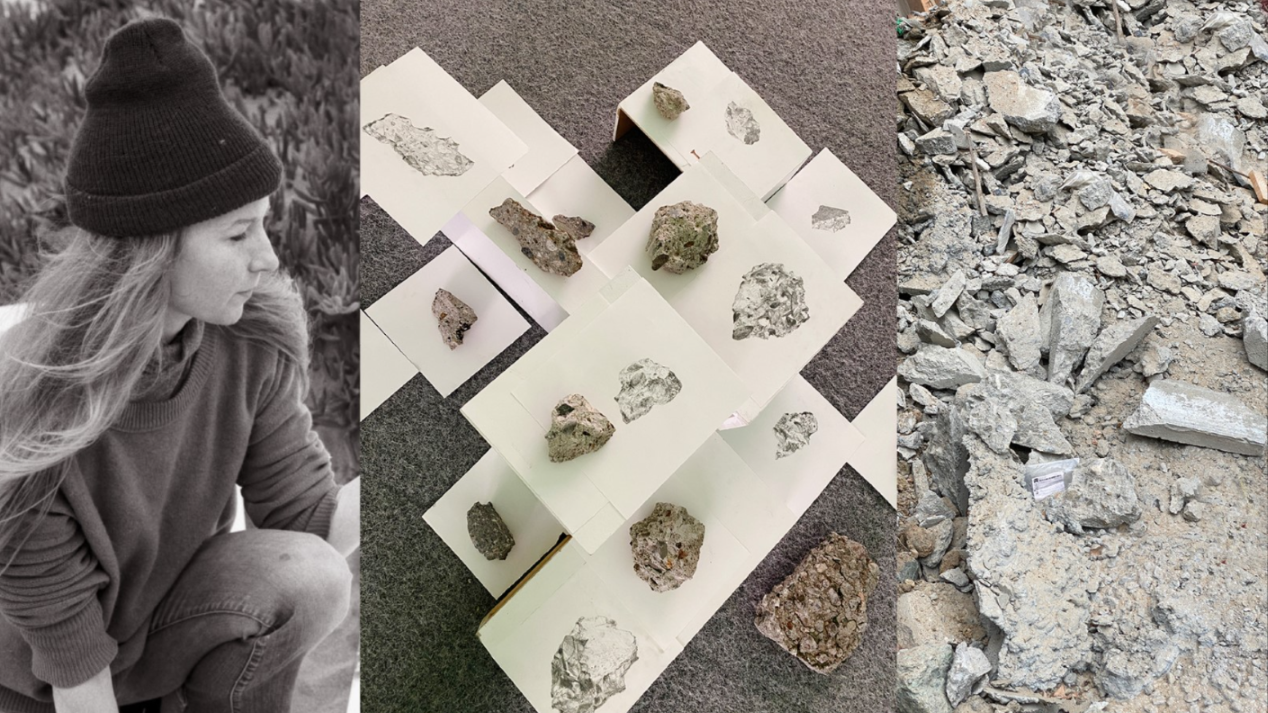
(Image: 2026 Artist in Residence Program artist Alicia Escott and her ongoing work Backfill. Image credit: David Boyll and the artist)
SAN FRANCISCO, November 5, 2026 — The San Francisco Arts Commission (SFAC), in partnership with the San Francisco Environment Department (SF Environment), is pleased to announce Etymology of a crack: a story of circularity, the culmination of San Francisco-based artist Alicia Escott’s research and production as the Artist-in-Residence at SF Environment.
Starting in February 2026, Escott spent 12 weeks in residence at SF Environment (SFE) conducting research around the department’s history, programs, services, and inner workings. Over the course of the residency, the artist was able to explore various topics such as waste disposal of increasingly complex consumer goods, food waste recovery efforts, compost impurities, efforts for circular recycling of buildings, and more. While Escott was embedded at SFE, the department released their updated Climate Action Plan for carbon neutrality in 2040. “Witnessing [SFE’s] commitment to environmental justice and the people of San Francisco has been awe inspiring,” states Escott. “It has been incredible and rewarding seeing their commitment to a circular economy on scales large and small and the impact they have had on this city I call home.”
After meetings with department staff, program partners, and stakeholders, Escott became interested in concrete, a material we interact with every day in the city, and the impact this seemingly innocuous material has on our environment. A city the size of San Francisco demolishes about 500 tons of concrete every day. Globally it accounts for 8% of carbon emissions, and it is the second most consumed material on earth. In San Francisco, about 65% of the city is covered with concrete and other impervious surfaces. During her residency, Escott began asking just where concrete comes from.
Etymology of a Crack: a story of circularity is part of a new ongoing research and artistic project that explores the body’s relationship to concrete. Starting in October and through November and December, Escott will stage multiple workshops in various neighborhoods in San Francsico that ask participants to ground themselves and move and feel the material we stand on. On December 14, Escott and collaborator D. Mia Pixley will lead a restful and accessible, movement-based workshop. During this program, Escott will also exhibit new artwork informed by their experimentation with low carbon concrete and pervious concrete at the newly renovated Buchanan Street Mall. As part of the Recreation and Park Department’s major capital project at Buchanan Mall, City departments are collaboratively piloting the use of low-carbon concrete. Pervious concrete and other green infrastructure and native plants in habitat gardens also support the project’s sustainability goals. For Escott, these events are just the beginning of an ongoing research project and credits the SFAC Galleries and SFE residency program for planting the seed.
“Artists have a unique ability to help us see the world around us differently and find beauty in everyday objects and in unexpected places. Alicia Escott’s exploration of concrete as part of her residency work with SF Environment is a wonderful example of that,” said Matthew Goudeau, Executive Director of Arts and Culture. “Through the Arts Commission’s Artist-in-Residence program, we have been able to create opportunities for artists to engage directly with City departments, bring fresh perspectives to civic challenges, and spark meaningful conversations with the public.”
“This residency has been transformative to me as an artist and as a San Franciscan,” said Escott. “My project (and the deeply collaborative work of SFE at large) required interfacing with multiple City agencies including Public Works, The Bureau of Urban Forestry, and the Recreation and Parks Department. These collaborations gave me a better understanding of the people that keep our city running. Every city in the country should have an artist-in-residence program and I’m so grateful that San Francisco does. This partnership with SFAC Galleries, and their unwavering support for keeping artists and the arts in San Francisco has been instrumental in my staying in San Francisco. This is the type of program that truly and meaningfully supports San Francisco’s resiliency.”
The Artist-in-Residence program provides unique opportunities for artists to step into City Departments with unprecedented access to participate in and respond to City processes and impact. To date, SFAC’s Artist-in-Residence Program has connected 15 local artists within various City departments, including City Hall, SF Covid Command Center, SF Planning Department, SF Public Library, SF Recreation and Park Department, and now SF Environment. Funding for the Artist-in-Residence program, when opportunities to host artists are made available, are provided by the hosting organization.
“Artists help us understand complex challenges like climate change,” said Tyrone Jue, Director of the San Francisco Environment Department. “Alicia’s work invites us to see concrete in a new light and reflect on how the choices we make shape our cities and relationship to nature. Seeing the familiar differently is an important step toward imagining a different future together.”
EVENT DETAILS
Etymology of a Crack: a story of circularity
Programs and Workshops
These accessible and restorative meditations will ask just where we are when we stand on a city block. Leading participants though the deep-time process of ancient seashells and coral reefs being turned into cement and combined with stones and sand mined both locally and abroad for the production of a slab of city sidewalk; its life as a panel of our city and its demolition & crushing for recycling. Asking what is possible as we work towards a circular economy in dense urban environments? What does porousness look like in both infrastructure and culture, and what effect is this material that we are increasingly surrounded by having on our psyche and our world, offering alternatives and participants a space of rest amid a busy city.
Sunday, November 22, 2026, 12:00 – 1:00 p.m.
Great Highway Sunset Dunes by Ocean Beach, between Lawton and Kirkham Streets
Saturday, December 12, 2026, 9:00 a.m. - 12:00 p.m.
(Meditation will take place later during the volunteer program)
Divisadero Tree Planting in a sidewalk basin
Volunteer opportunity to participate in the last City Tree Planting of the year with a short mediation on concrete and welcoming the water with artist Alicia Escott
In partnership with Department of Public Works and Bureau of Urban Forestry
Monday, December 14, 2026, 11:30 a.m. – 1:00 p.m.
Buchanan Mall Ella Hill Hutch Community Center with guest collaborator Dr. Mia Pixley
In celebration of the San Francisco’s First Low Carbon Concrete Municipal Park Project
1050 McAllister Street
San Francisco, CA 94115
Check www.sf.gov/sfac-galleries for updated information.
2026 SFAC Artist-in-Residence Bio
Alicia Escott is an interdisciplinary artist based in the land we currently call San Francisco. She practices in solidarity with thinkers across fields undoing the construct of “nature” as a thing separated from us and our world. Informed by how we negotiate day-to-day realities amid an awareness of the overarching specter of climate-chaos, mass-extinction, and social and political unrest, her work makes space for the unspoken individual and collective experiences of loss, heartbreak, and grief. Escott approaches these issues with an interstitial practice encompassing writing, drawing, word-making, painting, photography, video, sculpture, social-practice, composting, seed-planting, and activism.
Escott has exhibited widely including at Telematic Media Arts, Berkeley Arts Center, the Headlands Center for the Arts, Yerba Buena Center for the Arts, The San Francisco Maritime Museum, The Berkley Art Museum, and Museum of Contemporary Art Santa Barbra among others. She is a founding member of 100 Days Action and half of the social practice project The Bureau of Linguistical Reality alongside her collaborator Heidi Quante.
###
About the Artist-in-Residence Program
Launched in September 2015, the Artist-in-Residence program is overseen by the San Francisco Arts Commission Galleries and is an ongoing program that seeks to build partnerships with a variety of City Departments in order to provide unique residency opportunities that result in strengthening the value of artists participating in the advancement of civic dialogue.
About the San Francisco Arts Commission
The San Francisco Arts Commission is the City agency that champions the arts as essential to daily life by investing in a vibrant arts community, enlivening the urban environment and shaping innovative cultural policy. Our programs include: Civic Art Collection, Civic Design Review, Community Investments, Film SF, Grants for the Arts, Public Art, SFAC Galleries, and Art Vendor Licensing. To learn more, visit sf.gov/artscommission
About SF Environment
Now in its 30th year, SF Environment is the City’s climate accountability, coordination, and equity engine, advancing climate protection to enhance quality of life for all San Franciscans. SF Environment is recognized worldwide for its environmental policies and programs, which center on reducing emissions, achieving zero waste, reducing toxic chemical hazards, advancing environmental justice, promoting sustainable transportation modes, expanding clean energy infrastructure, greening our built environment, and protecting our urban forest. To learn more, visit sfenvironment.org
Media Contact:
Coma Te
Director of Communications, San Francisco Arts Commission
Coma.Te@sfgov.org
San Francisco Environment Department
Joseph.piasecki@sfgov.org