Info Page
Severe storms
Severe storms can cause downed trees and power lines, flooding, and landslides in certain areas.
El Niño and the 2026–27 winter
You can help prevent flooding and keep yourself and your community safe by taking steps before, during and after a storm.
September 2026 outlook
The National Weather Service (NWS) says a very strong El Niño is highly likely this fall and winter. Its December 2026–February 2027 outlook favors wetter-than-normal conditions in Northern California. Prepare now for rain, flooding, strong winds and power outages.
El Niño is a climate pattern that can influence storm tracks. It is not a storm. Even a very strong El Niño does not guarantee the same impacts everywhere or tell us when individual storms will arrive, where they will hit or how severe they will be.
How quickly rain falls matters, not just the season’s total. A single storm can cause serious damage even if the winter ends with normal or below-normal rainfall. Prepare now and follow forecasts throughout the season.
NWS expects coastal flooding this winter. Higher ocean levels, high tides, storm surge and large waves can combine to worsen flooding along the coast and waterfront. Follow local forecasts and avoid flooded areas.
How the City prepares
The Department of Emergency Management (DEM) brings City departments together for National Weather Service briefings. San Francisco Public Utilities Commission (SFPUC) crews maintain sewer infrastructure year-round. During intense storms, SFPUC’s Stormwatch coordinates preparations and response with Public Works and DEM.
Heavy rainfall can still exceed the sewer system’s capacity. Preparing your household, property and neighborhood remains important.
Check forecasts and warnings at weather.gov/mtr.
Sign up for AlertSF to receive important updates before, during and after emergencies.
Text your ZIP Code to 888-777 or sign up at AlertSF.org.
Watch: A hazard is possible. Prepare and follow forecast updates.
Warning: A hazard is happening or about to happen. Take protective action.
Advisory: Use caution and follow the precautions in the alert.
Before a storm
- Gather supplies and make sure you have what you need to stay indoors. Check your flashlights, batteries and essential supplies. Charge phones and other critical devices, and write down important contacts.
- Check on your neighbors. Talk with people on your block or in your building about what help they may need during a storm or power outage, especially older adults and people with disabilities or medical conditions.
- Clear drains safely before storms. Remove leaves and debris from sidewalks and the tops of storm drains when safe. Work from the sidewalk, wear gloves and use a rake or broom. Leave drain grates in place and don’t reach underneath them. Do not clear drains during storms or enter pooled water. Report blocked drains to 311.
- Join San Francisco’s Adopt a Drain and Rain Guardians programs to “adopt” one of the 25,000 storm drains (or catch basins) or rain gardens in our beautiful City and pledge to keep it free of debris and help minimize risk of flooding.
- If you live or work in an area that floods, Public Works will provide San Francisco residents and businesses up to ten free sandbags leading up to and during severe rainstorms.
- Sandbags can be retrieved at the Public Works operations yard, Marin Street/Kansas Street gate. Bring proof of address. Visit Public Works for hours and more information.
- Sandbags also are sold at many local hardware and home improvement stores.
- If you live in a flood-prone area, elevate belongings stored in garages or basements. Learn about flood protection resources and financial assistance at sfpuc.gov/rainreadysf.
- Standard homeowners’ insurance does not cover flood damage. Learn about coverage through the National Flood Insurance Program.
- When high winds are in the forecast, prevent damage to your property by trimming loose branches and parking away from trees. Close and latch any operable windows. Remove all loose or unsecured objects from balconies, roofs or other outside areas.
- Plan ahead for your business. Consider remote work or adjusted hours when severe weather makes travel dangerous.
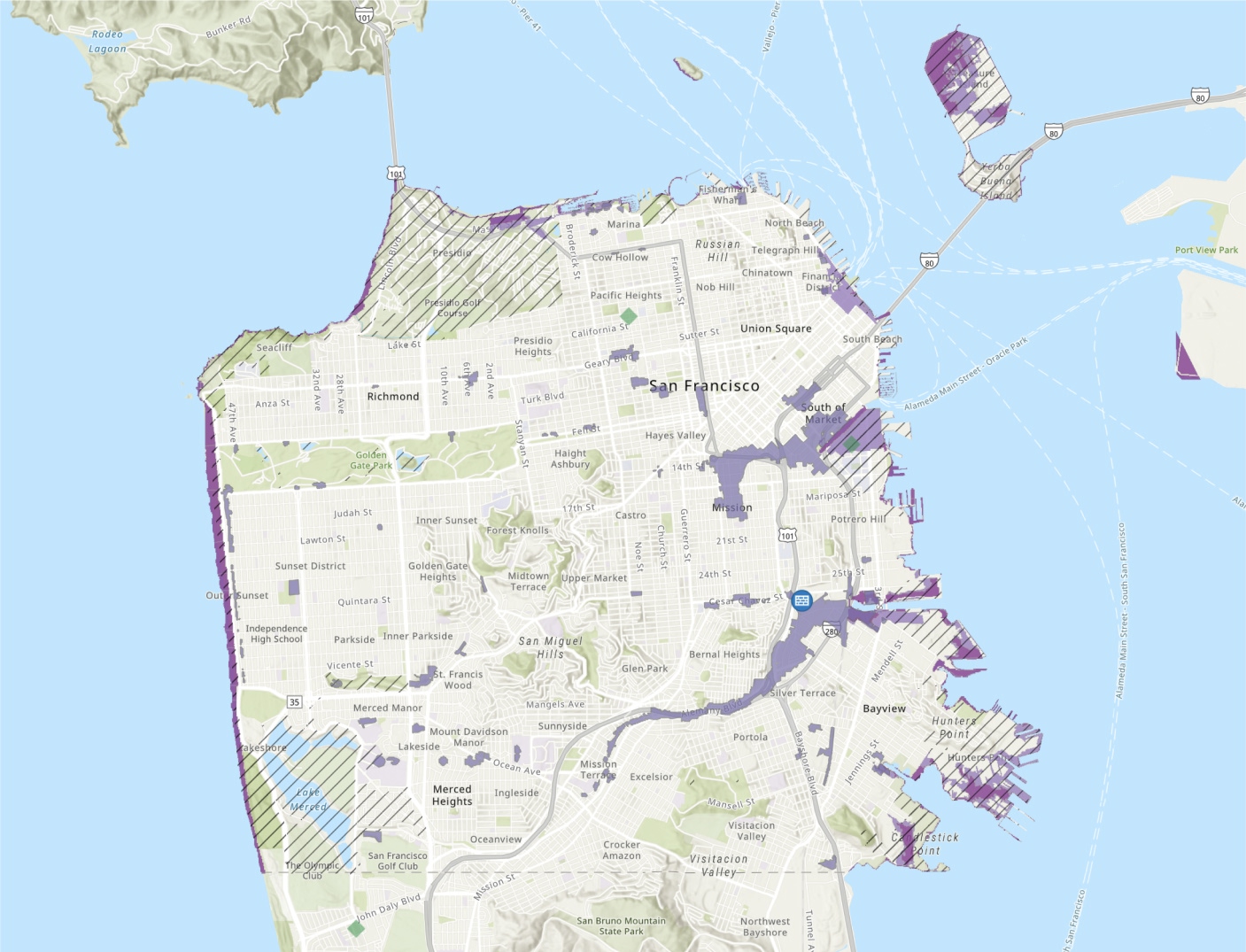
Storm and Flood Hazards Map
When a winter storm hits, stay updated on local conditions with our Storm and Flood Hazard Map.
This interactive map shows local flood risk zones identified by FEMA and the City, PG&E outage areas, sandbag pickup locations, and National Weather Service hazard products.
To explore additional resources, click the drop-down menu in the top-right corner of the map and select “layers” (the icon that looks like a stack of papers).
During a storm
- Avoid unnecessary travel during heavy rains and winds. If you have to be out, stay away from flooded areas and downed power lines, whether in a car or on foot. Never walk or drive through floodwater.
- Avoid flood-prone areas, like lower elevation streets, drainage channels, and underpasses where water can rise quickly.
- During high winds, falling trees and broken branches can become dangerous objects. Avoid walking near trees, especially in parks. Report downed limbs to 311.
- Use caution during power outages:
- Unplug electronics and turn off appliances to prevent damage from power surges.
- Leave one light on to signal when power is restored.
- Use flashlights instead of candles to prevent fires. Do not touch electrical equipment if you are wet or standing in water.
- Call, text or visit neighbors. Older adults, especially those who live alone, and those with disabilities or medical conditions are most at risk during emergencies and disasters.
- Report non-life-threatening storm-related issues such as clogged catch basins, residential or street flooding, sewer backups, or wastewater odors to 311 online at sf311.org, on the 311 mobile app for Android and iPhone, or by calling 3-1-1.
- Call 9-1-1 for life-threatening emergencies.
After a storm
- Check your home or business for flood damage and contact your insurance provider or landlord.
- If flooding entered your property through plumbing or the public right-of-way, you may qualify for a Floodwater Grant of up to $100,000 for flood protection projects for eligible residential and commercial property owners.
- If you smell gas or suspect a gas leak, leave immediately and call 9-1-1. Then call PG&E at (800) 743-5000.
- Safely handle food after power outages
- Leave refrigerator and freezer doors shut. An unopened refrigerator protects food for up to four hours during an outage.
- Food in a closed freezer stays safe for approximately 48 hours if it is full, or 24 hours if half full.
- After four hours without power, throw away refrigerated perishables such as meat, milk, eggs and leftovers unless ice or another cold source has kept them at 40°F or colder. Do not use taste to judge safety.
- Visit OEWD's Food Safety for Businesses page for more tips on preparing your business for a power outage.
- Continue reporting clogged catch basins, street flooding, sewer backups or wastewater odors to 311 online at sf311.org, on the 311 mobile app for Android and iPhone, or by calling 3-1-1.
- Call, text or visit neighbors. Older adults, especially those who live alone, and those with disabilities or medical conditions are most at risk during emergencies and disasters.
Learn more
- Read the National Weather Service’s El Niño information and preparedness guide.
- Learn how to prepare and stay safe during flooding.
- Find out about how disasters and emergencies can affect San Francisco.
- Review the steps to get prepared for any emergency.
About

Brought to you by the San Francisco Department of Emergency Management (DEM). DEM manages San Francisco's everyday and not-so-everyday emergencies.
For more information and updates, follow the San Francisco Department of Emergency Management on Instagram, X, Nextdoor, Facebook and BlueSky
Request a short presentation on disaster preparedness from the Department of Emergency Management.