District 10 Sunnydale Family Summit Summary
Our Children Our Families InitiativeFamilies and community members gathered at the Hub (Sunnydale Ave Community Center) for the District 10 Sunnydale Family Summit on September 17 to share what they value about raising families and living in San Francisco, what is working, what is challenging, and what they hope for the future.
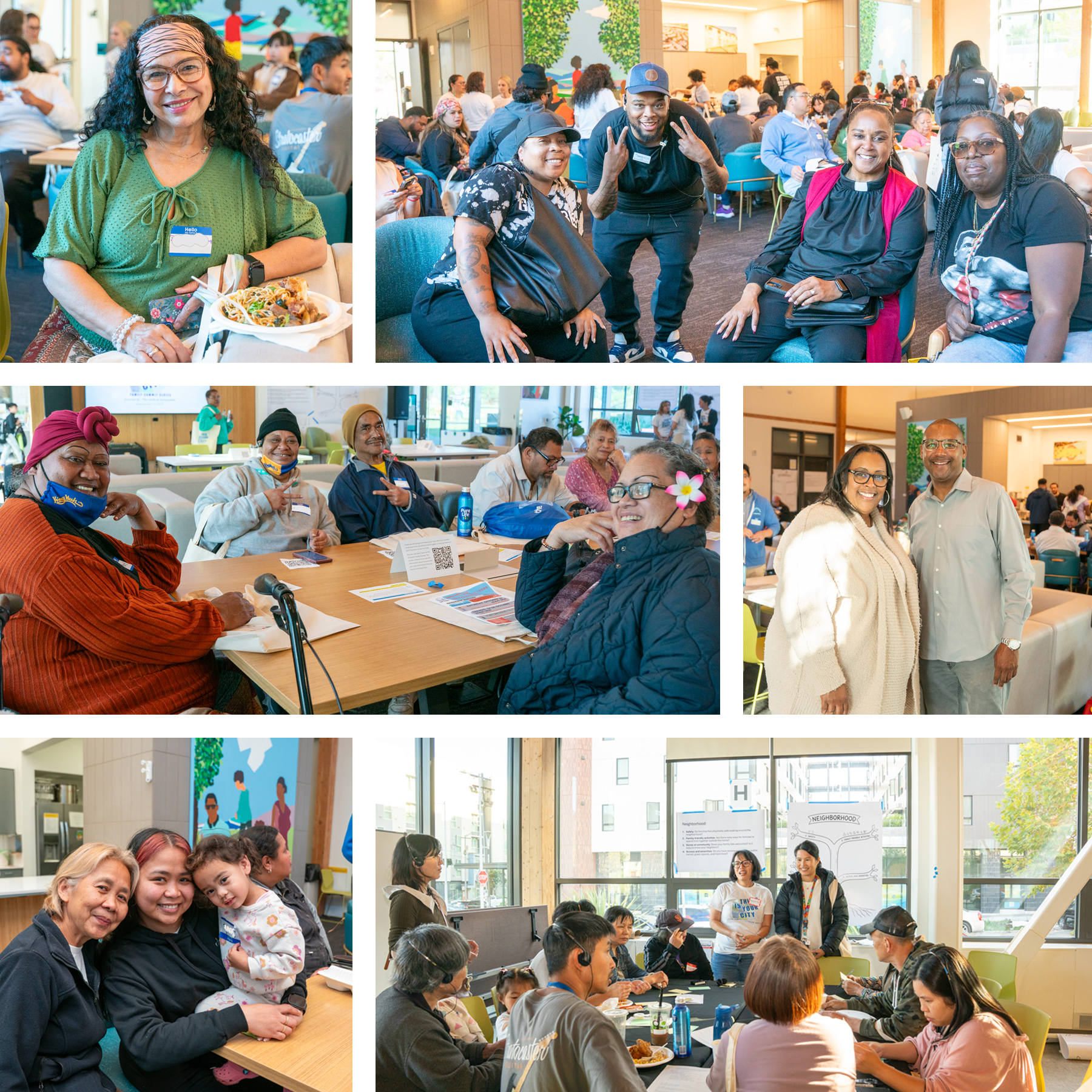
Key Takeaways of What We Heard
Participants explored the topics of Health, School, and Neighborhood through group activities, facilitated discussions and individual reflections.
- Community is a source of strength and belonging. Participants spoke about family roots, cultural diversity, strong neighbors and community organizations that help families feel connected. Sunnydale was specifically described as a place where neighbors are willing to help one another.
- Families value available resources, but access and awareness can be uneven. Participants identified childcare assistance, afterschool programs, youth employment, wellness services, WIC, CalFresh, libraries and community organizations as valuable supports. They also described challenges finding information, navigating eligibility, accessing services and getting to resources located outside their neighborhood.
- Children and young people need consistent support from early childhood through adulthood. Participants valued early education, afterschool programs, community-based organizations, school wellness services and youth employment opportunities while identifying gaps in school staffing, Special Education, mental health, college and career guidance, and opportunities that lead to employment.
- Transportation and neighborhood conditions affect families’ everyday lives. Participants raised concerns about getting children to and from school, transportation for seniors, housing conditions and the effects of neighborhood change. D10-specific health discussions also identified food access and transportation to grocery stores as challenges for families without cars.
- Participants want their voices to lead to action. Some participants questioned whether recommendations and survey responses reach decision-making spaces and expressed a desire to know how community input is being used. One group described “survey fatigue” and hoped their responses would be intentionally considered when funding community needs.
Thank you to the families and community members who joined us and generously shared their stories, experiences and hopes for SF. We are especially grateful for your honesty, your trust and your willingness to speak truth to power.
The OCOFI team is grateful to District 10 Supervisor Shamann Walton, DCYF Director Sherrice Dorsey-Smith, The Hub’s Anna Marie Fai, Andrea Stern and Danielle Washington, Clarity Social Research Group, and our colleagues from DCYF, HRC and the Mayor’s Office who helped make the District 10 Sunnydale Family Summit possible.
Special thanks to The Hub, Mercy Housing, the Boys and Girls Club of SF, Livable City, Little Skillet Catering and Creative Ideas Cafe for helping us create a welcoming space where families could participate, connect and be heard.
In Your Words: A deeper look at what participants shared
What Participants Value About San Francisco and Their Community
We heard deep appreciation for SF's diversity, cultural traditions, public resources, parks, transportation and opportunities for children and families. Many reflections were rooted specifically in community, family and belonging:
“Best thing is my community, raising my family within that community.”
“The diversity and resources we have in SF.”
“Accessing resources [plus I] love the connection to others, so many families [in this community] and having good neighbors—I am so grateful for that.”
“Community, no matter what color you are, you are welcome.”
“HOME.”
Family roots were particularly meaningful. One participant described growing up surrounded by extended family: “I enjoy the fact I was born and raised in the city. I was brought up around a lot of my family members and I enjoyed being raised with my extended family. Our house was full and I can say that I truly enjoyed being raised here.” Another spoke about growing up around cousins and the Samoan community as “a blessing to still be in city.” Participants described people “looking out for each other” and one participant summed up the community as “all the people—babies to the elders.”
We heard participants valued physical spaces that support connection. The HUB, Visitacion Valley Library, parks, recreation spaces, community centers, faith communities, night markets and neighborhood CBOs were among the places and organizations participants said help bring people together.
Strong Resources with Challenges in Access
Across the discussions, participants identified many resources that are working well. Early learning assistance, afterschool programs, community organizations, libraries, youth employment programs, wellness centers, WIC, CalFresh, free and low-cost clinics, public transportation and recreational opportunities were among those valued.
Participants valued organizations rooted in the neighborhood. R.O.C.K., SCDC and Boys & Girls Club were described as “3 strong CBOs in the community that support our youth” and as connections to the neighborhood. Participants also described wellness centers as helpful because multiple services could be accessed in one place.
At the same time, information and access emerged repeatedly as challenges: “Hard to push information to the public.” One Neighborhood small group discussion described a divide between people connected to community organizations and residents who may not know what is available: “Community workers might know but that doesn’t mean families, elders are aware or know how to gain access.”
Participants called for “one stop” resource centers, better in-person outreach, neighborhood calendars and text messages, and stronger coordination among organizations.
Children and Youth: Support Across Every Stage
Participants identified many strengths for children and young people including student-led clubs, school gardens, SFPL Summer Stride, Free Muni, parent groups, teachers, CBO partnerships and programs that help young people develop leadership. One participant described the possibilities created by Free Muni: “The world is almost endless when you can get to where you need to be.”
We heard participants describe gaps in school staffing and support, including Special Education vacancies, mental-health services, tutors, nurses and librarians, transportation, accessible afterschool care and long waits for assessments and services. One comment described Special Education teacher and therapist shortages as being “at crisis levels.”
As young people move toward adulthood, participants called for college counseling, test preparation, financial literacy, trade programs, internships, paid employment and life skills. “We need a Trade school in the neighborhood.” Participants particularly wanted additional support for young people who may not have family or financial resources to help them navigate college and employment.
Health, Food and Everyday Wellbeing
Participants valued green spaces, free school meals, recreation, affordable museums and parks, youth transportation and community health resources. They also described substantial challenges accessing healthy and affordable food in District 10.
“Equitable access to healthy, affordable foods/food desert” received multiple affirmations. Participants specifically described food deserts in D10 and Sunnydale, limited healthy options, transportation barriers to grocery stores and an “oversaturation of liquor stores.”
One parent described how standardized food assistance may not always match a family's actual needs: “We need access to food vouchers and/or stipends for food that families are allowed to get based on their needs and choose food items they use not only the foods preselected and given out—I have so much rice and I do not use/eat rice often.” Participants suggested more WIC markets, extending WIC eligibility, culturally appropriate school meals, healthy food pantries and better access to fresh food.
Mental health was another recurring concern. Participants valued grief support, youth programs and accessible community clinics, while describing stigma, long waitlists and insufficient school-based mental-health services. One participant described the difficulty when “a kid is sharing that they are ready for support but cannot get access.”
Participants also raised healthcare access for young adults, seniors and immigrants, including transportation, preventative care and understanding healthcare options after turning 18. Local relationships mattered: “Residents here need access to local providers who have relationships because people in this community like to know their providers.”
Transportation, Construction and Neighborhood Change
Transportation emerged as one of the clearest D10-specific themes. Participants described construction-related bus rerouting, longer walks to transit, parking loss and difficulty reaching schools, grocery stores, healthcare and neighborhood activities. One participant explained: “Construction messes up the bus routes. Because of the construction site, they changed the routes (bus), but they didn’t change them back. People have to walk very far. Used to be convenient to take my son to school, now it is inconvenient. For young people it’s easy, for older people it’s harder.”
Another discussion described the relocated bus stop as at least a ten-minute walk and raised particular concern for elders using canes and walkers. Participants discussed the need for transportation from the bottom to the top of the hill and suggested shuttles connecting residents to pharmacies, grocery stores and schools.
Parking was also a recurring concern. Participants described limited parking in a part of the city where families rely on cars, and connected the loss of parking to new development, construction and changes to neighborhood streets. One participant asked, “parking is being removed for bike lanes—more families drive than ride bikes out here so who made these decisions?” During the future-focused discussion, participants called for parking to be considered as new housing is built and questioned whether residential permits would actually help. One participant said: “We should just be able to pull up and park where we live, why is that so challenging?” while emphasizing a desire to keep parking free and accessible rather than adding more paperwork and processes.
Construction was also described as affecting community relationships. Participants said neighborhood events were not happening “like it used to be” and described a disconnect associated with construction. One comment said: “This neighborhood will have to re-establish community since so much has been stopped and delayed due to construction.”
Participants called for more consultation before decisions such as rerouting transit or changing neighborhood streets, clearer notification about construction and road closures, and better consideration of how neighborhood transportation, parking and development changes affect residents' daily lives.
Housing, Affordability and the Ability to Stay
Housing appeared across Neighborhood, Health and future-focused discussions. Participants raised high rents, habitability concerns, displacement, limited relocation options, housing for seniors and the need for affordable housing for local workers and families. When participants imagined SF ten years from now, their hopes included affordable housing, clearer pathways to homeownership and the ability for families and longtime communities to remain here. Comments included:
“More affordable for all families.”
“Keeping the Black community here.”
“A city where diversity is celebrated and protected, we fight against gentrification of communities so we can stay and keep the area affordable for families.”
Housing was also connected to health. Participants described mold and other habitability issues and identified stable housing and protection from significant rent increases as underlying concerns.
Being Heard: Communication, Follow-Through and Accountability
We heard one of the strongest themes in the D10 discussions was not simply having opportunities to provide feedback, but whether residents can see what happens after they participate. Some participants described serving on advisory boards and repeatedly sharing concerns: “Do our comments make it to the decisions making spaces? We do not know where this information is going. There is survey fatigue.”
Participants called for neighborhood liaisons who are known and trusted locally, a “two way street” built around “real relationships and updates,” and greater follow-through. One participant said: “Our lived experiences should always matter in decisions about our community.” Participants also called for regular project updates, community and accountability meetings, and “a system that informs community on decisions through the whole process.”
Looking Toward San Francisco’s Future
Participants imagined a SF where families can afford to remain, children grow up and contribute to their communities, elders and people with disabilities can move around their neighborhoods, healthy food is locally available, young people have pathways to jobs and education, and residents have meaningful roles in decisions affecting where they live.
“Our children grow up to make contributions to this community.”
“Teachers pay attention to all of our children and cultures.”
“The People are pretty dope, all the people—babies to the elders.”
Across the feedback, participants described a community rich in relationships, diversity, knowledge and existing resources, while also describing challenges accessing those resources and influencing decisions affecting everyday life. Their vision was not only about adding programs, but about preserving community, strengthening relationships, improving access and ensuring residents' lived experiences help shape the future of their neighborhood.
What Comes Next
All of the information collected at the Family Summits and through the Citywide Family Survey will be incorporated into the Citywide Community Needs Assessment being conducted by the Our Children, Our Families Initiative. The initiative is a new partnership between 13 city departments and the school district to improve services and results for SF’s children, youth, families and transitional aged young adults. Summaries will be posted after each summit and the full needs assessment will be published in June 2027.