
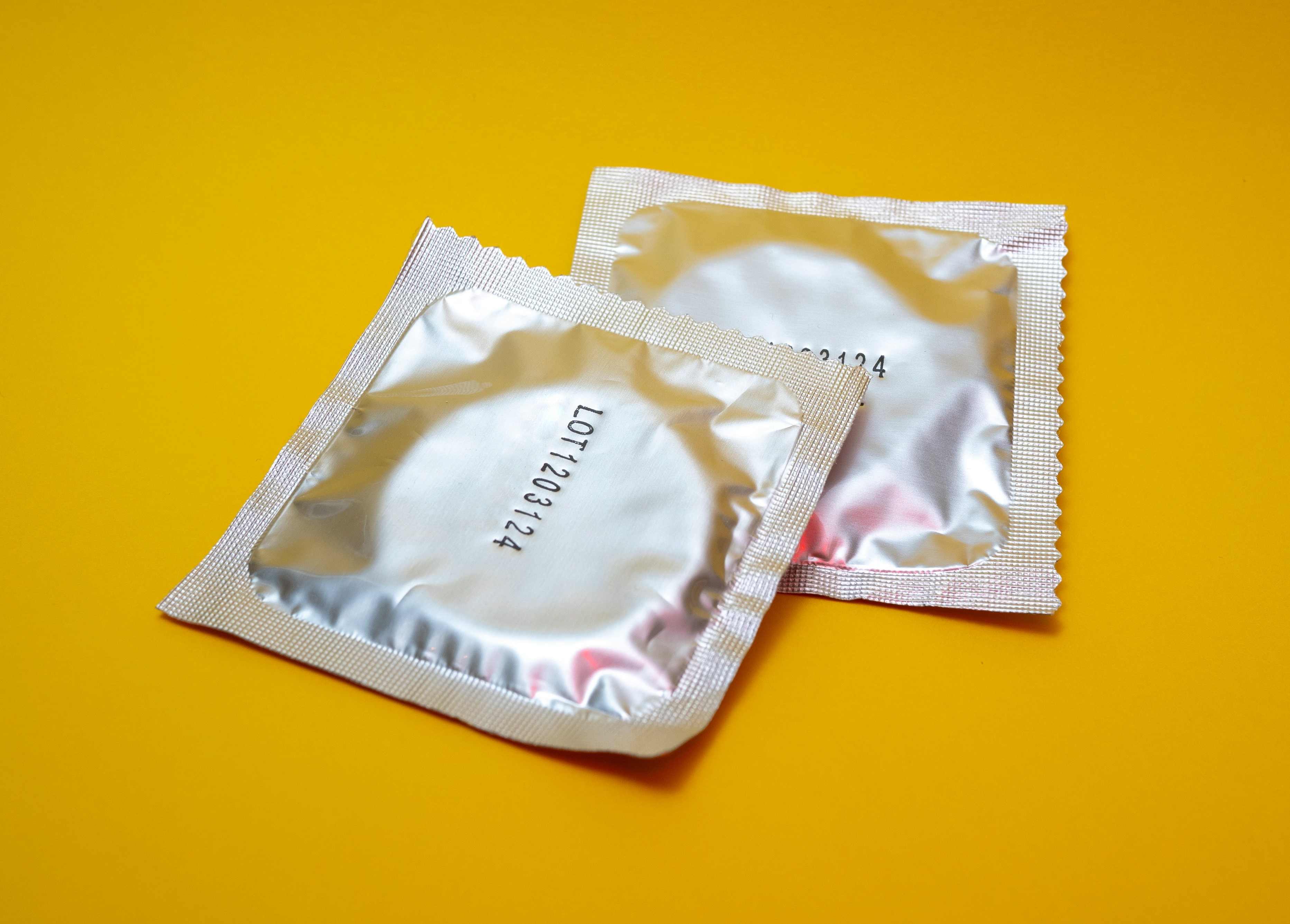
Condoms prevent STIs, HIV, and pregnancy
You can get free condoms during City Clinic visits.Types of condoms
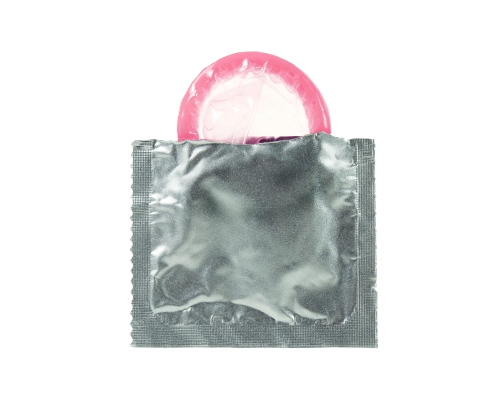
External condoms
- Worn on the penis
- Made by many brands
- Come in various sizes, colors, textures, and materials
- Sometimes called "male condoms"
- Available at City Clinic, other clinics, and in many stores.
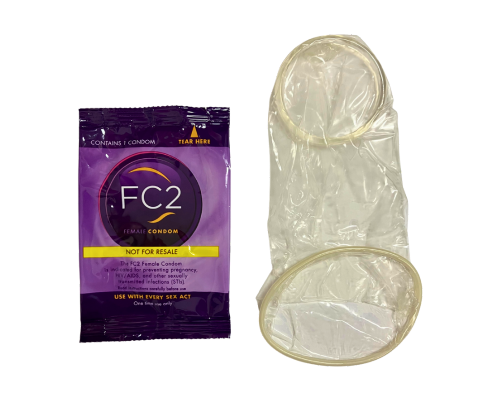
Internal condoms
- Worn in the vagina/front-hole or butt
- FC2 is the only brand that makes them, so they are sometimes called "FC2 condoms" or "FC2s".
- The FC2 is made of nitrile. You can use them even if you have latex allergies.
- Available at City Clinic, other clinics, online on the FC2 brand website, and by prescription at a pharmacy.
Images are not to scale
Internal condoms are usually bigger than external condoms.
Condoms work best when you use them correctly
For condoms to work best, you must use them correctly and use them the whole time you are having sex.
You can use them for oral, anal, and vaginal/front-hole sex.
Videos: How to use condoms correctly
Read: How to use condoms correctly
External condoms
How to use external condoms correctly:
- Use a fresh, new condom before any new genital contact and throughout the entire sex act, from start to finish.
- Check the expiration date before opening and do not use the condom if it is expired.
- Open the wrapper. Be careful not to nick or tear the condom with your fingernails or teeth when you do this.
- While some condoms are pre-lubricated, you may want to add more lube inside and outside the condom, and to your partner.
- If you have a foreskin, pull it back before putting the condom on.
- Put the condom on: hold the tip between your thumb and forefinger. Leaving a space at the head of the penis for semen, use your other hand to add a small amount of lube to the tip of the condom, then unroll it over the erect penis shaft all the way to the base of the penis.
- Smooth out any air bubbles—they can cause condoms to break.
- To remove the condom, hold it at the base of your penis and pull out of your partner's vagina or anus while your penis is still erect, making sure that semen doesn’t spill out. Roll the condom gently towards the penis head, remove it, and then throw it in the trash.
Throw the condom out if you accidentally put it on inside out. Reusing the side that touched the penis can possibly transmit an STI or cause pregnancy.
Storage
- Avoid storing the external condom in places where there could be heat, like in your pocket, in a wallet, or in a car.
Internal condoms
How to use internal condoms correctly:
- Use a fresh, new condom before any new genital contact and throughout the entire sex act, from start to finish.
- FC2s are pre-lubricated inside so rub the outside of the pouch to make sure the lube is spread evenly.
- Get into a comfortable position like putting one leg up on a chair, lying on your back with your knees up, or squatting.
- Hold the FC2 by the closed end, squeezing the inner ring between your thumb and forefinger.
- Gently and slowly insert the inner ring into the vagina or anal canal.
- Push into the FC2 with your index finger, further into the vagina or anal canal, making sure the outer ring is not twisted and lies right outside the vagina or anal canal.
- Guide the penis into the vaginal or anal canal so that the penis doesn’t unintentionally slide under the outer silicone ring.
- Stop if the penis slips outside of the FC2 during sex.
- To remove, squeeze and twist the outer ring to gently pull out the FC2, then throw it in the trash.
Tip: When using the FC2 for anal sex, some people find it helpful to remove the inner ring before inserting.
See an infographic showing the instructions with images:
Storage
- Avoid storing the internal condom in places where there could be heat, like in your pocket, in a wallet, or in a car.
Condoms prevent these STIs
Condoms work well against these STIs:
- Chlamydia
- Gonorrhea
- Hepatitis B
- Hepatitis C
- HIV
- Non-gonococcal urethritis (NGU)
- Trichomoniasis
Condoms also help prevent these STIs, but they may be less effective against them:
- Herpes
- HPV (warts)
- Mpox
- Syphilis
This is because these STIs can transmit through skin that is not always covered by a condom.
Choose the right type of external condom for you
Materials to choose from
Latex condoms
These are the most common type. Do not use lube containing any oil with latex condoms because it will cause the condom to break. This is because latex dissolves when it touches oil.
Polyurethane condoms
These are a good alternative for people allergic to latex. You can use lube that contains oil with polyurethane condoms. Polyurethane condoms are just as effective in protecting against STIs as latex condoms.
Polyisoprene condoms
These are a good alternative for people allergic to latex. Polyisoprene is a synthetic version of latex, made without the allergens in natural latex. This means it feels like latex, but it does not trigger latex allergy, and it does not have the smell of rubber that some people notice in latex.
Lambskin condoms do not prevent STIs or HIV
Lambskin condoms are made of lamb or sheep intestines. They do not protect against STIs, including HIV, and are not recommended by the FDA for this use.
Lambskin condoms only help protect against pregnancy.
Flavored condoms for oral sex
Flavored condoms prevent STIs from transmitting between a penis and throat. But the flavored coating can be harmful to vaginas/front-holes and anuses.

More ways to protect yourself from STIs and HIV
Protect yourself and your partners with condoms, vaccines, and preventive medications like PrEP, PEP, doxy-PEP, and HIV treatment as prevention.Find your protectionAbout
San Francisco City Clinic is a trusted source for sexual health services and information, known for our experienced professionals and our commitment to delivering compassionate, high-quality care for over 100 years.
Our mission is to improve our community’s sexual health by preventing, diagnosing, and treating sexually transmitted infections (STIs) and HIV, and preventing unintended pregnancy.
Find all City Clinic services and information
Contact information
Address
San Francisco, CA 94102
Monday, Wednesday, Friday
8:00 am to 4:00 pm
Tuesday
1:00 pm to 6:00 pm
Thursday
8:00 am to 11:00 am
1:00 pm to 4:00 pm
Walk-ins may end earlier for some services.
We are closed weekends and holidays.
Phone
General information
sfccpatientservices@sfdph.org