news
District 6 SOMA Family Summit Summary
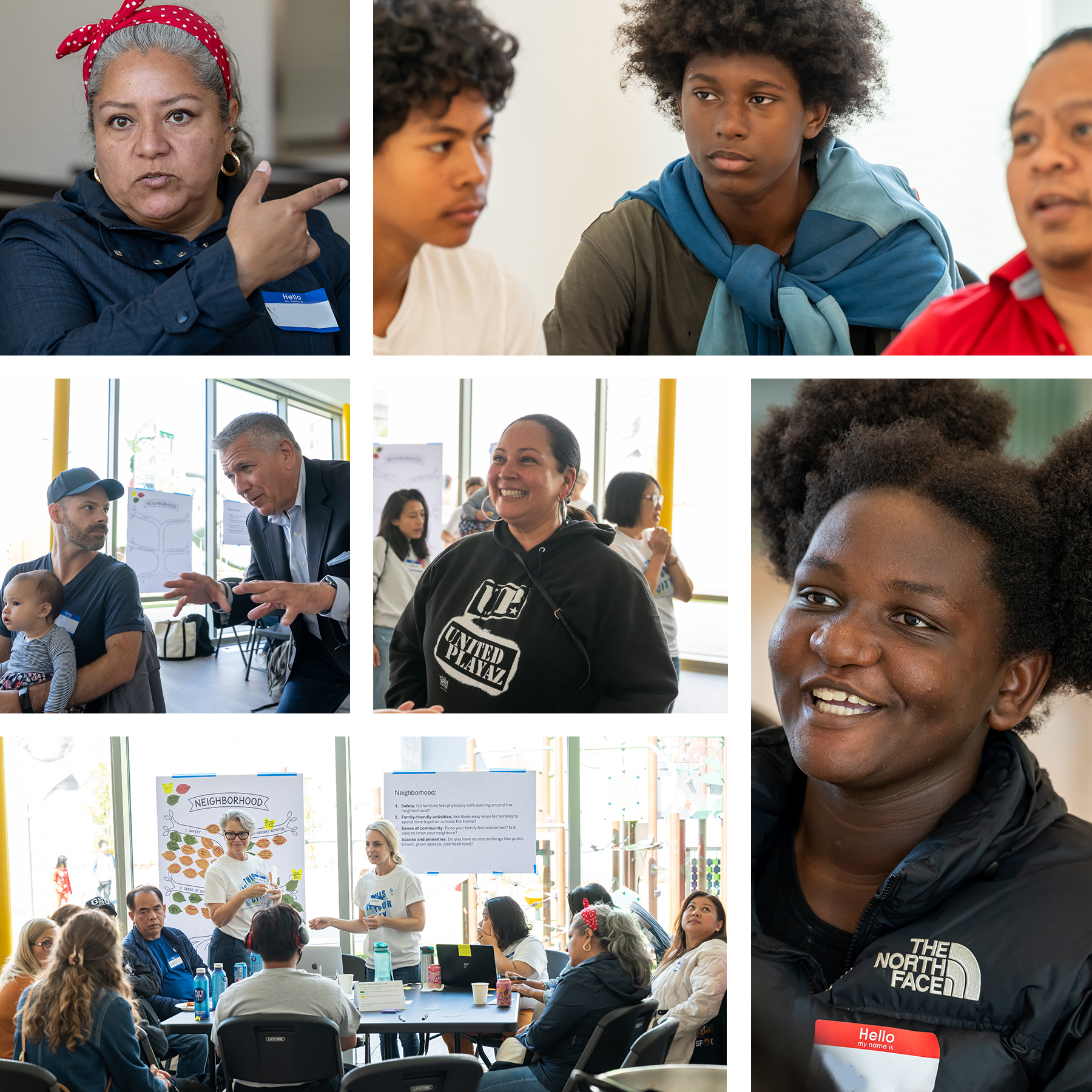
Our Children Our Families InitiativeFamilies and community members gathered at the Gene Friend Recreation Center for the District 6 South of Market (SOMA) Family Summit on September 19 to share what they value about raising families and living in San Francisco, what is working, what is challenging, and what they hope for the future.
Key Takeaways of What We Heard:
District 6 SOMA Family Summit participants explored the topics of Health, School, and Neighborhood through group activities, facilitated discussions and individual reflections.
- Community, culture and neighborhood institutions are important sources of strength. Participants valued SOMA’s cultural diversity, Filipino community and history, neighborhood organizations, parks, libraries, public transportation and community spaces. Gene Friend Recreation Center was repeatedly identified as an important new resource for children, youth and families.
- Participants want children and families to be able to move safely through their neighborhood. Participants raised concerns about dangerous driving, pedestrian safety, freeway entrances, drug use, human waste and other street conditions children encounter traveling to school and around the neighborhood. They also identified community ambassadors, safe passage programs, street cleaning and traffic enforcement as efforts that are helping.
- Children and young people need stronger support at school and beyond the classroom. Participants valued teachers, language pathways, afterschool and summer programs, youth employment and community-based organizations, while identifying concerns about bullying, school staffing, Special Education and IEP support, mental health, academic intervention, school facilities and pathways to college and employment.
- Resources exist, but knowing about and accessing them remains a challenge. Participants described strong community organizations, health services, food assistance and other supports, but said residents may not know what is available unless they are already connected. They called for more direct outreach, resource hubs, neighborhood information sharing and one-on-one assistance navigating services.
- Affordability and economic pressure affect families’ ability to stay, care for one another and plan for the future. Participants discussed the cost of housing, childcare, healthcare, food and transportation, including the experiences of working families who earn too much to qualify for some assistance but still struggle with SF’s cost of living. Their hopes included being able to afford to remain in the City and having more time to spend with their children.
Thank you to the families and community members who joined us and generously shared their stories, experiences and hopes for SF. We are especially grateful for your honesty, your trust and your willingness to speak truth to power.
The OCOFI team is grateful to District 6 Supervisor Matt Dorsey, Clarity Social Research Group, and our colleagues from DCYF, RPD and the Mayor’s Office who helped make the District 6 SOMA Family Summit possible. Special thanks to Gene Friend Rec Center, Mission Graduates, Livable City, Little Skillet Catering and Mestiza for helping us create a welcoming space where families could participate, connect and be heard.
In Your Words: A deeper look at what participants shared
What Participants Value About San Francisco and Their Community
Participants appreciated SF’s diversity, food, parks and nature, libraries, public transportation, free gathering spaces and community organizations that support families.
“Places to exist that don’t cost money – library and outdoor spaces.”
“Love diversity.”
“Accessibility, can go anywhere walking, busing, etc.”
For some participants, what they value about SF was rooted specifically in SOMA’s community, culture and history. Reflections included “our families and neighborhood,” “historic connections with SOMA Filipinas,” and “being here with community and seeing young people give input.” Participants valued language accessibility and collaboration among local community organizations.
Participants named Galing Bata, SOMCAN, United Playaz, West Bay and other neighborhood organizations as important community resources. Galing Bata was valued as a place where “children get to learn about their roots.” The City Map activity similarly identified places with strong cultural and community connections, including Manilatown, Bessie Carmichael School/Filipino Education Center, and Victoria Manalo Draves Park.
Gene Friend Recreation Center emerged repeatedly as a valued neighborhood investment. Participants described the new recreation center as a place for children to play, families to gather and residents to access recreation and community resources. One discussion described it simply, “The Gene Friend rec center is vital to this community.” Participants emphasized the need for more places where children can gather, play and simply be children.
Children and Youth: Support at School and Beyond the Classroom
Participants identified strengths including helpful teachers, language pathways and immersion programs, early learning scholarships, afterschool and summer programs and community-based organizations. Participants valued programs that provide young people with opportunities beyond the classroom, including MYEEP, Free Muni for youth, City internships and job fairs. Free City College was described as “like a second chance.”
At the same time, participants raised significant concerns about the school experience, particularly at Bessie Carmichael/FEC. They discussed bullying and fights, staff turnover, school safety, sanitation and facilities, academic support, Special Education and IEP services, mental health, literacy, and the need for additional teachers, paraprofessionals, social workers and nurses. One participant's request was simple: “Don’t take away our social worker.” Participants also described the effects of homelessness, community violence and poverty on students and families.
Arts and enrichment were also described as part of supporting students academically and emotionally. In a Dear SF postcard, one participant wrote: “Music, dance, and art help our students engage more in academics, especially with our students with trauma.” Participants called for continued arts funding, greater academic intervention, mental-health and trauma support, additional staffing and stronger support for students with IEPs. One message captured the attachment participants expressed toward the neighborhood’s schools and community organizations: “Please give more love to Big and Small Bessie!! And the CBOs that support our children and youth!”
Participants also focused on what happens as young people prepare for adulthood. They valued existing youth employment and education opportunities while calling for paid internships, true entry-level jobs, college preparation, trades and clearer pathways into employment. One young participant described getting a first job as “incredibly difficult” and said young people need an easier way to “get a foot in the door.” A Dear SF postcard made that need even more direct: “Could I get an internship please?”
Safety, Streets and the Everyday Experience of Children and Families
Safety emerged as one of the clearest D6-specific themes. Participants described concerns about dangerous driving, cars running lights, e-bikes and scooters on sidewalks, freeway entrances, shootings, drug use, human waste and other conditions encountered while walking with children or traveling to school. One participant described walking to preschool as “a high stress activity when going from point A to point B.” Another parent described changing routes with their seven-year-old to avoid unsafe conditions: “I have to go out of my way just to avoid areas at different points of the day.”
The experience of children walking around SOMA came up repeatedly across Neighborhood and Health discussions as well as in the Dear SF postcards. One discussion specifically described conditions between Bessie Middle School and Bessie Elementary, asking: “When is it going to change? Kids have to step over needles, poop.” One student wrote: “It’s become a big problem that kids cannot walk to school without running into human poop on the sidewalk. I say this because I’m a student too and even living close to my school, I run into people on the streets doing drugs right in front of me.”
Participants also identified community-led efforts that are helping. Safe passage and walking-school-bus programs, community ambassadors, street cleaning and red-light cameras were among the bright spots. United Playaz was specifically recognized for its morning safe-passage work with children and families. One participant described how “UP took it upon themselves” to be out weekday mornings to help ensure children and families are safe, describing the work as “a community effort” and emphasizing, “we’re part of the solutions.”
Ideas for improvement ranged from wider sidewalks, safer street design and greater traffic enforcement to more ambassadors, youth jobs and afterschool programs, housing and services for people experiencing homelessness, and mental-health responses that do not rely solely on arrest. One participant emphasized that these challenges require multiple approaches, describing them as “complex social issues” where “the solutions are themselves complex.” Participants expressed different perspectives about the appropriate role of law enforcement while sharing a common concern about the conditions children and families experience in their neighborhood.
Strong Resources with Challenges in Access
Participants identified many resources that are working well, including neighborhood CBOs, public transportation, libraries, parks, food assistance, community clinics, early learning and afterschool programs, and mental health and youth services. One individual reflection summed up the experience as “Lots of support for families – if you know where to look.”
That qualification — if you know where to look — appeared throughout the discussions. One participant explained: “We always have to ask in order to know something. It gets tiring.” Another observed that “to have community, you have to be in community,” describing how people who are not already connected to organizations may miss information about available services.
Participants suggested more direct and visible outreach through neighborhood flyers, posters, social media, door knocking, public information boards and meet-and-greets with service providers. They also envisioned Gene Friend as a possible neighborhood resource hub where residents could learn what is available and called for more one-on-one assistance for people who have difficulty navigating City websites and systems.
Health, Food and Mental Wellbeing
Participants valued food banks, school meals, community health centers, recreation and programs providing healthy food for young people. They described food banks and EBT as bright spots and appreciated fruits and vegetables in school meals. At the same time, they said “food is expensive” and noted that “a lot of people don’t know where these resources are.” Participants called for more grocery stores and affordable, nutritious options, as well as community gardens and programs that introduce children and families to gardening and healthy eating. As one participant explained, “Kids really love gardens.”
Mental health emerged across both adult and youth discussions. Participants valued community-based programs, crisis intervention teams and youth resources, while describing therapy costs, stigma, long waiting lists and insufficient school-based services. One parent shared, “Waiting lists are so long my kids were not able to get mental health services,” while another comment emphasized, “Kids need somebody to talk to and more therapists.” Participants also connected youth mental health to what children experience around them, including family financial stress, homelessness, drug use and violence. They called for more accessible therapy, grief support, wellness services and trusted adults for young people to talk with.
Community-based organizations were described as an important source of support. One participant shared how West Bay helped connect their daughters with healing support following a traumatic experience. United Playaz and West Bay were also named as places where young people and families could find mental-health support and community.
Participants also described healthcare as difficult to afford and navigate, even when services exist. They valued neighborhood health centers, home visits, interpreters and outreach programs, particularly for families who are new to the country. At the same time, participants said “healthcare is expensive, even with insurance” and described City websites as difficult to navigate. Their suggestions included more direct outreach and individualized assistance because, as one comment noted, “So many people are not computer savvy, they also need 1:1 support.”
Affordability and the Ability to Stay
Cost of living appeared across School, Neighborhood, Health and future-focused discussions. Participants talked about high rents, overcrowded housing, childcare costs, healthcare, food, transportation and the economic pressure on parents, teachers and community workers. One discussion described families living in overcrowded apartments, while another reflected on the pressure of working multiple jobs simply to make ends meet. Participants connected these pressures not only to whether families can remain in SF, but also to the time and stability they have to care for their children.
Participants also described a particular challenge for working households who may earn too much to qualify for assistance while still struggling to afford SF. One discussion described the middle class as a “forgotten population” with a participant explaining, “Working people don’t always have programs that fit our needs.” Another participant shared that their family could not afford to save for their daughter's college education but earned too much to qualify for assistance.
A Dear SF postcard illustrated how quickly a change in eligibility can affect a household. One participant wrote, “I was eligible for insurance, but the moment I had a $1 raise at work, I was not qualified anymore.” Because their employer did not provide health insurance, they described paying more than $700 each month and said, “I’m paycheck-to-paycheck.”
When participants imagined SF ten years from now, they described a city where families could afford to remain without working so much that they lose time together. Their vision included affordable food and healthcare, stable housing, living wages, more jobs and “peace of mind.” Participants imagined “not having to work so hard to afford living here; more down time” and simply “having time to spend with kids.”
One discussion captured the everyday tradeoff between earning enough to live in SF and having time together as a family: “Nighttime, pick them up, dinner, sleep – no bonding. [We need] More time to connect.” Ultimately, participants connected affordability to something fundamental: the ability to remain in their community. As one reflection put it, “[I want to be able to] Afford to live here, we would not have to move.”
Looking Toward San Francisco’s Future
Participants imagined cleaner and safer streets, more children playing outside, affordable healthcare and food, stable housing, more jobs and easier pathways into employment. They envisioned more trees, community gathering spaces, reliable public transportation, free places to work and play, and resources for people experiencing crises that connect them to help. One participant imagined a future with “more kids playing in the streets,” while another envisioned a City that is “more inclusive and friendly. People are more open and willing to be nice.”
Young people also imagined themselves as part of SF's future. One young participant envisioned becoming “a social worker helping children,” reflecting a desire not only for greater access to employment, but for opportunities to grow, contribute and give back to their community.
Their vision also centered on community. Participants wanted continued investment in CBOs, arts and cultural programs, intergenerational activities and neighborhood celebrations such as Barrio Fiesta. They imagined more spaces where people could come together, including “free places for people to work, play, gather like the library or community center.” Participants also envisioned neighbors pooling resources and supporting one another, alongside continued investment in the organizations and cultural traditions that already bring the community together.
The Dear SF postcards brought many of these hopes together. One participant wrote: “We have a rich culture and our community is so great but there are factors that make it hard to live and work here.” Another envisioned “a city that supports its citizens through any stage of life” and “a city that listens to its citizens’ needs.” A different participant offered a simple expression of gratitude and possibility: “Dear San Francisco, thank you so much for giving me a chance to excel and be comfortable living in the city.”
Another asked the City to care for youth, families, seniors and longtime residents, concluding: “We made this city what it’s become and we matter too.”
Across the discussions, participants described a future grounded in the strengths already present in their community: deep cultural roots, strong organizations and people committed to one another. Their hopes included safe and clean streets, strong schools, accessible resources, affordable living, opportunities for young people and places where families and neighbors can spend time together. Their feedback reflected a desire not only for additional services, but for the people, organizations and cultural traditions already sustaining SOMA to be recognized, supported and able to remain.
What Comes Next
All of the information collected at the Family Summits and through the Citywide Family Survey will be incorporated into the Citywide Community Needs Assessment being conducted by the Our Children, Our Families Initiative. The initiative is a new partnership between 13 city departments and the school district to improve services and results for SF’s children, youth, families and transitional aged young adults. Summaries will be posted after each summit and the full needs assessment will be published in June 2027.