District 5 Fillmore Family Summit
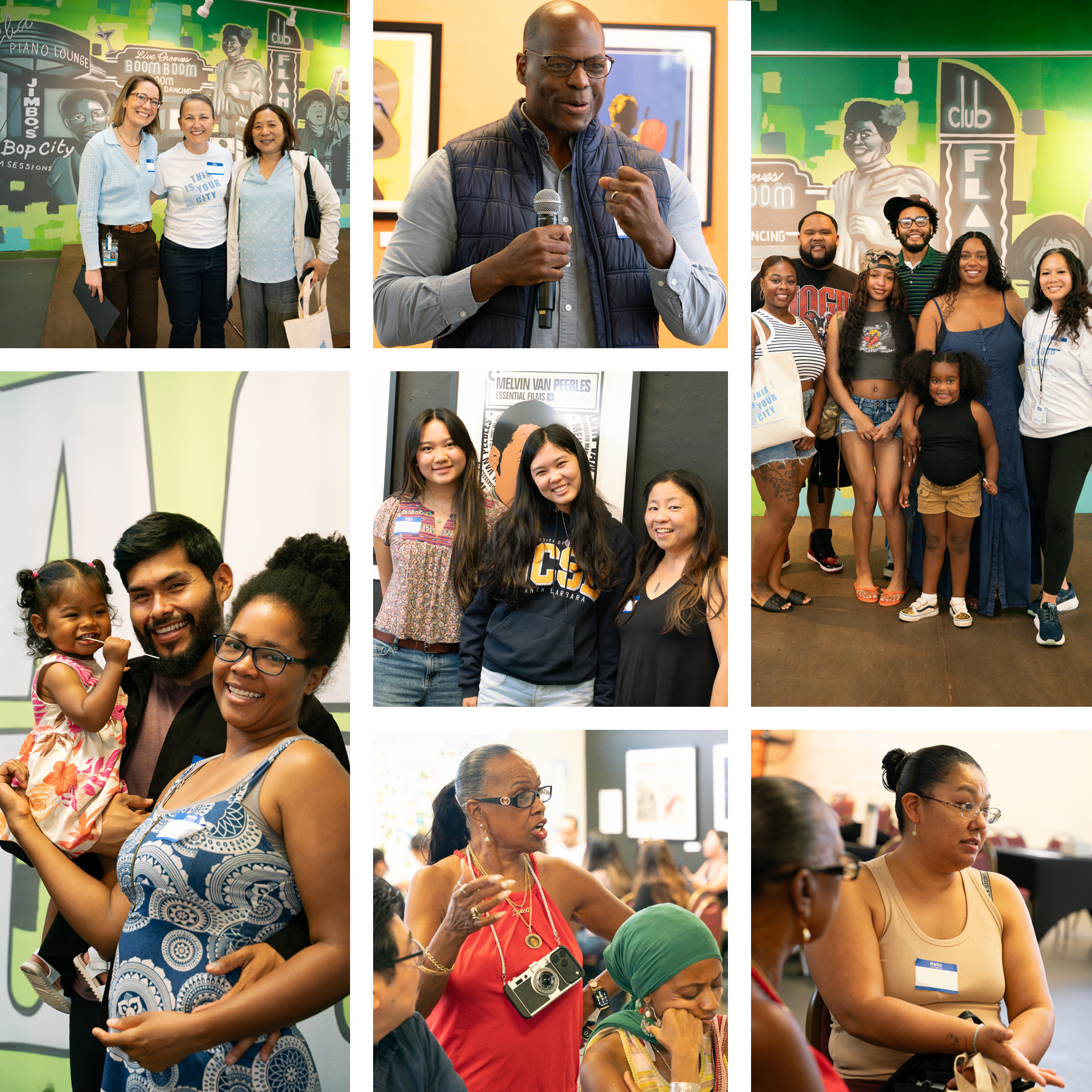
Our Children Our Families InitiativeFamilies and community members gathered at the African American Arts and Culture Complex for the District 5 Fillmore Family Summit to share what they value about raising families and living in San Francisco, what is working, what is challenging, and what they hope for the future.
Key Takeaways of What We Heard:
District 5 Fillmore Family Summit participants explored the topics of Health, School, and Neighborhood through group activities, facilitated discussions and individual reflections.
- Community history, cultural identity and neighborhood organizations are sources of pride and belonging. Participants celebrated the Fillmore’s rich history, multicultural events, youth leadership and organizations that connect generations, while worrying about the loss of longstanding Black community institutions and neighborhood culture.
- Families value early education and youth programs but face gaps in affordability, access and school experience. Participants appreciated early learning scholarships, dedicated teachers, recreation programs and college-credit opportunities, while raising concerns about school conditions, inequity, summer registration and support for working families.
- Mental health depends on trusted relationships, continuity and community-based care. Participants valued neighborhood providers, family resource organizations and peer connections but called for more school-based mental health support, trauma-informed practices, easier access and stable funding for frontline organizations.
- Public spaces and transportation create opportunity when they are safe, clean and accessible. Participants appreciated parks, community events and free Muni for youth, but described dirty or inaccessible public restrooms, unleashed dogs, school-area traffic concerns and crowded buses.
- Affordability and accountability shape whether residents and community organizations can stay and thrive. Participants described housing and everyday costs, nonprofit funding pressures and concerns about decisions made without meaningful community input. They wanted transparent investments, stronger pathways to education and work, and follow-through on what the City hears.
Thank you to the families and community members who joined us and generously shared their stories, experiences and hopes for SF. We are especially grateful for your honesty, your trust and your willingness to speak truth to power.
The OCOFI team is grateful to District 5 Supervisor Chief of Staff Sam Logan, Agency for Human Rights Director Mawuli Tugbenyoh, Clarity Social Research Group, and our colleagues from DCYF, SFUSD, DEC, SFPL who helped make the District 5 Fillmore Family Summit possible. Special thanks to African American Arts and Culture Complex, Booker T. Washington Community Service Center, Livable City, Little Skillet Catering and Minnie Bell's Soul Movement for helping us create a welcoming space where families could participate, connect and be heard.
In Your Words: A deeper look at what participants shared
What Participants Value About San Francisco and the Fillmore
Participants described San Francisco as a city of distinctive neighborhoods, cultural traditions and people who make community possible. They valued its natural beauty, public transportation, local food and small businesses, and the ability to encounter different cultures within a short distance. The Cherry Blossom Festival, neighborhood street fairs, cultural districts and community gatherings were cited as places where families connect and young people learn about the city around them. Several spoke with affection about the Fillmore’s history and the role of its community institutions.
For some, San Francisco was inseparable from their identity. One participant captured the sentiment, “San Francisco made me a fighter.” Another participant described the city as a place where people and organizations uplift one another. Participants appreciated opportunities to contribute to the culture they grew up with, not only attend events as spectators. “SF is home, I can't see being anywhere else.”
Youth programs and community-based organizations were especially valued. Participants described Japantown Youth Leaders as a way for young people from different neighborhoods and school systems to meet, develop leadership and participate in civic life. Others pointed to community benefit districts, ambassadors and intergenerational organizations that help residents find support and keep neighborhood connections strong.
Early Learning, Schools and Opportunities Beyond the Classroom
Participants recognized important strengths in early childhood education. Early Learning Scholarships helped some families manage substantial preschool costs, and participants praised the quality of local early care providers. At the same time, families working nontraditional or overnight shifts described difficulty finding care that matches their schedules. Suggestions included free parking for early educators and continued financial support as children move from preschool into afterschool programs.
School experiences varied. Participants appreciated committed teachers, school sports, Rosa Parks Elementary’s family engagement and opportunities for high school students to take City College classes. Others raised concerns about poorly maintained facilities, staffing and resources, counselor knowledge, advanced coursework and the need to engage students before they become disconnected from school. One parent described plumbing problems and safety concerns around Rosa Parks; another said a counselor had not provided accurate information about classes available outside a student’s school.
Participants also discussed inclusion and educational equity. One parent described how a child who is Black, autistic and has multiple food allergies faced overlapping barriers, including isolation when adults did not consistently enforce safety precautions. A participant-written postcard urged the City to ensure that children with allergies and neurodivergent children can participate safely in school, youth programs and community events. Participants also questioned racial diversity at Lowell High School and differences between public and private school experiences.
After school and summer programs were appreciated but difficult to secure. Families described highly competitive registration for Recreation and Park activities, including swimming, camps and Randall Museum programs. They proposed more affordable slots, vouchers, small-group camps for children who prefer smaller settings and more accessible enrichment. Other ideas included restoring district-funded puberty education, expanding GATE opportunities, introducing responsible AI literacy for students and teachers, and providing stronger college counseling, driver education and pathways to paid work.
School schedules and transportation also shaped participation. Youth described late school dismissal as a barrier to reaching afterschool programs before dark and asked for more consultation before schedule changes. Some suggested staggered dismissal times and additional transit service around schools.
Youth Mental Health, Family Wellness and Trusted Community Care
Participants valued existing supports, including Safe & Sound, neighborhood family wellness services, Booker T. Washington Community Service Center resources, the Zen Center’s mindfulness and music activities, and other community-based providers. One participant described Safe & Sound as having helped during a difficult time. Participants emphasized empathy, nonjudgmental care, family resilience and providers who meet people where they are.
Access to mental health support was not only about whether a service exists. Participants described the frustration of having to rebuild trust when providers leave, difficulty finding the right provider and the need for clearer information about available resources. They wanted stronger outreach, mental health first aid training for community members, school-based support, social-emotional learning and services that are trauma-informed and culturally responsive. Some urged the City to treat exposure to violence as a public health concern as well as a public safety issue.
Participants also called for more support for mothers and caregivers. One mother described the difficulty of raising children while feeling overlooked in public investments: “When you are a mom, you feel forgotten.” Others wanted longer parental leave, more childcare at public events and greater attention to the mental health and practical needs of families experiencing housing insecurity. The discussion also included a reminder that supporting young people and supporting their caregivers are connected priorities.
Several participants emphasized that trusted organizations are part of the mental health infrastructure. They called for stable funding for case management and therapy, administrative support, partnerships with institutions such as UCSF and the Bay Area Black Nurses Association, and incentives that help experienced staff stay. Others proposed a shared platform so nonprofits can identify one another’s services and coordinate care instead of leaving families to navigate disconnected systems.
Public Spaces, Neighborhood Safety and Family-Friendly Amenities
Parks and public spaces were widely appreciated, but participants described conditions that make them difficult for families to use. Public restrooms were a particularly concrete concern: participants said some were locked, dirty or unsafe, with sinks too high for small children and few suitable alternatives for families with toddlers. One notetaker recorded a parent’s account of seeing a child urinate outside City Hall because a clean, accessible restroom was unavailable. Suggestions included more frequent cleaning, built-in child-height step stools and youth employment programs to help maintain park facilities.
Participants also raised concerns about unleashed dogs in parks where young children play and called for fenced dog areas and consistent enforcement of leash rules. Around schools, participants wanted clearer school-zone signage, safer crossings and better traffic management. A parent described a car performing dangerous maneuvers near Rosa Parks during school drop-off. Others spoke about crowded buses, long waits and the challenge of an hour-long commute to school, even while valuing free Muni for youth. They proposed better service around dismissal times and consideration of free transit for seniors or additional riders.
The proposed changes at District 11’s Crocker Amazon Park surfaced, including among participants whose primary discussion was not about the Fillmore. One participant involved in the Keep Crocker Real effort said she had attended public meetings but did not feel heard.
Food Access, Affordability and the Ability to Remain in San Francisco
Participants appreciated existing food resources, including Booker T. Washington’s food distribution, but identified food access as a growing concern. Some described expanding food deserts in the Fillmore and Tenderloin, and suggested opportunities to grow, share and distribute fresh produce locally. Others emphasized that access to food, healthcare and family support cannot be separated from housing costs and the pressure on household budgets.
The cost of remaining in San Francisco was among the most personal topics raised. Participants spoke about rising rents, parking, groceries and the difficulty of securing housing even while working. One participant described having experienced homelessness as a young mother and still being unable to afford to settle in the city after finding employment. Others said teachers and young adults struggle to find housing near their jobs or families. One participant distinctly noted even with a decent job, “you’re not thriving, you’re surviving.”
Participants also connected affordability to the decline of San Francisco’s Black community and the loss of neighborhood institutions. One discussion reflected concern that the culture and energy that historically drew people to the Fillmore and other neighborhoods are slipping away. Participants wanted affordable housing options, realistic eligibility requirements, living-wage jobs and educational pathways that help young people build a future without leaving the communities that raised them. One participant shared, “An economic boom for the city needs to benefit everyone”
One participant wrote: “As a young woman living alone in this city, I need better opportunities and support for my education so I can build a better future for myself, I don’t want to spend my whole life just working to get by.” Participants also proposed financial literacy education, more mentorship, pathways into City College and CSU, career preparation and opportunities for young people to learn from other cities and bring those experiences home.
Community Organizations, Cultural Preservation and Youth Leadership
Community-based organizations were described as anchors of neighborhood life, particularly for families who may not feel well served by larger systems. Participants celebrated organizations that offer cultural programming, youth leadership, family wellness, recreation and practical help.
At the same time, some described smaller nonprofits, particularly Black-led organizations, as facing serious financial and administrative pressures. They worried that trusted organizations could disappear even when they remain well positioned to reach residents who need support.
Participants proposed capacity-building assistance, shared administrative tools, coordinated referrals and partnerships with local businesses and technology companies. One participant called for “a common platform where all the nonprofits can see the services of other non-profits so they can work together to serve the communities.” Others wanted technology companies to contribute funding, expertise and meaningful career opportunities for local youth, rather than growth that primarily increases the cost of living.
Young people at the Summit described the value of civic participation and meeting peers from different backgrounds. Participants appreciated youth commissions, community forums and programs that invite young people into neighborhood decision-making. They also raised questions about whose voices are represented, including the balance of public- and private-school students, and asked for outreach that reaches young people who do not already know about available opportunities.
The preservation of cultural identity was closely connected to these concerns. Participants described a desire for Black, Asian and Latino communities to retain gathering places, cultural organizations and opportunities to shape neighborhood change. They wanted community institutions to be strengthened rather than displaced and more pathways for longtime residents to participate in the city’s economic future.
Community Voice, Trust and Accountability
Participants valued the chance to have a genuine conversation at the Family Summit. Some contrasted the small-group format with experiences of speaking at public meetings and leaving uncertain whether anyone had listened. One participant said, “I don’t feel heard,” describing repeated efforts to raise concerns about public restrooms and park changes. Another worried that the report might soften serious challenges by surrounding them with too many positive observations. This feedback underscores the importance of accurately reporting both community strengths and concerns without minimizing either.
Participants wanted earlier consultation on school schedules, park investments and neighborhood changes, as well as clearer explanations of funding decisions. Suggestions included trusted neighborhood ambassadors, outreach through schools and community organizations, accessible event listings and ongoing communication after the Summit. One participant asked whether attendees would receive the findings and learn what happens next.
A participant offered both affection and urgency: “Dear SF we love you but we need you… focus up & we will prevail.” The message captures a theme across the conversations: participants care deeply about the city and want their knowledge and experiences to make a difference in how it is governed.
Looking Toward San Francisco’s Future
Participants envisioned a San Francisco where families can afford to stay, young people can access education and meaningful work, community organizations remain strong and neighborhood culture is protected. They wanted safe, welcoming parks and restrooms, reliable transportation, inclusive schools, mental health care rooted in trusted relationships and stronger support for mothers and caregivers.
The discussions also raised a question about who benefits when the city changes. Participants wanted investments in technology, housing, parks and public services to improve life for everyday San Franciscans, including those whose communities helped build the city. They called for meaningful involvement before decisions are made, transparency about tradeoffs and a clear account of what happens with the information they shared.
What Comes Next
All of the information collected at the Family Summits and through the Citywide Family Survey will be incorporated into the Citywide Community Needs Assessment being conducted by the Our Children, Our Families Initiative. The initiative is a new partnership between 13 city departments and the school district to improve services and results for SF’s children, youth, families and transitional aged young adults. Summaries will be posted after each summit and the full needs assessment will be published in June 2027.