press release
District 11 OMI Family Summit Summary
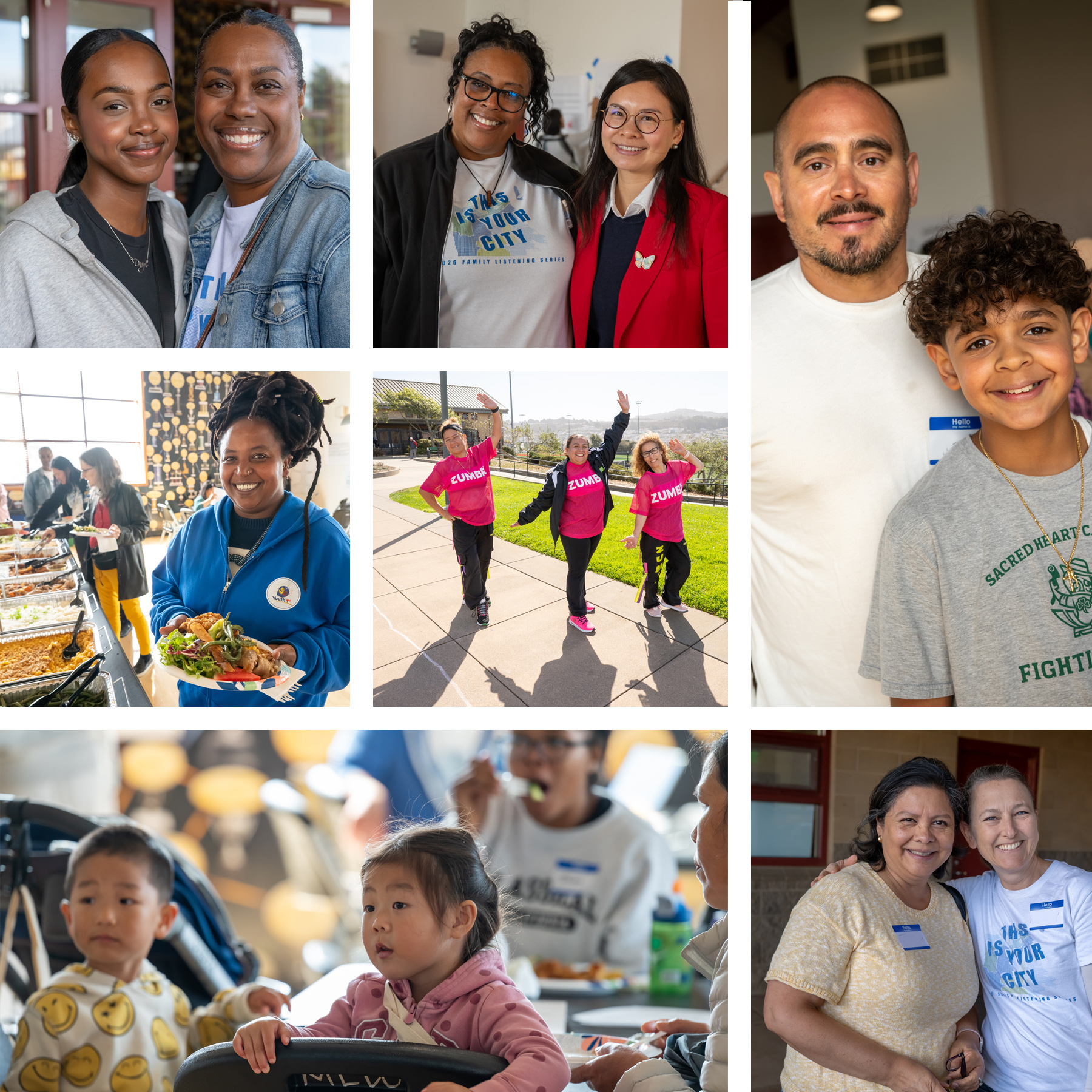
Our Children Our Families InitiativeFamilies and community members gathered at the Minnie and Lovie Ward Recreation Center for the District 11 OMI Family Summit to share what they value about raising families and living in San Francisco, what is working, what is challenging, and what they hope for the future.
Key Takeaways of What We Heard:
Participants explored the topics of Health, School, and Neighborhood through group activities, facilitated discussions and individual reflections.
- Parks, recreation and neighborhood relationships are important sources of community connection. Participants valued public spaces and programs that bring children, families and seniors together. They described Minnie and Lovie Ward Recreation Center as an important community space and wanted these neighborhood assets protected and strengthened.
- Children and young people need consistent, equitable support in and beyond school. Participants appreciated early childhood educators, affordable afterschool programs and local educational opportunities while raising concerns about school quality, special education, cultural responsiveness, mental health services, staffing and the loss of programs that support working families.
- Neighborhood safety includes crime, traffic conditions and safe passage. Participants shared differing experiences of safety and called for safer streets, stronger traffic enforcement and greater attention to neighborhood crime.
- Families value available resources, but affordability, language access and funding cuts create barriers. Participants identified challenges accessing affordable groceries, culturally familiar foods, healthcare, childcare and community programs. They also raised concerns about services being reduced or eliminated and the difficulty of finding information and support.
- Participants want community voices to inform decisions about neighborhood investments. Discussions about preserving green space, maintaining public recreation facilities, protecting essential services and interpreting neighborhood data reflected a desire for meaningful community input, transparent decisions and accountability for what happens after the Summit.
Thank you to the families and community members who joined us and generously shared their stories, experiences and hopes for SF. We are especially grateful for your honesty, your trust and your willingness to speak truth to power.
The OCOFI team is grateful to District 11 Supervisor Chyanne Chen, Department of Early Childhood Director Ingrid X. Mezquita, Clarity Social Research Group, and our colleagues from DCYF, RPD, LIB and the Mayor’s Office who helped make the District 11 OMI Family Summit possible. Special thanks to Minnie and Lovie Ward Rec Center, Youth 1st, Livable City, Little Skillet Catering and Do Eat Restaurant for helping us create a welcoming space where families could participate, connect and be heard.
In Your Words: A deeper look at what participants shared
What Participants Value About San Francisco and Their Community
Participants appreciated SF’s natural beauty, cultural diversity, public transportation and walkable neighborhoods. One shared, “I love my city and my neighborhood,” valuing access to shopping, transportation and everyday necessities. Minnie and Lovie Ward Recreation Center stood out as a gathering place for children and seniors, offering tai chi, ping pong, Chinese chess and sports. “I come here Saturdays for tai chi,” one participant shared. Residents also appreciated libraries, playgrounds and senior programs that sustain friendships across generations.
Children and Youth: Support at School and Beyond the Classroom
Participants valued early childhood education, dedicated teachers, smaller classrooms and hands-on learning. “Teachers are awesome! Administrators too!” one group shared. They also appreciated childcare choices, transitional kindergarten, preschool and enrichment programs that support working families.
Experiences varied across schools. Participants cited staff turnover, special education shortages, referral delays, communication gaps, school meals and unequal access to advanced coursework and multilingual programs. One recommendation was clear: “All schools should have baseline excellence, no matter the neighborhood.” They called for mentorship, specialized training and stronger accountability. Participants also questioned whether students feel understood and valued. One group raised concerns that “African American males are not thriving” in SFUSD and called for greater cultural responsiveness, stronger support for students with different learning needs and school environments where families see their cultures reflected.
Affordable afterschool and summer programs were essential to working families. “We had very low cost after school help, this is super important for working families,” one group noted. Participants worried about staffing, access and cuts that leave children unsupervised, and sought more activities beyond sports, including cooking, art and outdoor learning.
Older youth valued Free City College but described limited class availability, uneven career pathways and scarce job opportunities. They sought equitable dual enrollment, financial literacy and stronger connections between education and employment.
Youth Mental Health: Trusted Adults, Consistency and Care
Youth mental health emerged as a particularly meaningful part of the D11 conversations. Participants valued existing mental health resources, including Balboa High School's wellness center and youth clinic, but wanted consistent, accessible support throughout the district. They emphasized the importance of welcoming spaces and trusted relationships established before a crisis.
Participants shared painful experiences involving the deaths of young people and families in the community. Following the deaths of two students who attended Denman Middle School, participants described how mental health resources were brought into the school but were short-term and provided by staff unfamiliar to students. Another participant shared how a murder-suicide involving a family on Monterey Boulevard had personally affected her family, who had been friends with those who died. She questioned how parents can help their children understand and process such a tragedy. Although SFUSD provided mental health resources, she expressed concern that the professionals brought in were unfamiliar to the children and believed the response should have involved school social workers who already had established relationships with students. These experiences raised an important question: how comfortable are young people talking about grief with counselors they have never met?
Participants emphasized the importance of consistent school social workers, peer support, mental health education and trusted relationships established before a crisis. One participant expressed the value of peer relationships: “Programs like Peer Resources that trains youth to support peers in tragic situations and consistent social workers at schools are important for the mental health of our city. Kids will hear each other anyway, imagine if they had the tools to do it better.” Another connected the need for mental health services to the lasting effects of the pandemic: “Our children need more mental health services. They lost family members and socialization during COVID. Peer Resources absolutely worked in the past and have been cut. Restore Peer Resources.”
Participants also wanted safe, welcoming spaces outside school where young people could spend time together, build relationships and connect with trusted adults. One mother of three, who chose to raise her children in the city where she grew up, wrote: “I would love to see a safe space for teens to hang out, have fun, and even do positive things. Mental health is so important. When teens know where the trusted adults are, they can benefit.” Young people also expressed a desire for greater awareness of available services. One youth wrote: “I am a youth living in District 11 and I hope that there are more mental health resources for youth and that they are more talked about and people know about them.”
Together, these experiences underscored the importance of continuity, peer support, early intervention and trusted relationships before, during and after a crisis.
Neighborhood Safety, Crime and Moving Safely Through OMI
Neighborhood safety experiences differed. Some felt comfortable in neighborhood parks, while others described robberies, assaults, fights, illegal dumping and unsafe public spaces. “Don’t know who can harm you,” one participant said. Participants described incidents of violence in the neighborhood, including a robbery involving students on the 29 bus, and expressed concern about safety near transit stops and public spaces. Some wanted more visible police presence, particularly at night.
Traffic safety was another concern. Participants described speeding, hit-and-run incidents, drivers running stop signs and red lights, and vehicles cutting through residential streets. Specific concerns included O’Shaughnessy Boulevard, Capitol Avenue, Sheridan Street, Brotherhood Way and the Broad and Randolph corridor. Some participants felt navigation applications such as Waze and Google Maps were directing drivers onto smaller residential and school streets, creating additional risks for pedestrians and families. One participant described the conditions directly: “D11 has so much dumping. Hard to walk around safely especially on the Broad/Randolph corridor. Brotherhood way is not safe to cross– speeding, people running red lights.” Another called for specific improvements: “Need increased traffic calming and safety measures to protect pedestrians and cyclists. Physical barriers, daylighting, speed bumps. Slow street in OMI!”
Participants sought stronger enforcement, lighting, safer crossings, bicycle infrastructure and crossing guards, particularly near schools.
Parks, Recreation and Preserving Community Green Space
Participants appreciated nearby playgrounds, walking paths, dog parks, sports facilities and recreation programs that support physical health, social connection and family life. One participant described using the volleyball court at Merced Heights Playground as a place to meet friends, while others appreciated opportunities for daily exercise and family activities.
Minnie and Lovie Ward Recreation Center was particularly meaningful to participants. One discussion described how “This rec center saved this community,” recognizing its role as a gathering place for residents of different ages and backgrounds. Participants appreciated opportunities for tai chi, line dancing, Chinese chess, ping pong and other activities, including tai chi instruction in Cantonese. They wanted continued public access, additional classes and more evening open-gym hours, particularly from 7 to 9 p.m. twice a week. Seniors also described the need for accessible indoor gathering spaces during rainy or windy weather, while other participants suggested expanded activities such as karaoke, swimming and programs for children and families.
Proposed changes at Crocker Amazon Park raised concerns about replacing grass with artificial turf, removing mature trees and expanding ball fields. Participants questioned effects on shade, heat, habitat and the park’s character, and whether community perspectives had informed the plans. One participant connected student wellbeing and environmental preservation: “District 11 needs Crocker Amazon Park to stay natural. We need to listen to the community's thoughts and factor that in.” Another appeal captured the sentiment directly: “Keep Crocker real! Preserve green spaces for environment, mental, and physical health and safety.”
Participants supported park improvements but wanted investments that preserve natural green space and reflect neighborhood priorities through meaningful public input.
Food, Healthcare and Access to Everyday Resources
Participants connected family wellbeing to affordable food, accessible healthcare and the availability of essential services close to home. They valued food banks, neighborhood recreation programs and existing healthcare resources but identified gaps in grocery access, culturally familiar foods and affordable fresh produce. One participant described having to travel outside SF to purchase African groceries, while others noted that grocery stores were expensive or inconveniently located. Participants also observed that some neighborhoods have more liquor stores than places to purchase affordable, nutritious food.
Ideas included neighborhood grocery stores, a farmers market, food-waste partnerships and community food sharing. One participant described her mother’s reluctance to accept handouts, underscoring the need for affordable options that preserve dignity.
Healthcare access also varied. Participants described limited nearby clinics and pharmacies, language barriers and travel outside the neighborhood for care. One suggested a pharmacy within five minutes of home. In one small group, Chinese-speaking seniors described challenges finding healthcare providers, library staff and recreation center employees who speak their language. One participant shared a particularly difficult experience: “There’s not a lot of health centers we can go to. Sometimes get sent to Daly City, and interpretation isn’t always available, and can’t get the help/care that’s needed. I ask my doctor to only refer me to Chinese Hospital; it’s still expensive to go to the Chinese hospital.”
Participants wanted nearby, culturally responsive services and outreach in the languages residents speak.
Affordability, Funding Cuts and the Ability to Stay
Participants described economic pressures affecting working families, seniors, young people, and community organizations including rising rents, food costs, limited employment opportunities and reductions in essential services. Some older homeowners struggled to make ends meet on fixed incomes, while families faced increasing costs for childcare and afterschool programs. These challenges made it difficult for even longtime residents to remain in SF.
Participants raised concerns about funding cuts affecting TAYA youth employment supports, IT Bookman meal services, childcare and afterschool programs, and support for older adults. At José Ortega Elementary, they said some children went home unsupervised because families could not afford alternatives. Participants wanted earlier notice and clearer communication when programs face cuts.
One participant wrote: “Better and cheaper housing for working families.” Another called for greater equity in public investment: “Proper appropriation of funds. Equality. Put $$$ back into communities.” A third emphasized the City's responsibility to residents and future generations: “Do better by all your citizens. Put the ‘serve’ back in public servant. Our youth, our future, deserves it.”
Participants called for affordable housing, living-wage jobs, support for neighborhood organizations and transparent resource decisions so families and seniors can remain in their communities.
Community Belonging, Language and Staying Connected
Participants described OMI as an intergenerational community of longtime residents, families, seniors and immigrants from diverse cultural backgrounds. They valued neighborhood events, recreation programs and community organizations that bring people together. One participant shared, “There are places to hang out and activities for elderly and children.”
A newer Ethiopian immigrant described learning English from scratch, navigating unfamiliar systems and finding City College helpful while adjusting to life in the region. Chinese-speaking seniors described relying on tai chi instructors and friends for news when nearby public facilities lacked Chinese-speaking staff.
One discussion acknowledged, “People don’t trust each other,” while another urged, “Community should be coming together and can spend more time together.” Participants saw gatherings and trusted relationships as ways to build belonging. Ideas included community bulletin boards, shared gardens, food and skill exchanges, and more neighborhood events. Youth 1st was praised for family days and celebrations that invite the wider community.
Looking Toward San Francisco’s Future
Across the conversations, participants envisioned an OMI community where families can afford to stay, children and young people have consistent support, streets are safe, parks remain accessible and neighborhood resources reflect the diversity of the people who live there.
They wanted stronger schools, trusted mental health services, affordable childcare, fresh and culturally familiar food, safe transportation and public spaces that bring generations together. Participants also emphasized protecting existing neighborhood assets, including recreation centers, libraries, green spaces and community-based programs that residents rely on.
A recurring concern was whether City investments and funding decisions reflect families' everyday experiences. Participants wanted greater transparency about program reductions, meaningful input into neighborhood changes and a clearer understanding of how their feedback will be used. One participant questioned whether residents would hear back about the findings and what would happen next.
Despite these challenges, participants expressed pride in their neighborhoods and appreciation for the people and organizations that sustain them. They wanted to help shape San Francisco's future and have a meaningful voice in decisions affecting the communities they call home.
What Comes Next
All of the information collected at the Family Summits and through the Citywide Family Survey will be incorporated into the Citywide Community Needs Assessment being conducted by the Our Children, Our Families Initiative. The initiative is a new partnership between 13 city departments and the school district to improve services and results for SF’s children, youth, families and transitional aged young adults. Summaries will be posted after each summit and the full needs assessment will be published in June 2027.