Info Page
Electrical conduit and solar regulations for Shared Spaces
Learn how to install compliant electrical hookups and solar on your parklet.
A permit is required for electrical work:
Contact Department of Building Inspection (Electrical Inspection Division) to install compliant electrical hookups on your parklet.
Compliant electrical hookups on parklets
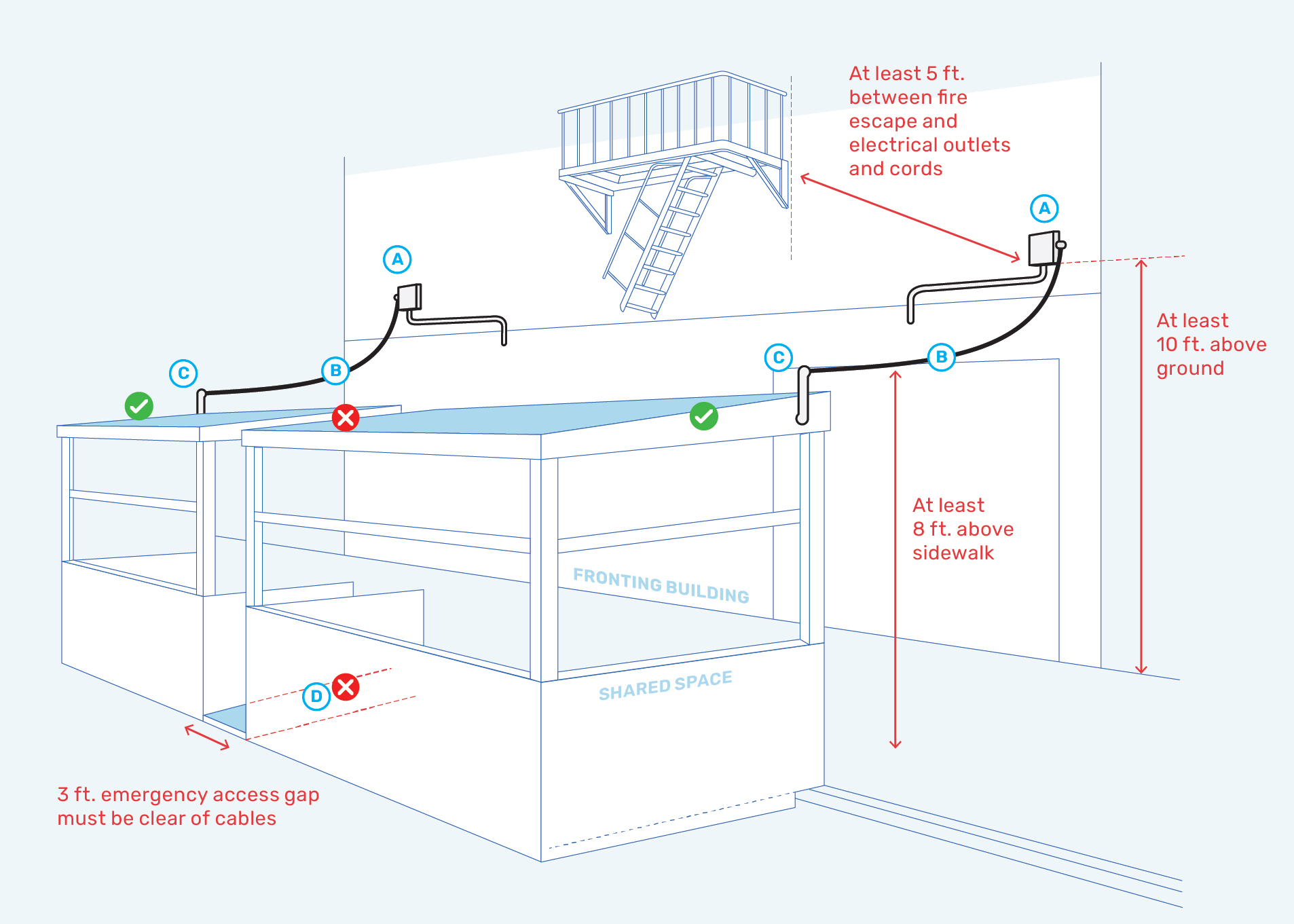
Before you install an electrical conduit on your parklet, make sure you review the diagram and understand the compliance requirements. Refer to the example images and descriptions below to ensure a safe and compliant installation.
Prohibited: Extension cord and power strip "daisy chaining" (connecting multiple cords or strips in series). This practice creates overheating risks, electrical short circuits, and fire hazards.
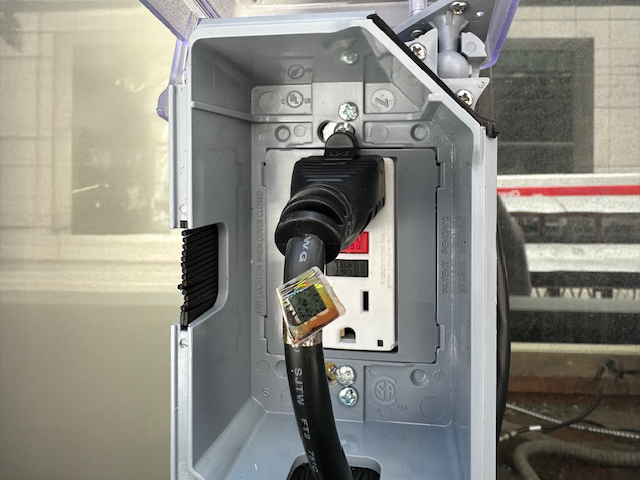
B. All Shared Spaces: Must use outdoor quick disconnect cables and cords. Quick disconnect cables and cords are specialized electrical connections that allow emergency responders to rapidly detach from shore power or charging stations when responding to calls.
May use standard electrical cords plugged directly into outlets. Extension cords are not permitted.
Support wires and anchors between the structure and building facade are allowed as long as they are quick release.
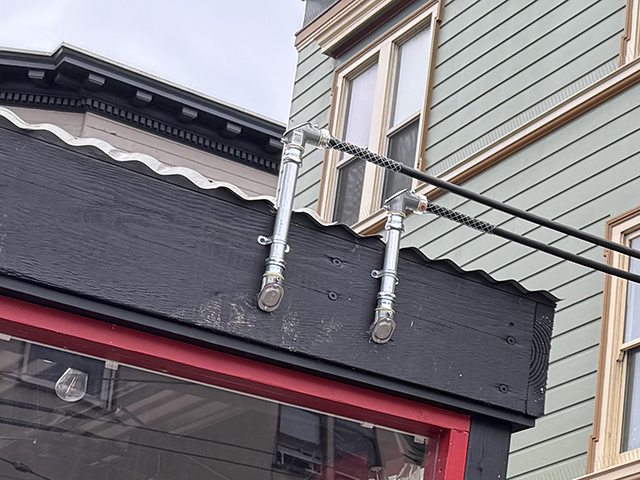
C. Cables may only run from the far ends of the shared space. No cords or cables can cross the 3-foot emergency access gap.
Connection limits: Maximum of two electrical connections between the structure and building facade, placed only from the far ends. This two-connection limit applies to all structures regardless of length. No conduit allowed between Shared Spaces structure and the building. Quick disconnect cables and cords are always required.
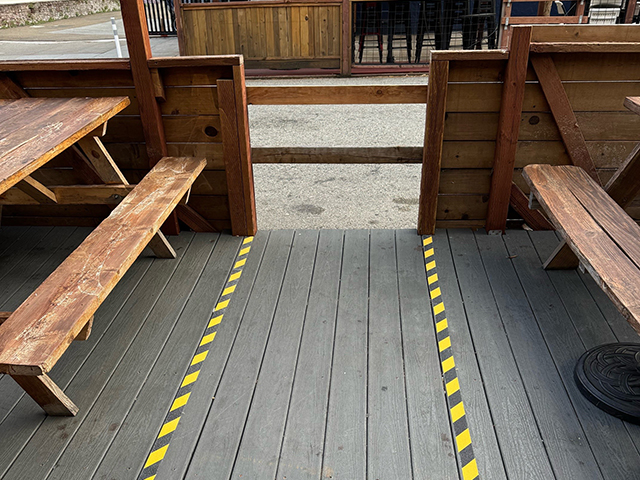
D. Electrical cords cannot be placed in the 3-foot setback areas on either side of the structure or the middle 3-foot gap (if applicable). These zones must remain completely clear from ground to sky—no obstructions including tables, chairs, gates, mopeds, or any other items that could impede emergency operations.
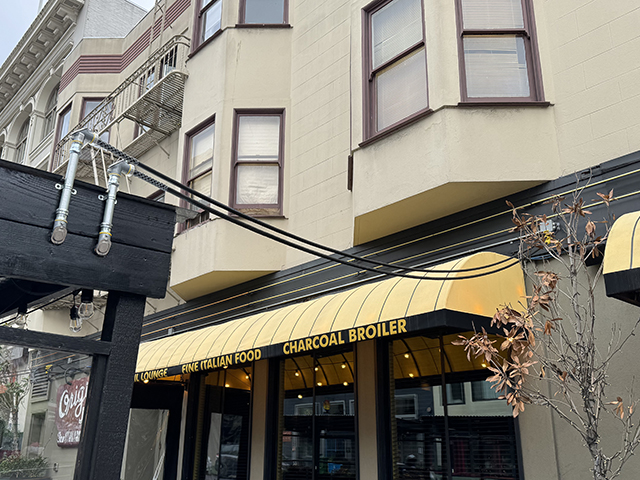
E. Electrical cords must be supported on their own, without any form of electrical support including fixed hard conduits, zip ties, eye bolts, clips, beams, aircraft cables, mesh wire support. No rigid fixed conduit. Sidewalk cable ramps are never permitted.
Electric heater installation
You must use outdoor heating fixtures safely. Electric heaters may be used in parklets per manufacturer’s safety specifications. Contact the Department of Building Inspection for exterior electrical outlet installation at building.
Solar Panel Regulations
Safety certification: Solar devices must be listed and labeled by UL or another Nationally Recognized Testing Laboratory (NRTL) approved by the State of California.
Height restrictions:
- Maximum 10 feet for all structure components, including solar panels, poles, posts, canopies, wires, string lights, signs, and pergolas
- Maximum 9 feet if Muni overhead lines are present
- Highest angled point of solar panels must stay within these height limits—no exceptions
Structural inspection: Solar panels added to non-covered or beamed roofed structures require inspection under roofed structure regulations.
Propane exclusion: Structures with approved solar panels cannot use propane. You must choose one or the other—no exceptions.
Placement: No part of solar panel structure may extend over the curb or sidewalk.
Required documentation: Submit the following with your site plan:
- Solar panel description and location on approved site plan
- Manufacturer's cutsheet showing UL or NRTL certification
- Kilowatt-hours (kWh) capacity
- Brand name and model
- Weight and dimensions
Approval process: All solar panel installations require review by SFFD and the Shared Space Team before approval.