District 9 Mission Family Summit
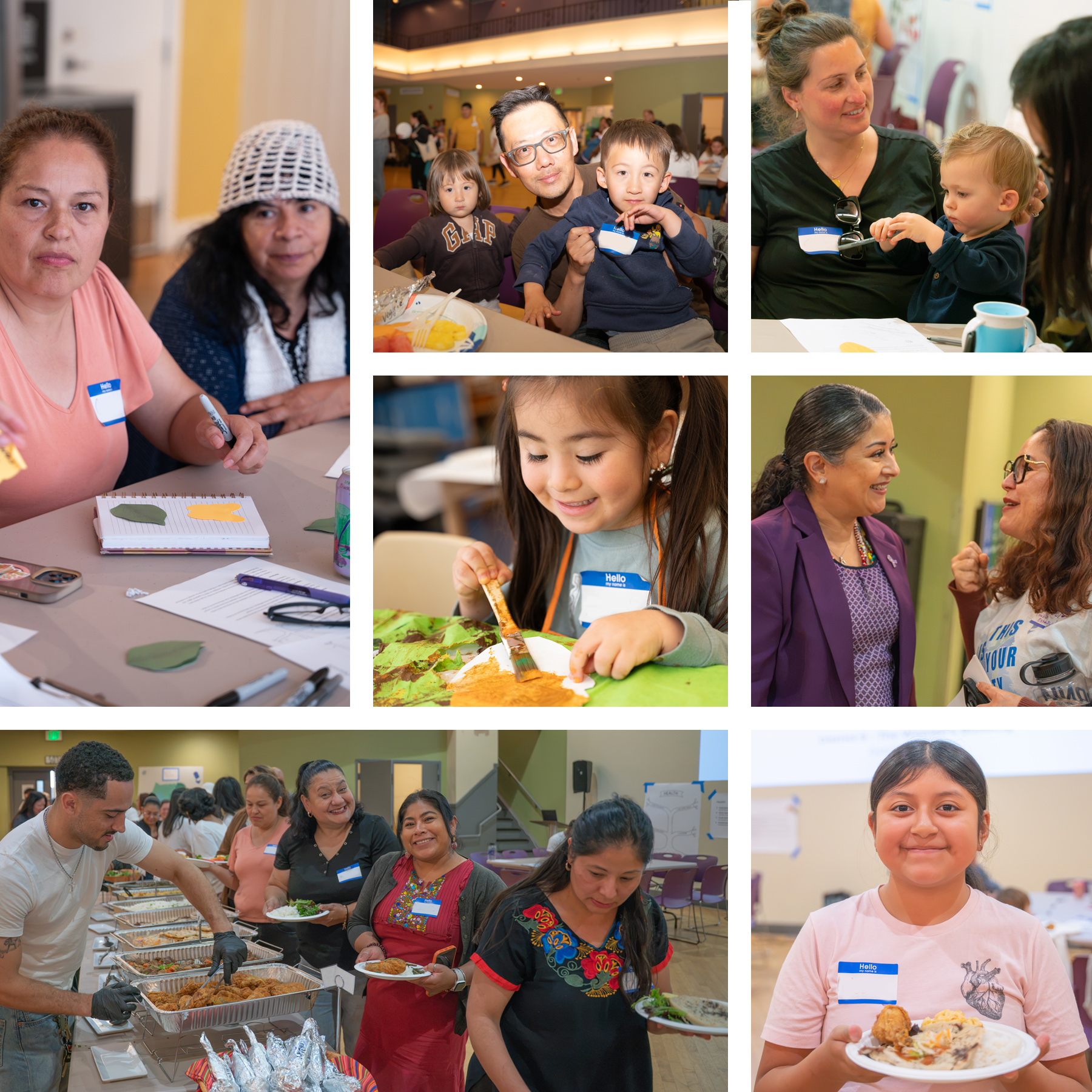
Our Children Our Families InitiativeFamilies and community members gathered at The Women’s Building for the District 9 Mission Family Summit to share what they value about raising families and living in San Francisco, what is working, what is challenging, and what they hope for the future.
Key Takeaways of What We Heard:
District 9 Family Summit participants explored the topics of Health, School, and Neighborhood through group activities, facilitated discussions and individual reflections.
- Community and culture are essential strengths. Participants celebrated the Mission’s Latino cultural heritage, festivals, arts, multilingual connections, parks, libraries and the everyday relationships that make the neighborhood feel like home. They want those strengths preserved as the neighborhood changes.
- Safe, clean, accessible streets remain a pressing concern. Participants described open-air drug use, discarded waste, blocked sidewalks, unsafe cycling and traffic, and confusion about whom to call for timely assistance. They also identified community ambassadors, cleanups and pedestrian-friendly streets as assets to build on.
- Affordability and displacement threaten belonging. High rents, housing instability and changes to neighborhoods that have been home to generations of families were linked to families leaving the Mission, young people working to help support their households and challenges in maintaining longstanding community relationships.
- Families value education and youth programs but experience uneven access. Early-learning assistance, caring teachers, school wellness centers, community schools, paid internships and free transit were praised. Families also described preschool shortages, inconsistent school quality, special-education gaps, safety concerns and programs that fill before they can enroll.
- Access to services depends on trust, language and coordination. Participants praised neighborhood organizations and health resources but called for stronger Spanish-language access, clearer information, culturally responsive mental-health care, coordinated referrals and genuine accountability for community input.
Thank you to the families and community members who joined us and generously shared their stories, experiences and hopes for SF. We are especially grateful for your honesty, your trust and your willingness to speak truth to power.
The OCOFI team is grateful to District 9 Supervisor Chief of Staff Jennifer Ferrigno, Department on the Status of Women Director Dr. Diana Aroche, Clarity Social Research Group, and our colleagues from DCYF, SFUSD and MEDA who helped make the District 9 Mission Family Summit possible. Special thanks to The Women’s Building, Mission Neighborhood Services, Livable City, Little Skillet Catering and Panchita’s Pupuseria for helping us create a welcoming space where families could participate, connect and be heard.
In Your Words: A deeper look at what participants shared
What Participants Value About San Francisco and Their Community
We heard D9 participants described the Mission as a neighborhood rich in culture, diversity, community relationships and a strong tradition of civic engagement. They celebrated the cultural identity and history of the neighborhood, highlighting Carnaval, Día de los Muertos, the lowrider parade, neighborhood festivals, arts and music programs, family-owned businesses and cultural institutions as important expressions of community life. For longtime residents, these traditions represent generations of family history and belonging. For newcomers, familiar languages, cultural connections and trusted neighborhood organizations can help create a sense of home. A D9 participant wrote: “This city is unique in its rich diversity and culture, differing in every neighborhood. However, why are resources and accessibility so different when SF is only 7 miles by 7 miles? Each district seems to operate differently.”
Families also appreciated San Francisco's walkability, public transportation, parks, playgrounds, libraries and access to neighborhood amenities. They highlighted Free Muni for Youth, farmers markets, neighborhood recreation programs, library storytimes and opportunities for children to explore the city. Parks and public spaces were especially valued by families without private outdoor space, providing opportunities for children to play, neighbors to connect and communities to gather.
Community-based organizations were repeatedly recognized as essential sources of support and connection. Participants identified the Latino Task Force, Homeless Prenatal Program, Mission Graduates, Community Music Center, Project Commotion and other neighborhood organizations as examples of programs supporting families, young people and residents navigating difficult circumstances. Community-led street cleanups, neighborhood celebrations, youth programs and volunteer activities were also described as ways residents demonstrate pride in and care for their community.
One participant reflected on the personal significance of receiving support through a trusted neighborhood organization: “I found my identity there…Homeless Prenatal really provided me with resources when I needed it.”
At the same time, participants acknowledged that a strong network of community resources does not guarantee that everyone can access them. Some described difficulties finding programs, navigating eligibility requirements or establishing connections after arriving in San Francisco. One participant emphasized the importance of investing in organizations that help newcomer youth develop a sense of belonging: “From my experience, for newcomer youth, it’s a culture shock. No sense of belonging. How do we build that? Investing back into the nonprofits creating those spaces.”
Looking ahead, participants wanted more opportunities for neighborhood gatherings, multigenerational activities, cultural celebrations and meaningful community participation. They called for continued investment in local institutions, greater visibility for existing programs and stronger connections among residents, community organizations and City agencies. Across these reflections, participants described community not simply as a collection of services or neighborhood amenities, but as the relationships, traditions and shared spaces that make people feel connected to one another and to San Francisco.
Neighborhood Safety, Cleanliness and Moving Through the Mission
Participants raised concerns about conditions around the 16th and 24th Street corridors and BART plazas, including public drug use, human waste, needles, blocked sidewalks and inadequate sanitation. Families described the difficulty of navigating these conditions with children, strollers or mobility needs. Some questioned how to get a timely response when a situation requires more than routine 311 service but does not clearly warrant 911. Others expressed concerns about the treatment of street vendors and residents by some street patrol personnel.
Traffic safety was another recurring theme. Participants raised concerns about speeding electric bikes and scooters on sidewalks, dangerous crossings and the need for protected bike lanes, traffic enforcement, better lighting and safer routes to school. Community ambassadors, volunteer street cleanups and Slow Streets were praised by some. However, views of street restrictions differed: one participant expressed concern that barriers could impede emergency vehicles and connected that concern to a family loss. The discussion underscores the importance of considering pedestrian safety and emergency access together. D9 Participant shared, “[My] kid has learned to say ‘are you kidding me?’ to e-bikes on sidewalks.”
Suggestions included daily or more frequent cleaning in heavily affected areas, retaining public trash cans, additional bulky-item collection, clearer emergency-response guidance, better coordination among departments and community groups, and safety strategies designed with residents. Participants also asked for more public bathrooms and for outreach and health responses that recognize the needs of unhoused neighbors. A D9 Participant wrote, “Please, please clean up the sidewalks in the Mission!! And take care of the souls that are addicted to drugs and get them help and off our streets and sidewalks!!” Another wrote in Spanish “As a mother, I would like, and I strongly urge, for the city to be cleared of all trash and for drugs to be removed from public areas, so that we may have a safe city.” A D9 parent shared, “Picking up my kids near Muni is sometimes dangerous. I know it’s difficult to address these things, but it’s dangerous.”
Housing, Displacement and the Ability to Belong
Housing affordability was closely tied to cultural preservation. Participants described rising rents, evictions, vacant housing and longtime Latino families leaving familiar blocks. Some worried that young people cannot afford to remain in the neighborhood where they grew up. Others noted that youth seek employment partly because their families need income. Participants called for more affordable housing, attention to housing vacancies and investment in the people and institutions that have sustained the Mission. A D9 participant shared, “People didn’t leave the City, they were pushed out. My neighborhood was once all Latin families, now we are the only ones on our block. It is a different vibe.”
Another D9 participant wrote, “I am raising my son in the Mission, his brothers grew up here but have moved out for college – they won’t be able to move back, it’s just not affordable for them. I want to stay, I walk here, I’ve spent 32 years here. You need to prioritize families, our needs, our voices in government policies.” A related concern was whether public policy prioritizes the needs of families. Some participants perceived greater attention to nightlife, entertainment or technology-related economic development than to childcare, affordable homes and everyday family spaces.
Early Childhood, Schools and Support for Every Learner
Families praised Early Learning For All (ELFA), preschool tuition assistance, high-quality educators, transitional kindergarten, bilingual programs and caring school staff. One parent shared, “Before I found out about this program I thought I had to choose just one child to go to preschool.” Others valued early mental health support and opportunities for older youth to mentor younger children.
Despite these strengths, families described lengthy preschool searches, limited full-day options, confusing enrollment processes and barriers for immigrant families and children with disabilities. As one parent explained, “Even though we got ELFA it took us over a year to find a preschool. My younger son is still waiting/looking.”
In K–12 education, participants highlighted Mission High School’s college and career programs, Beacon partnerships, wellness centers, free meals, Free Muni for Youth and dedicated teachers. Concerns included bullying, school safety, staffing shortages, inconsistent academic opportunities, unmet special education needs and inadequate communication. One parent shared, “Feels like my child’s teacher doesn’t have a relationship and doesn’t know my child.”
Participants called for stronger school-family relationships, consistent staffing, better coordination and greater accountability. A school social worker reinforced these priorities urging “smaller class sizes in SFUSD and support for Tier 2 services (reading and math) intervention teachers,” along with dedicated school-based mental health clinicians. Other small groups similarly emphasized the need for certified special education and bilingual teachers, family liaisons and more consistent support for every learner.
Afterschool, Youth Employment and Pathways to Adulthood
Families valued Parks and Recreation programs, libraries, afterschool academic support, arts education, Mission Graduates, youth civic engagement, internships and opportunities to earn college credits while still in high school. But popular programs often fill immediately, with affordability, transportation and registration timing creating additional barriers. Participants asked for more after-hours programs, accessible arts and enrichment, museum opportunities and programs that work for caregivers who are employed during the day.
Youth employment emerged as a distinct priority. Participants called for expanded TAYA opportunities, paid internships, financial literacy, mentoring, career and trades exposure, and stronger connections with small businesses. They proposed a centralized youth job board, including information available in neighborhood libraries, and employment pathways that include undocumented young people and youth with disabilities. Some also called for greater support for first-generation college students, college transitions and mental health during early adulthood. One participant shared, “Number one thing you hear from youth is there’s no employment.”
Food, Healthcare and Mental Health: Resources That Families Can Reach
Participants recognized food banks, WIC, community nutrition and cooking classes, recreation scholarships, health clinics and San Francisco General Hospital as valuable supports. Spanish-language discussion notes identified food assistance through the Women’s Building, Everett Middle School and La Raza, as well as nutrition education through CARECEN and hospital-based services. Families appreciated fresh produce and practical education but reported inconsistent food quality, limited time to prepare nutritious meals and dissatisfaction with some school meals.
Other participants described food bank waitlists, eligibility restrictions, challenges for older adults and uncertainty among immigrant families about whether receiving public benefits could affect their status. These concerns should be treated as reported fears or experiences, not as legal guidance. Participants asked for clearer navigation, more equitable access and stronger coordination among service providers.
“While I appreciate having access to produce and fresh food, the reality is that the cost of living in San Francisco does not allow enough time to even cook consistently because so much time is spent working to try and make ends meet.” — D9 participant
Mental-health services were another area of both appreciation and unmet need. Participants valued school wellness centers, community-based organizations, supportive clinics and growing openness among young people to discussing their feelings. They also described cultural stigma, difficulty securing appointments, shortages of providers and the need for more mental-health consultants in schools. Some wanted earlier education about emotional wellbeing and more services delivered through trusted community relationships. D9 participant shared,“Mothers need more mental health support. All of the things in our communities that are impacting our children also impact mothers.”
Healthcare access was described as strong in some respects but complicated by cost, insurance rules, language, wait times and referrals. Participants suggested better information about coverage renewals, more school nurses, school-based health centers, and coordinated outreach with community organizations.
Language, Immigration Concerns and Trust in Public Systems
For many participants, the Mission’s Spanish-speaking community and sanctuary identity were sources of belonging. At the same time, they described language barriers at community events and schools, concern about immigration enforcement and reluctance among some immigrant families to attend public gatherings. One notetaker observed that fear of immigration enforcement may have affected who was present in the discussion.
These concerns extended into everyday decisions about accessing essential services. Participants raised questions about whether immigration status affects preschool enrollment and described fears about changes to Medi-Cal eligibility, healthcare coverage and public charge rules. One participant shared: “I let Medical (for myself and my children) expire because I’m afraid of accessing this resource and then being negatively impacted by public charge rules. I feel very afraid.”
Participants also questioned whether San Francisco’s sanctuary commitments translate into meaningful protections and accessible services. A D9 participant noted, “Growing fear of ICE; calling SF a ‘sanctuary city’ isn’t enough” as a challenge. Another described the city as a “sanctuary and beacon of hope” for people who need support, and urged San Francisco to act with care. Suggested responses included gathering input directly from people targeted by immigration enforcement, supporting neighborhood immigration-response plans and partnering with trusted community organizations to help families understand and maintain healthcare coverage.
The discussions reinforced that language access alone is not enough to build trust. Participants wanted clear, culturally responsive information, reliable community-based assistance and visible follow-through from City agencies. Their experiences suggest that meaningful access depends not only on whether services exist, but also on whether families feel safe seeking them.
Looking Toward San Francisco’s Future
Participants envisioned a Mission District where families can afford to stay, children and young people feel safe and supported, and the neighborhood's cultural diversity and traditions continue to thrive. They wanted clean, welcoming streets, strong neighborhood schools, affordable childcare, accessible healthcare and mental health services, and meaningful opportunities for young people to learn, work and build their futures in San Francisco.
Throughout the conversations, participants emphasized the importance of preserving the Mission's cultural identity and the community organizations that have long supported immigrant families, newcomers and longtime residents. They called for more affordable housing, stronger protections for families facing displacement, expanded youth employment opportunities and greater investment in neighborhood programs. Participants also wanted City services to be easier to navigate, available in residents' languages and better coordinated across departments and community organizations.
A recurring concern was whether City policies and investments reflect the everyday experiences of families. Participants wanted greater transparency, more responsive services and meaningful opportunities to influence decisions affecting their neighborhoods. As one participant asked, “How will we know that what we suggested was considered to make changes?” Several pressed for visible accountability: “Listen with empathy. You guys represent us, and our needs should be universalized. Everyone in SF has a story to tell, and it’s always important to learn from the people you represent.” Another urged: “Please don’t just show up during election season but be present. Issues aren’t solved and done with, issues such as street safety need to be consistently revisited. Let’s keep SF being such a beautiful city and let’s keep locals in.”
Despite these challenges, participants expressed pride in the Mission's resilience, cultural richness and tradition of community organizing. Their reflections underscored a desire not simply to preserve what makes the neighborhood special, but to ensure that the families and communities who have shaped it can continue to belong, contribute and thrive. We are hearing the same refrain across many of our Summits, ”We love San Francisco, but does the city love us back?"
What Comes Next
All of the information collected at the Family Summits and through the Citywide Family Survey will be incorporated into the Citywide Community Needs Assessment being conducted by the Our Children, Our Families Initiative. The initiative is a new partnership between 13 city departments and the school district to improve services and results for SF’s children, youth, families and transitional aged young adults. Summaries will be posted after each summit and the full needs assessment will be published in June 2027.