news
District 7 Westwood Park Family Summit Summary
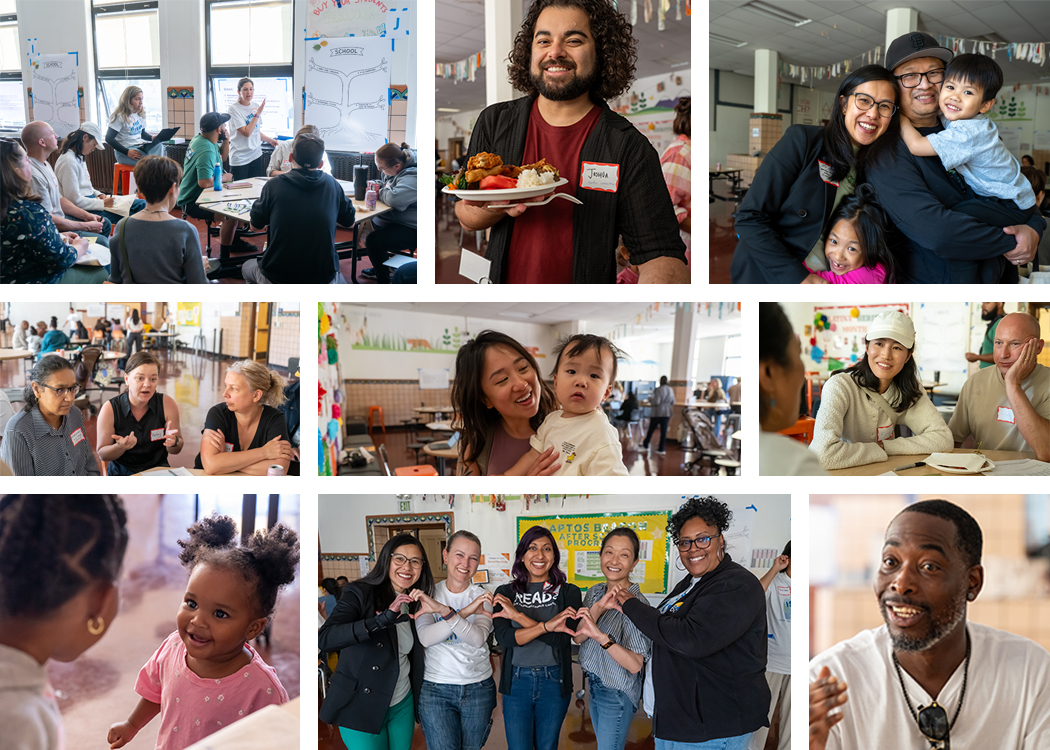
Our Children Our Families InitiativeFamilies and community members gathered at Aptos Middle School for the District 7 Family Summit on September 12 to share what they value about raising families and living in San Francisco, what is working, what is challenging, and what they hope for the future.
Key Takeaways of What We Heard:
Participants explored the topics of Health, School, and Neighborhood through group activities, facilitated discussions and individual reflections.
- Families value San Francisco and want to stay. Participants celebrated the City’s diversity, parks, culture, libraries, schools and family resources, while repeatedly describing affordability as a challenge to remaining here.
- Families value available resources, but access can be uneven. Families identified valuable programs and services while also describing challenges with awareness, eligibility, availability and coordination.
- Children and youth need support across every stage. Participants valued existing school and community supports while identifying gaps for tweens and teens, young people transitioning to adulthood, and people with disabilities.
- Families raised concerns about moving safely through their neighborhoods. D7-specific concerns centered particularly on pedestrian safety, dangerous driving and children navigating areas such as Ocean Avenue and Monterey Boulevard. Other safety comments reflected experiences across San Francisco.
- Families want connection and places to belong. Participants talked about a “lack of village,” places to gather, teen and tween activities, youth-led spaces and opportunities to strengthen neighborhood connection.
Thank you to the families and community members who joined us and generously shared their experiences, ideas and hopes for San Francisco.
The OCOFI team is grateful to Chief of Staff Jen Low from District 7 Supervisor Myrna Melgar’s team, DCYF Director Sherrice Dorsey-Smith, SFUSD Superintendent Maria Su, Aptos MS Principal Dimitric Roseboro, SFPL Deputy Director Dolly Goyal, Clarity Social Research Group, and our colleagues from DCYF, DEC and HRC who helped make the District 7 Family Summit possible.
Special thanks to our Aptos MS, Community Youth Center of San Francisco, Livable City, and Little Skillet Catering for helping us create a welcoming space where families could participate, connect and be heard.
In Your Words: A deeper look at what participants shared
What Participants Value About San Francisco
We heard deep appreciation for San Francisco’s diversity, parks and open spaces, cultural activities, libraries, public transportation, walkability, schools, community organizations, and opportunities for children and families. Individual reflections described San Francisco as a place that:
“Represents the world — diversity.”
“It is a beautiful city with a ton of character in every neighborhood and a wonderfully diverse environment.”
“Beautiful architecture, vibrant communities, and a strong public transit system. You can easily get to most places by walking.”
We heard childcare subsidies, school wellness centers, afterschool programs, Rec and Park summer camps, free City College, free Muni for youth, farmers markets, recreation centers and community-based organizations among the resources they value.
Affordability and the Ability to Stay
Affordability appeared throughout the Summit — in conversations about housing, childcare, activities, schools, employment and the ability of families to remain in San Francisco. Individual reflections on the challenges included:
“Affordability, wealth gap.”
“Cost of living in SF is high for survival.”
“Housing is unaffordable.”
“Cost of living. Rent as well as the cost of goods & services is high, making it difficult to make everything work.”
Participants shared friends and family members moving away, children staying at home longer because they cannot afford to move out, difficulty saving for college, and concern about how teachers, baristas, public servants and families working multiple jobs can continue to live in San Francisco. A participant self identified as born and raised in San Francisco shared: “I love my city but my city doesn’t love me.”
Housing was also connected to schools and neighborhoods. Participants called for more affordable family housing, particularly on the Westside. One participant connected housing affordability and school assignment to families’ ability to participate in and feel part of their school communities: “The lottery system needs to be equitable – when families are unable to live in the communities where their school is, it makes our schools more separated. Some families are missing out on the experience if they’re not close by or a part of the community and that feels unfair.”
Strong Resources with Challenges in Access
We heard participants identified many programs and services that are working well, while also describing challenges finding, accessing or qualifying for them. The early care discussion provided a clear example. A family with two young children estimated that childcare subsidies saved them approximately $5,500 per month. Yet other participants also shared:
“I didn’t take advantage of the subsidies — I didn’t know those existed.”
Another family initially believed they did not qualify and learned about the assistance through a coworker:
“We found out through word of mouth — now we are trying to tell others.”
Similar access issues appeared elsewhere: summer and afterschool programs filling quickly, limited program space, difficulty navigating Medi-Cal, a lack of Medi-Cal providers, gaps in services for children and adults with disabilities, and challenges finding opportunities for young adults. The Neighborhood discussion also identified a “lack of coordination across various efforts.”
Children and Youth: Support Across Every Stage
We heard participants identified strong supports for children and youth, including school counselors, wellness centers, social workers, Beacon programs, YMCAs, Boys & Girls Clubs, recreation programs, internships and youth employment opportunities. When asked what is working, one parent shared: “School counselors, my daughter loves hers.”
Participants also described gaps: staffing shortages in schools, limited middle- and high-school summer activities, mental-health access for tweens and teens, bullying, screen time, disability supports, and opportunities for young people transitioning into work or college.
The school lottery was described as particularly disruptive for some families. Participants talked about juggling multiple schools and waitlists and the difficulty of planning work, transportation and family life while school placement remains uncertain.
Support for people with disabilities extended beyond childhood. One participant described a family member whose transition-to-work program helped her gain independence, while emphasizing: “These [disability] communities really require lifelong care.”
Participants also wanted stronger pathways into adulthood, including trades, internships, career exposure and employment opportunities for transition-age youth.
Safety, Community and Places to Belong
Safety comments reflected both experiences within District 7 and perceptions of San Francisco more broadly. One participant described D7 as “fairly safe and welcoming,” while another specifically raised concern about allowing their child to walk on Ocean Avenue. A separate comment about feeling unsafe biking referred to “many parts of the city,” rather than District 7 specifically. Participants shared:
“D7 is fairly safe and welcoming.”
“I don’t feel safe allowing my child to walk on Ocean Ave.”
Locally focused ideas included crosswalk lights on Monterey Boulevard and more foot patrols on Ocean Avenue and Monterey Boulevard when school lets out. Participants also suggested improvements at Muni stops, although the location for that suggestion was not specified.
In the Sense of Community discussion, participants described a “lack of village,” a “lack of places to gather,” and difficulty connecting with direct neighbors because “lots of people move constantly.” These comments were raised by D7 Summit participants, they may be describing District 7 specifically or their broader experience living in San Francisco.
Young people were a particular focus. Participants called for more teen and tween activities, youth-led community spaces, informal “third spaces,” and opportunities to activate vacant spaces for young people and families. One participant reflected specifically on the experience of participating in the Family Summit: “I like that the Family Summit is being held. It gives me a feeling like my voice is being heard.”
Looking Toward San Francisco’s Future
We heard participants imagine a San Francisco where families can afford to stay, find stable housing, move safely around their neighborhoods, access services and opportunities, and see young people build a future here.
They talked about reliable public transportation, clean streets and public bathrooms, affordable family housing, community spaces, diverse jobs, career opportunities for young adults and stronger connections between residents and the resources available to them.
Participants also expressed concern about losing community, cultural identity, libraries and the ability of families to remain in the place they call home.
Across the feedback, an important tension emerges: participants see tremendous value in what San Francisco already offers, while describing real challenges in being able to afford, access and remain connected to it. One participant captured both the opportunity and complexity of raising a family here: “It’s amazing to raise kids here but it’s hard to raise kids here.”
What Comes Next
All of the information collected at the Family Summits and through the Citywide Family Survey will be incorporated into the Citywide Community Needs Assessment being conducted by the Our Children, Our Families Initiative. The initiative is a new partnership between 13 city departments and the school district to improve services and results for San Francisco’s children, youth, families and transitional aged young adults. Summaries will be posted after each summit and the full needs assessment will be published in June 2027.