press release
District 5 Tenderloin Family Summit Summary
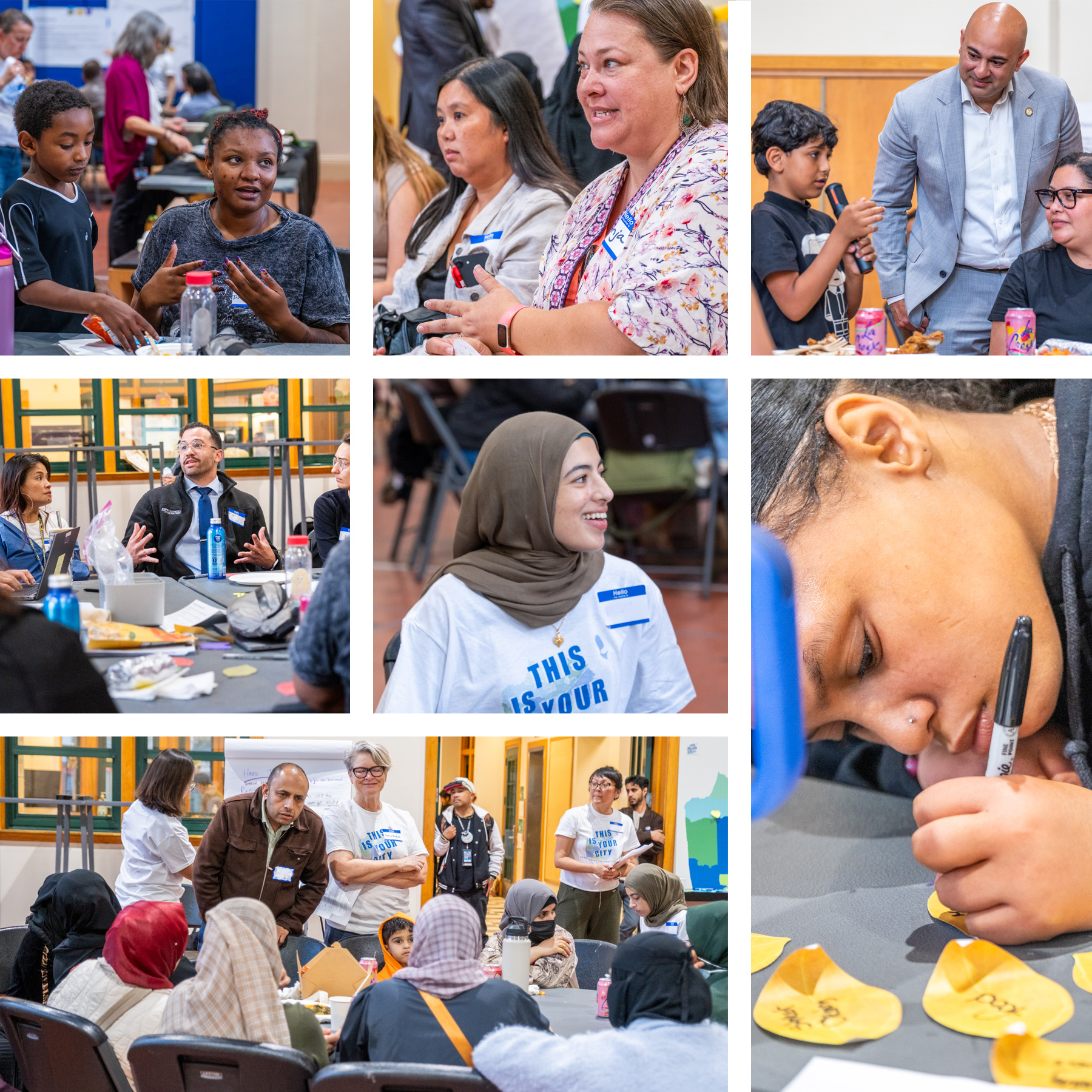
Our Children Our Families InitiativeFamilies and community members gathered at the Tenderloin Rec Center for the District 5 Tenderloin Family Summit to share what they value about raising families and living in SF, what is working, what is challenging, and what they hope for the future.
Key Takeaways of What We Heard
Participants explored the topics of Health, School, and Neighborhood through group activities, facilitated discussions and individual reflections.
- The Tenderloin has a strong community, but families want neighborhood conditions to reflect that strength. Participants valued the people, cultural diversity, community organizations and connections that make the neighborhood feel like home while describing street conditions that can make everyday life difficult.
- Children and young people need safe, supportive environments in and beyond school. Participants raised concerns about bullying, learning and mental health support, transportation, afterschool opportunities and what children experience while moving through the neighborhood.
- Safety and street conditions shape families’ everyday lives. Participants described open drug use, human waste, litter, violence, loud music and persistent neighborhood noise as conditions affecting children and families. They called for safe passage, cleaner and quieter streets, public restrooms, treatment and prevention, and spaces designed with children and families in mind.
- The Tenderloin has many resources, but knowing about and accessing them can be difficult. Participants named strong nonprofits, youth programs, schools, transit and health resources while describing gaps in outreach, language access, coordination and services available during evenings and weekends.
- Participants want families and longtime residents to be able to remain in San Francisco and the Tenderloin. Affordable family housing, stable rent, living wages and economic opportunity emerged alongside a desire for longtime residents and families to be able to stay in the communities they call home.
Thank you to the families and community members who joined us and generously shared their stories, experiences and hopes for SF. We are especially grateful for your honesty, your trust and your willingness to speak truth to power.
The OCOFI team is grateful to District 5 Supervisor Bilal Mahmoud, First 5 Programs Director Theresa Zighera, Clarity Social Research Group, and our colleagues from DCYF, RPD, LIB and the Mayor’s Office who helped make the District 5 Tenderloin Family Summit possible. Special thanks to Tenderloin Rec Center, Up on Top, Livable City, Little Skillet Catering and Shalimar Restaurant for helping us create a welcoming space where families could participate, connect and be heard.
In Your Words: A deeper look at what participants shared
What Participants Value About San Francisco and Their Community
Participants expressed appreciation for San Francisco’s diversity, public transportation, parks and outdoor spaces, schools, community resources and opportunities such as jobs and free college. Individual reflections included “walk, bike and take transit anywhere,” “bridging cultural diversity,” and “This is where I am and it’s where my calling is.” Another participant grounded their connection to San Francisco in family and place: “I live here, I’ve been here, my son goes to school here.”
The Tenderloin itself was described as a place with strong community connections. Participants talked about people being friendly and open to one another and valued street fairs, cultural celebrations, neighborhood organizations and places where people come together. The consolidated notes captured an overarching takeaway: “The community in TL is strong and people are friendly and willing to help.” Participants also named community resources and organizations, including GLIDE, 826 Valencia, Street Soccer and the Tenderloin Museum, as important parts of neighborhood life.
At the same time, participants described a tension between the Tenderloin’s culture and what is most visible on its streets. One discussion reflected that it can be “hard to really see and appreciate the culture when what you see on the street is drug use.” Participants described celebrations and cultural life that can feel less visible than the neighborhood’s challenges and wanted the Tenderloin’s families, cultures and community strengths to be more present in its public spaces.
Children and Youth: Support at School and Beyond the Classroom
Participants identified strengths across the different stages of childhood and young adulthood. They valued childcare subsidies, high-quality early care, great public school teachers, afterschool programs, Free City and employment and training opportunities for transitional-age youth. One participant shared that “Children’s Council was pivotal in getting me access to work when [I was] on CalWORKS.” Participants also recognized programs including New Door, HYPE Center, Larkin Street, MYEEP, Opportunities for All and Mission Hiring Hall as valuable resources helping young people transition into adulthood, college and employment.
At the same time, participants described gaps in support. They raised concerns about teacher shortages, bullying, learning disabilities and special education support, language barriers, mental health services and students not feeling heard. One participant asked, “If I told you I’ve seen bullying more than once, why would you ignore that?” Middle school students were described as wanting help but “don’t know who to ask” and wanting support to be consistent. Participants called for more caring adults, culturally relevant education, multilingual academic support, art and outdoor education, life skills and consistent support for young people who need help.
Participants also described gaps as children grow older. Afterschool and summer programs were valued, but participants said there are not enough spaces, particularly outside traditional hours and for older youth. Neighborhood discussions noted that “weekends have little or no resources/programs” and described a drop-off in programming for older age groups. Participants wanted more safe places where young people could spend time together, build relationships and, as one discussion described it, have places “where kids can be kids.”
Safety, Streets and the Everyday Experience of Children and Families
Safety was one of the clearest Tenderloin-specific themes. Participants described children and families navigating open drug use, human waste, litter, violence, unsafe behavior and stressful public transportation. Parents spoke about the toll of having to navigate these conditions with their children. One discussion captured the frustration of conditions repeatedly returning after efforts to address them: “Clean today, tomorrow dirty.”
Participants repeatedly returned to what children see and experience simply walking through their neighborhood. One discussion asked, “What are we normalizing for our kids, for ourselves?” Participants described children asking questions about what they see and parents doing their best to explain circumstances that can be difficult even for adults to process. One participant said children and youth in the Tenderloin experience conditions that would not be accepted elsewhere in San Francisco: “If it doesn’t fly in PacHeights, it shouldn’t fly in the TL.” Another reflected on the neighborhood simply as “our home,” underscoring that families and children live their everyday lives amid these conditions.
Participants also spoke specifically about the experiences of Muslim and Arabic-speaking women in the neighborhood. They described harassment toward women wearing hijabs and shared an incident in which a pregnant Muslim woman was struck in the face while derogatory comments were made about her faith. Another mother described being assaulted while walking with two of her daughters and having experienced assaults while pregnant and with her children. Reflecting on those experiences, she asked, “Is this how we are living here? It’s not safe.”
Families also described how safety extends beyond the street. Participants raised concerns about mold, mice, roaches and other unsafe conditions in housing, including one account of a family living with damage and severe leaking after a fire. Noise was another concern, with participants describing loud music and neighborhood noise. Together, these comments reflected how conditions inside and outside the home can affect children’s sense of safety and wellbeing.
Participants identified efforts that help, including street ambassadors and safe-passage programs, but wanted them expanded to more streets and hours. One participant called for “24/7 safe passage.” Participants also proposed cleaner and more accessible sidewalks, public restrooms, family zones, safe public spaces, expanded youth programming and treatment and wraparound services for people struggling with addiction. One comment emphasized the importance of outreach because “People sometimes don’t know recovery is an option.”
Participants expressed different perspectives about enforcement and public safety responses. Some wanted stronger enforcement, while others emphasized prevention, treatment, case management and culturally affirming services rather than relying solely on incarceration. Across those perspectives was a shared concern about what children and families are being asked to navigate every day and a desire for the Tenderloin to be treated as a neighborhood where families live, grow and belong.
Strong Resources with Challenges in Access
Participants consistently acknowledged that the Tenderloin and San Francisco have many resources. They named nonprofits, community centers, health services, schools, youth programs, public transportation and family supports as important strengths. Yet participants also described a recurring challenge: services may exist without families knowing about them or being able to navigate them. As one discussion captured it, “The City has a lot of resources, but many people don’t know how to access them.”
Participants wanted information and support to reach families more directly, through visible resource hubs, community connectors and places where people already have relationships and trust. Afterschool programs were valued as one example because participants described them as places where children “shine and feel safer,” build relationships and have adults checking in with them.
Language, employment and cultural accessibility were also important parts of the conversation. Participants called for more support for monolingual residents, including English classes and employment opportunities for people learning English. They also questioned whether workforce training connects people to sustainable employment, noting that “youth eventually grow up and need somewhere to land.”
Participants shared how these barriers can be especially difficult for immigrant families. One woman described having taught at a university in Yemen but being unable to find comparable work because her educational credentials did not transfer easily here. That experience accompanied broader questions about whether workforce programs lead to meaningful employment: “Is there a job market to welcome newly trained workers?” One discussion noted that City College had offered strong English-language programs, “but they were hard to get to.”
Participants wanted spaces for families and children “where moms feel welcome and people are not discriminated against,” particularly visibly Muslim women. They pointed to Cross Cultural Family Center on Turk Street as a place where women feel welcome, as well as the Tenderloin Recreation Center's women-only Friday programming. These examples underscored that access is not only about whether a service exists, but whether families feel that it is a place for them.
Health, Mental Wellbeing and Environmental Stress
Participants connected health to much more than access to doctors. They talked about food, exercise, mental health, street conditions, noise, air quality and the physical environment children and families experience every day. Across these conversations, health and wellbeing were closely connected to whether people felt safe, supported and able to move comfortably through their neighborhood.
Participants valued the Civic Center Farmers Market, food-bank distribution, community health resources, SFUSD Wellness Centers, community centers and neighborhood nonprofits. At the same time, they identified grocery and food deserts, expensive gyms and limited access to healthy food. Participants called for “clean and safe streets so folks can exercise,” free gym access, low-cost healthy food and more grocery stores in the Tenderloin. They also wanted culturally relevant food options and community events that promote health.
Mental health emerged across both adult and youth discussions. Participants described “high stress for working parents,” young people who “feel lonely and disconnected,” chronic youth mental health crises and concerns that experiences related to trauma can be misdiagnosed. They emphasized reaching people before they are in crisis, calling for “more preventative mental health supports” for adults and more preventive services, mentors and wellness counselors for young people. One suggestion was especially direct: “Every student should have an hour with a therapist if they want it.”
The conversation also reflected how closely family wellbeing is tied to the surrounding environment. Participants identified air pollution, dirty streets, dumping and poverty among the environmental stresses affecting children and families. One concern was particularly immediate: “Noise pollution keeps kids from being able to sleep.” Participants described the overall state of the Tenderloin as “not ok,” connecting the physical environment directly to the wellbeing of children and families.
Participants also expressed a disconnect between reports of neighborhood improvement and what they experience in their daily lives. The Health discussion captured this directly: “The messages from City leaders don’t match the conditions on the streets. They say things are improving but to those who are in the communities it is not improving.” A Dear San Francisco postcard echoed that sentiment: “The political data points about how things are improving do not reflect the way it feels to live here.” Together, these comments underscored participants’ desire for progress to be measured not only through data, but through the everyday experiences of the children and families who call the Tenderloin home.
Housing, Affordability and the Ability to Stay
Housing and affordability appeared across School, Neighborhood and Health conversations. Participants described high rents, apartments too small for families, long waits for affordable housing and difficulty finding affordable housing in locations that work for families. Some connected housing directly to children's experiences, saying families cannot simply move away from difficult neighborhood conditions because housing elsewhere is unaffordable.
Participants also described the economic pressures facing parents and people who work with children and youth. They called for living wages for youth-service providers and described the reality that “you need to have more than one job to survive and thrive.” Transportation costs, childcare, food and housing were described as competing household expenses. One discussion captured the pressure families and workers face when the cost of living becomes too much: “When it gets too hard, you have to make a choice to change or leave because it gets too much.”
The Dear SF postcards made the desire to remain particularly clear. One participant wrote: “Please offer more affordable housing. I want to bring my mom to SF to live with me but I can’t afford it.” Another wrote: “We belong here. We are born, raised, and rooted here in San Francisco. Make sure we can stay here. Don’t push us away from our hometown.”
Looking Toward San Francisco’s Future
Across the conversations, participants envisioned a Tenderloin where the strength of its community is reflected in the conditions families experience every day. They wanted clean and safe streets, affordable family housing, healthy food, stronger schools, accessible mental health care, safe passage, jobs and places where children can play and families can gather.
Participants wanted solutions built with the community and greater coordination and accountability across systems. They emphasized trusted neighborhood organizations, culturally responsive services, intergenerational activities and traditions that bring people together. One Dear SF postcard captured both the abundance of resources and the desire for them to work together more effectively: “We have so much to offer children, youth, and families. But there is a need to better coordinate and focus on outcomes, not outputs. Work smarter, not harder.”
Participants also wanted the Tenderloin to become a model for addressing environmental challenges rather than a place where difficult conditions are accepted or concentrated. Across differing perspectives about enforcement, treatment and prevention, participants shared a desire for the Tenderloin to be treated as a neighborhood where families live, grow and belong. As one discussion put it simply: “Bring humanity back into this space.”
Despite the seriousness of many of the experiences shared, participants also expressed determination and hope for their community. Their feedback reflected a desire for the Tenderloin’s children and families to experience the neighborhood’s strengths not only through programs and organizations, but in their homes, schools, streets and public spaces every day. One participant’s Dear SF postcard offered a simple closing hope: “Thank you. I am hopeful for a better tomorrow.”
What Comes Next
All of the information collected at the Family Summits and through the Citywide Family Survey will be incorporated into the Citywide Community Needs Assessment being conducted by the Our Children, Our Families Initiative. The initiative is a new partnership between 13 city departments and the school district to improve services and results for SF’s children, youth, families and transitional aged young adults. Summaries will be posted after each summit and the full needs assessment will be published in June 2027.