Info Page
Types of illuminated signs and awnings
Learn about the different ways signs and awnings can be lit.
There are different ways to illuminate a sign or awning.
Use these definitions to help complete the sign and awning permit.
Non-illuminated
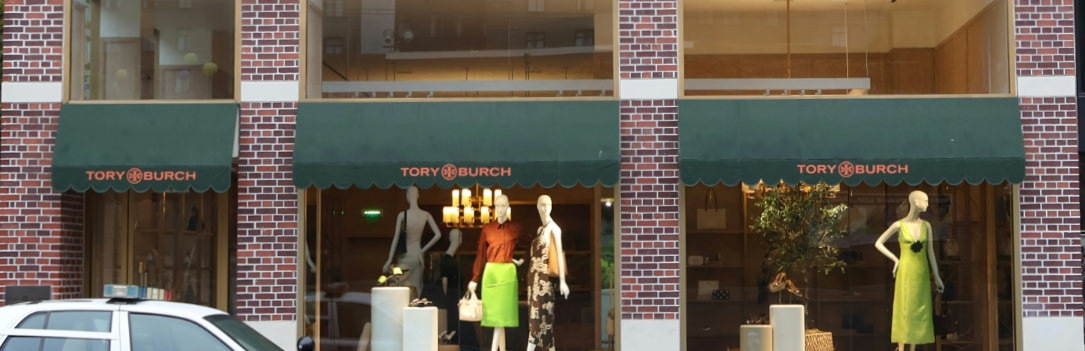
Non-illuminated means there are no lights within or shining onto a sign or awning. This usually means the sign or awning is not readable after dark.
The following is an example of a non-illuminated awning.
Indirect illumination
Indirect illumination means there are lights installed on the building that are designed to shine directly on the sign or awning.
If the lights illuminate other areas of the building, it may be considered direct illumination.
The following is an example of an indirectly-illuminated wall sign.

Direct illumination
Direct illumination involves light contained within a sign or marquee, that shines outward through it. This includes neon and exposed lamp signs.
The following is a freestanding sign that's both directly illuminated and indirectly illuminated by a spotlight shining from below.

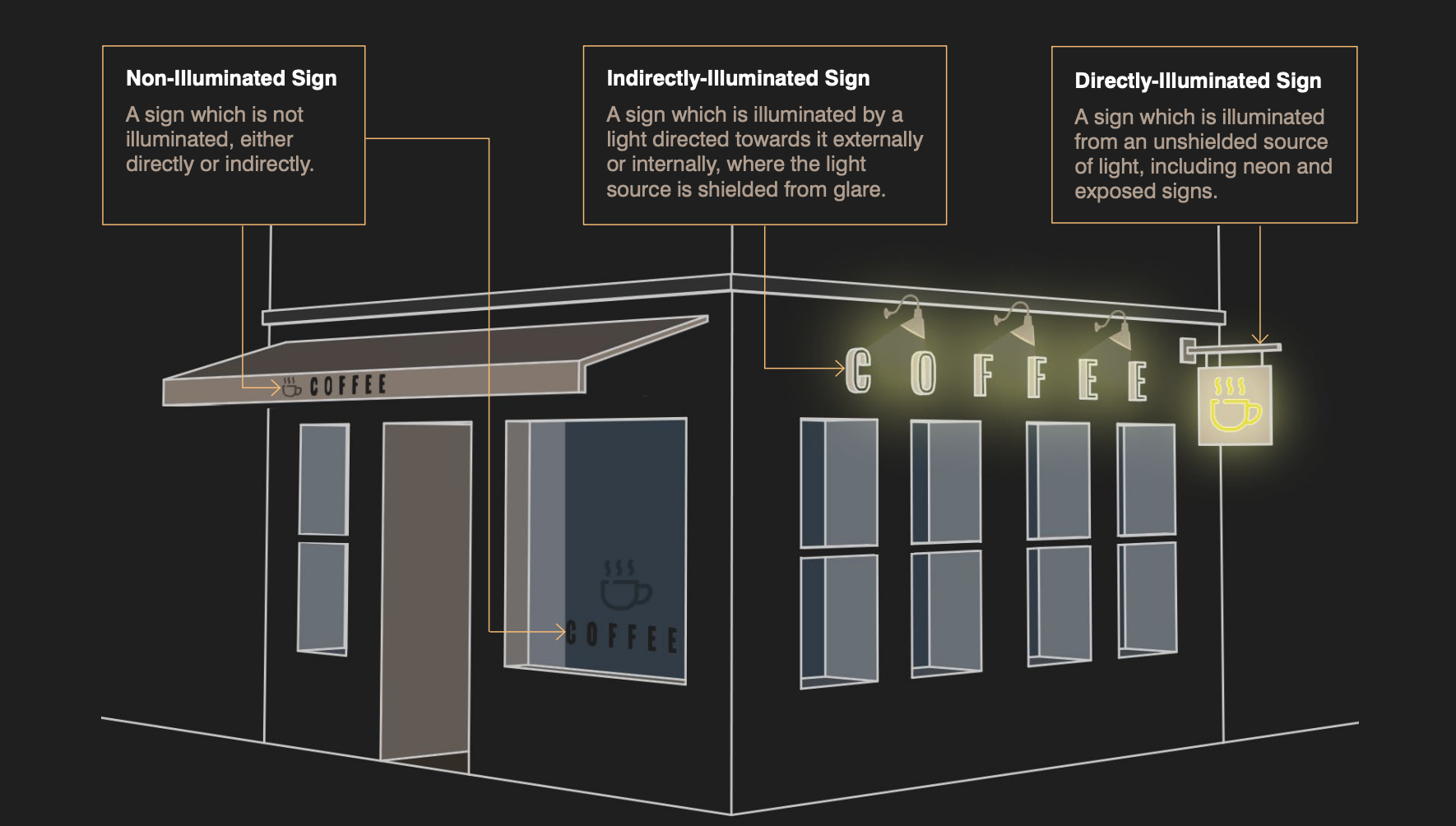
Diagram of all the illumination methods
The following is a diagram of all the illumination types, from SF Planning.