news
Summary of District 2 Marina Family Summit
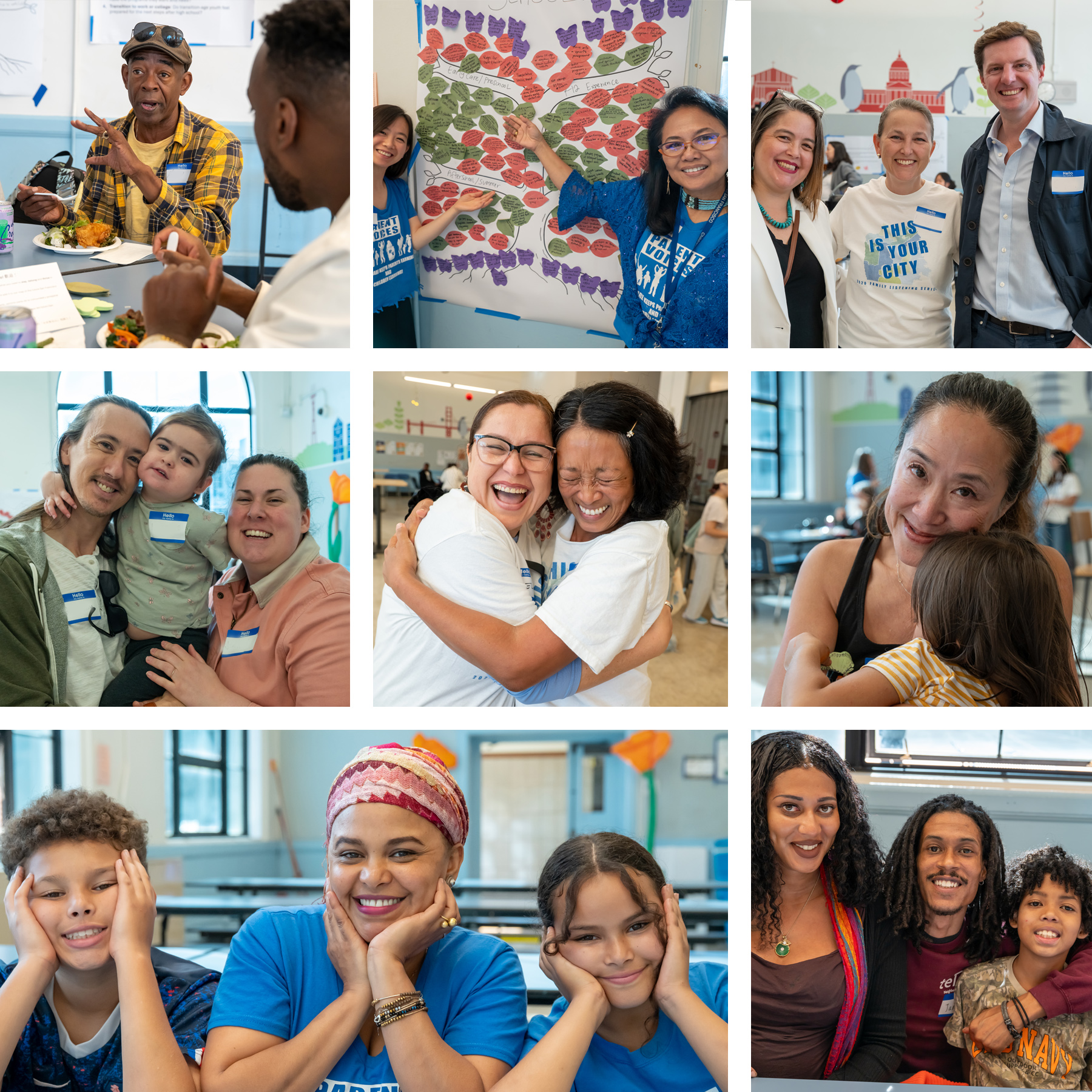
Our Children Our Families InitiativeYouth, young adults, families, and community members gathered at Marina Middle School for the District 2 Marina Family Summit to share what they value about growing up, raising families and living in San Francisco, what is working, what is challenging, and what they hope for the future.
Key Takeaways of What We Heard:
On November 7, 2026, youth, young adults, families, and community members gathered at Marina Middle School for the District 2 Marina Family Summit to share what they value about Participants explored the topics of Health, School, and Neighborhood through group activities, facilitated discussions and individual reflections.
- San Francisco's cultural diversity, neighborhood connections and public resources are sources of pride. Participants celebrated the City's parks, libraries, schools, public transportation, neighborhood businesses and community programs. At the same time, they expressed concern about the loss of neighborhood businesses, declining community connections and the need for more accessible spaces and activities that bring people together.
- Families value public education and expanded childcare resources but face persistent barriers to equitable access. Participants praised dedicated teachers, early learning scholarships, childcare subsidies, Beacon programs and school-based supports. They also described complicated enrollment processes, inconsistent access to special education services, disparities in school funding, limited childcare options and school schedules that do not align with working families' needs. They called for stronger coordination, more inclusive services and sustained investment in educators and students.
- Mental health and family well-being require culturally responsive services and stronger support systems. Participants recognized the value of school counselors, telehealth, community organizations and programs that support physical and emotional health. They also described the effects of financial stress, generational trauma, stigma and limited access to mental health services. They called for more counselors, culturally responsive support groups and easier access to services.
- Neighborhood safety, accessible public spaces and opportunities for community connection are essential to quality of life. Participants appreciated walkable neighborhoods, parks, libraries and public transportation but raised concerns about pedestrian safety, speeding vehicles, street cleanliness, drug activity and the condition of public facilities. They also described limited affordable activities for children and teenagers, particularly during evenings, weekends and school breaks. They called for safer streets, more responsive City services and expanded recreational opportunities.
- Affordability and equitable access to resources remain central challenges for families across income levels. Rising housing, childcare, transportation and everyday living costs are placing pressure on working families, educators, young adults and immigrant households. Participants highlighted eligibility rules that can leave families without assistance despite continuing financial need, as well as barriers to employment, college preparation and workforce development. They called for more flexible income eligibility, affordable housing, stronger family supports and expanded opportunities for young people to build their futures in San Francisco.
Thank you to the young adults, families and community members who joined us and generously shared their stories, experiences and hopes for SF. We are especially grateful for your honesty, your trust and your willingness to speak truth to power.
The OCOFI team is grateful to District 2 Supervisor Stephen Sherrill, MOHCD’s Community Development Deputy Director Julia Sabory, Clarity Social Research Group, and our colleagues from DCYF, SFUSD, RPD, and Mayor’s Office who helped make the District 2 Marina Family Summit possible. Special thanks to Marina Middle School, Presidio YMCA, Livable City, Little Skillet Catering and Turtle Tower for helping us create a welcoming space where families could participate, connect and be heard.
In Your Words: A Closer Look at What Participants Shared
What Participants Value About San Francisco and Their Community
We heard participants express deep appreciation for the City’s cultural diversity, natural beauty, neighborhood character and abundance of public resources. Parks, libraries, recreation centers, public transportation, local businesses and community organizations were frequently celebrated as essential parts of everyday life. Participants valued living in a city where families can explore different cultures, connect with nature and access opportunities without having to travel far from home. One participant reflected on the City's welcoming character, sharing that in SF, “you can be your authentic self.”
Several participants described the benefits of raising children in an urban environment, where young people develop independence and confidence navigating their neighborhoods and public transportation. Families appreciated the proximity of schools, playgrounds, libraries and recreational opportunities, particularly in walkable neighborhoods like the Marina. Participants also valued the relationships and sense of belonging that make SF feel like home. As one participant shared, “The community is very helpful and nice.”
Longtime residents expressed a particularly strong connection to the City’s identity and history. Participants spoke about growing up in the City, raising multiple generations of family members here and appreciating the diversity that distinguishes SF from other places. One resident who had lived in the neighborhood for 80 years described feeling homesick for SF’s diversity when away and reflected that being born and raised in the City becomes part of who you are. Another participant celebrated the pride that connects San Franciscans, sharing, “I worked in SF for over 10 years. I love how proud San Franciscans are, their lingo and all about pride and love of the city.”
Community organizations and neighborhood programs were also recognized for creating opportunities to connect and providing important support to families. Participants highlighted the Tel Hi Neighborhood Center, Boys & Girls Clubs, public libraries, neighborhood celebrations and recreational programs. At the same time, participants expressed concern about vacant storefronts, the loss of local businesses and the need to rebuild neighborhood connections that have weakened in recent years. Despite these challenges, their reflections revealed a deep attachment to SF and a desire to preserve the sense of community that makes the City feel like home.
Early Childhood, Schools and Support for Families
We heard families express appreciation for SF public schools, dedicated educators, early learning programs and expanded childcare resources. Participants highlighted early learning scholarships, childcare subsidies, Children's Council, SFUSD preschool programs, Beacon programs and community schools as important supports. They also recognized the value of school social workers, paraprofessionals, free school meals, language pathways, arts education and career technical education.
Despite these strengths, families described significant challenges navigating childcare enrollment, eligibility requirements and provider availability. The cost of early care was a particular concern, with one participant sharing, “Childcare in ECE can cost as much as my B.A. degree.” Some participants reported outdated provider lists, lengthy application processes and difficulty finding programs that accept available childcare subsidies. Others described how school and childcare schedules do not align with working hours, particularly for parents balancing employment, multiple children and limited family support. Participants called for more flexible childcare options, including before-school, evening, weekend and summer care, alongside better information about available programs.
Access to services for children with disabilities and medically complex needs emerged as a particularly important concern. Families praised specialized providers such as the Felton Institute's early childhood and developmental support programs but described limited childcare placements, gaps in services for children ages three to five, and difficulties coordinating Individualized Education Programs (IEPs) and other supports across schools. Some parents reported that half-day programs leave them responsible for finding additional care that can accommodate their children's needs. Participants called for more inclusive childcare placements, earlier identification and intervention, stronger coordination between schools and families, and better compensation and training for educators and support staff.
Families also raised concerns about disparities in school resources, particularly differences in what individual parent-teacher associations can raise to support school programs and staffing. Participants described inconsistent access to tutoring, arts, sports, counseling and academic enrichment. They also expressed concern about bullying, racial bias, the need for more diverse educators and culturally responsive teaching, and the effects of staffing shortages and budget reductions. One discussion emphasized that access to essential educational opportunities should not depend on a school's fundraising capacity. Reflecting on the need for stronger academic and career preparation, one participant shared, “We don’t have opportunities to prepare our children.”
School assignments and transitions were another recurring concern. Participants described difficulties navigating enrollment and transfers, limited neighborhood school choice, and the challenges of coordinating transportation when children attend schools in different parts of the City. Some felt that school assignment patterns weaken neighborhood relationships by separating children who live near one another. One participant offered a direct recommendation: “Please create a K-12 feeder system for SFUSD students. Students should be able to stay with their neighbors, close-ish to home K-12.”
Families valued afterschool and summer programs for enrichment, academic support and friendships. However, they described competitive enrollment, limited availability, staffing turnover and insufficient access to tutoring, arts, music and STEM activities. One participant described the reassurance that quality afterschool programming provides, sharing that it “feels good to know where my child is and that they are doing something engaging.” Families called for sustained funding, better wages and training for program staff, and stronger connections between afterschool programming and students' academic and developmental needs.
Neighborhood Safety, Public Spaces and Community Connection
We heard participants celebrate the Marina's walkability, access to parks, proximity to the waterfront and neighborhood amenities. Libraries, playgrounds, recreation centers and community events were recognized as places where families can gather, build relationships and enjoy public space. They also valued clean streets and knowing their neighbors.
At the same time, pedestrian and traffic safety emerged as significant concerns. One participant captured the importance of safer streets, sharing, “Lack of traffic safety. We walk everywhere.” Participants described speeding vehicles, dangerous crossings, scooters and bicycles traveling on sidewalks, and limited traffic enforcement. Some raised concerns about traffic congestion, parking availability and the effects of changing street configurations on access to homes and businesses. Families emphasized that transportation solutions must account for different needs, including those of parents managing school drop-offs, work schedules and caregiving responsibilities.
Street cleanliness and public safety were also recurring topics. Participants described concerns about drug activity, discarded needles, trash, public smoking and vaping, and the need for more responsive services for people experiencing homelessness or mental health crises. Some called for increased police patrols and faster response times, while others emphasized the importance of supportive services, community engagement and coordinated responses to neighborhood concerns. One participant described concerns about personal safety when returning home from work, sharing, “I get off of work late at night, more police for safety. Street lights would help.” Participants also recommended more trash receptacles, improved maintenance and clearer ways to report and resolve problems through City services.
Families expressed a desire for more affordable, accessible and age-appropriate activities, particularly for older children and teenagers. Participants described limited programming for youth ages 10 to 14, high costs for private summer camps and the difficulty of finding recreational opportunities during evenings and weekends. One participant expressed the desire for more accessible recreational spaces, sharing, “We want playgrounds for kids and adults as a family to access.” Recommendations included expanded Recreation and Park programming, open schoolyards, additional sports and arts activities, and late-night opportunities such as basketball for teenagers.
Participants also called for stronger neighborhood connections through block parties, volunteer opportunities, small business events and community gatherings. Some described the loss of grocery stores, vacant storefronts, expensive community facility rentals and challenges obtaining permits for neighborhood activities. Others expressed concern about the maintenance of existing parks, playgrounds, bus shelters and public facilities. Participants also emphasized the importance of making existing activities easier to discover, with one sharing, “We want more family friendly activities and need more awareness/outreach of those events. I want a park nearby so my family can relax in the park.” Across these discussions, participants emphasized that maintaining public spaces and supporting neighborhood relationships are just as important as creating new amenities.
Healthcare, Mental Health and Everyday Well-Being
We heard participants recognize the value of SF's healthcare resources, food assistance programs, parks and community organizations that support physical and emotional well-being. Participants highlighted SNAP and EBT benefits, food banks, neighborhood markets, farmers markets, free food distributions and public recreational opportunities. They also appreciated telehealth services, school-based counseling and community programs that create spaces for young people to connect and receive support.
However, families described significant challenges accessing assistance when household income falls just above eligibility thresholds. Participants explained that modest increases in earnings can result in the loss of food, childcare and other benefits, even when families continue to struggle with the high cost of living. One participant described how “once you are over the income line, benefits get cut like a cliff,” underscoring the need for more flexible eligibility requirements. Participants called for sliding-scale eligibility and policies that recognize the financial realities of working households. This concern extended beyond food assistance to healthcare, affordable housing and educational support.
Mental health and emotional well-being were important concerns across generations. Participants described the stress of “trying to balance life, children, work, self-care,” alongside the effects of generational trauma, household instability and persistent stigma surrounding mental health. Some noted that cultural expectations can discourage people from discussing emotional challenges or seeking help. Participants also observed that there is “no way for everyday people to consistently talk about challenges,” highlighting the need for trusted spaces where individuals can share their experiences and seek support. They called for culturally responsive counseling, peer support groups, wellness activities and more opportunities for families and adults to speak openly about their experiences.
Young people and transition-age young adults faced additional barriers. Participants described limited counseling capacity, the effects of household trauma and unsafe environments, and difficulties navigating healthcare and social service applications independently. One participant noted that “TAY don’t know how to apply for health care,” emphasizing the importance of accessible information and personalized guidance. Participants recommended more school-based counselors, youth dialogue circles and in-person assistance at community centers, where young people could receive help navigating applications and connecting to available services.
Participants also emphasized the importance of maintaining free and affordable activities that support physical health and social connection. Parks, sports and community events supported exercise, emotional well-being and belonging. Families called for continued investment in these resources and stronger coordination among schools, healthcare providers and community organizations.
Housing, Affordability and Pathways to Opportunity
We heard participants describe the growing financial pressures of living, working and raising families in SF. Housing, childcare, groceries, transportation and recreational activities were recurring concerns. Some working families struggled to qualify for assistance despite being unable to afford everyday expenses. One participant expressed the need for greater support, sharing, “We need more support for low-income families— free groceries.”
Participants described the difficult choices families make to remain in SF. Some shared experiences of rising rents, limited affordable housing and the need to balance employment with caring for children. One participant described how the cost of living affects family time, sharing, “If we don’t work, it’s hard to sustain living in SF. When we have to work, there’s not enough time with the kids.” Another reflected on the challenge of living on a teacher's salary while earning too much to qualify for certain benefits. Despite these pressures, participants expressed a strong desire to remain in the City and preserve the communities they call home. As one participant shared, “I LOVE San Francisco, looking for housing now but there’s so much community.”
Childcare affordability was a particularly significant issue. Families described costs comparable to major educational expenses, limited provider availability and the challenges of finding care for children with specialized needs. Low wages and staff turnover also threatened the quality and availability of childcare and afterschool programs.
Participants called for stronger pathways to college, employment and financial independence for young people. They valued Free City College, career technical education, mentorship and opportunities to explore different professions. However, they described limited access to career counseling, internships, tutoring and college preparation, along with complicated applications and programs that fill quickly. One participant highlighted the need for more vocational education, sharing, “We don’t have enough trade schools.” Participants recommended earlier college and career guidance, paid work opportunities, apprenticeships, skills training and stronger connections between schools and employers.
Immigrant families and young adults also highlighted the importance of accessible employment assistance, including résumé preparation, job applications, English-language support and help navigating available services. Participants emphasized that information should be easy to find, culturally and linguistically responsive, and supported by trusted organizations that can guide families through complex systems.
Looking Toward San Francisco's Future
Participants envisioned a San Francisco where families can afford to remain, children and young people have equitable access to education and enrichment, and neighborhoods offer safe, welcoming places to gather. They wanted to preserve the City's cultural diversity, natural beauty, public resources and strong community identity while addressing the financial and structural barriers that make everyday life difficult. Recognizing the importance of investing in young people's futures, one participant emphasized that “College prep and counseling should start early.”
A recurring theme was the need to strengthen what already works. Participants recognized the value of childcare subsidies, public schools, libraries, parks, community organizations and healthcare resources, but emphasized that these investments must be sustained, accessible and responsive to changing community needs. One participant underscored the importance of protecting public resources, sharing, “I would support libraries number one.” Participants also called for greater coordination between City departments, SFUSD and community organizations, particularly when families are navigating services or seeking help for children with specialized needs.
Participants also emphasized the importance of clearer communication, transparency and meaningful community participation. Many described difficulty learning about available programs, understanding eligibility requirements or identifying which agency could address a particular concern. They recommended more accessible information, culturally and linguistically responsive outreach, and opportunities for residents and young people to help shape decisions affecting their communities.
Participants called for solutions that recognize the distinct needs of SF's neighborhoods rather than relying on a one-size-fits-all approach. One participant urged City leaders to “Get out of one size fits all mentality – cater to each neighborhood.” They wanted more responsive City services, stronger neighborhood partnerships and practical improvements to public spaces, transportation, schools and family resources. Together, participants envisioned a diverse, welcoming city where children, youth and families have the resources to thrive.
What Comes Next
All of the information collected at the Family Summits and through the Citywide Family Survey will be incorporated into the Citywide Community Needs Assessment being conducted by the Our Children, Our Families Initiative. The initiative is a new partnership between 13 city departments and the school district to improve services and results for SF’s children, youth, families and transitional aged young adults. Summaries will be posted after each summit and the full needs assessment will be published in June 2027.